
Cosmetic Filling Machine: Nozzle, Pump & Thermal Selection
Cosmetic Filling Machine: Nozzle, Pump & Thermal Selection
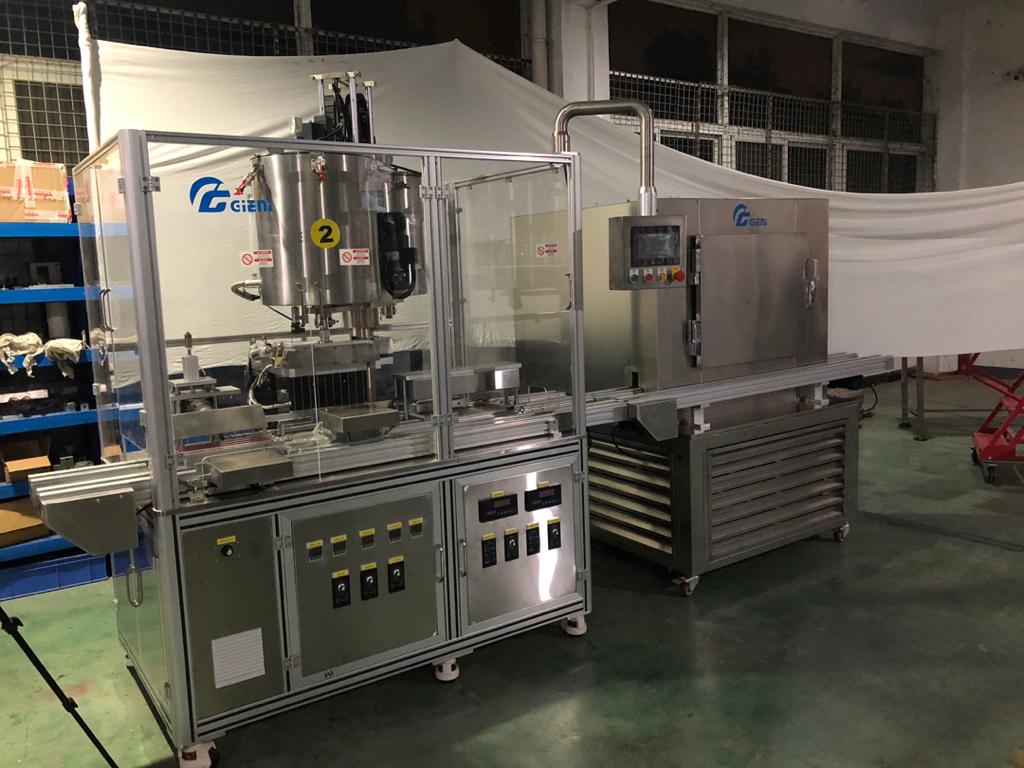
A cosmetic filling machine is specified on three physical variables before any model number is compared: how the formula is dosed (pump), how it is delivered into the container (nozzle), and what temperature it must hold before, during and after filling (thermal control). Answer those three correctly and speed, capping and labeling follow. Answer them wrongly and no output rating will recover the line.
GIENICOS — Shanghai GIENI INDUSTRY CO., LTD. — designs and manufactures intelligent cosmetic filling and packaging equipment and was founded in Shanghai in 2011. Its range covers lipgloss, mascara, hot pouring, lip balm, lipstick, deodorant stick, compact powder, nail polish, eyeliner, eyebrow pencil, skin care, toner, cream, loose powder and wax filling, together with labeling, capping and check weighing. Because one portfolio can hold a wax that is solid at room temperature next to a solvent-thin nail polish, this guide maps selection by formula behaviour and container format rather than by machine name.
Problem Definition: Why One Filling Specification Cannot Cover a Cosmetic Portfolio
Most filling faults that reach the QA bench are not machine faults. They are specification faults, and they usually trace back to a machine chosen on the wrong physical property of the product.
- Weight drift on creams and gels. A setting calibrated on a thin liquid under-doses as soon as the formula becomes thixotropic. Volumetric dosing assumes the material behaves the same at the start and the end of a shift, which is rarely true for a cream that has been stirred for hours.
- Product on the bottle mouth. A nozzle without return suction leaves a hanging drop; the cap then drags that drop down the shoulder during capping, and the defect is discovered at incoming inspection rather than at the filling head.
- Shrink holes and dull surfaces on sticks. The bulk was poured below its ideal flow temperature, or the cooling curve after pouring was too fast at the surface and too slow in the core, so the surface sinks as the core contracts.
- Powder scatter and weight spread. Auger dosing without weighing produces acceptable averages but unacceptable individual fills once the powder is aerated or the bulk density shifts between batches.
- Marked or deformed tubes. A nozzle that does not synchronise its stroke with tube position marks the laminate wall and deforms thin-walled tubes before sealing.
The decision rule that prevents most of this is a sequence rather than a checklist: characterise flow and the thermal window first, choose the dosing principle second, size the nozzle system third, add thermal hardware fourth, and only then integrate capping and labeling. Speed is the last variable to negotiate, not the first.
Industry Background: Where the Demand Signal Comes From
According to Future Market Insights, the global cosmetic filling machines market was valued at USD 476.80 million in 2025 and is projected to reach USD 718.63 million by 2036. Fortune Business Insights reports that Asia Pacific dominated the filling machine market with a 33.08% share in 2025. For equipment buyers, the relevant reading is not the headline figure but the direction: demand keeps shifting toward automated dosing and away from manual and semi-manual filling where repeatability matters.
FMI also projects automatic filling machines to hold a 41.2% share of the cosmetic filling technology market in 2026. That is consistent with what buyers ask for in practice — not a faster head, but a head that holds tolerance across a long shift without an operator adjusting it.
Procurement teams also need the trade classification: cosmetic filling machines fall under HS Code 8422.30, with 8422.30.91 covering machinery used in opening, filling and closing containers in the Harmonized Tariff Schedule (USITC). GIENICOS ships approximately 80% of its output to the EU, USA and Asia, and serves customers across 100 countries and regions, which is why compliance documentation and spare-part continuity appear alongside technical parameters in buyer questionnaires.
Detailed Solution: The Three Selection Axes
Axis 1 — Pump: match the dosing principle to flow behaviour
Four dosing principles cover the majority of cosmetic formats. The correct choice is determined by viscosity, by whether the material carries pigment or pearl, by solvent volatility, and by how often the line changes colour.
Servo piston dosing is the default for medium-to-high viscosity material. The Servo Piston Filling Machine (JSFL 1-2) is a single- or dual-nozzle unit with a liftable tank, specified for lip balm, lipstick, lip cream and other high-viscosity cosmetic products. The same principle scales in the Lipgloss Mascara Filling Machine (JMG), which fills 10 to 12 pieces per cycle and runs at 60–72 pcs/min mid-speed or 80–100 pcs/min high-speed, and in the Automatic Lipgloss Filling and Capping Machine (JQH-02), which covers 1–20 mL at 60–80 pcs/min with ±0.1 g precision. For skin care volumes, the Toner and Cream Rotary Filling Machine (JRS-G3) applies servo piston dosing across 10–300 mL at up to 50 pcs/min, with ±0.5 g precision from 20–100 mL and ±0.5% from 101–300 mL.
Auger dosing is the powder path. Powder is not pumped; it is metered by a rotating screw, so the variables are screw geometry, bulk density and whether the fill is verified by weight. The Automatic Loose Powder Filling Machine (JLF-A) uses dual-nozzle auger filling with a 25 L hopper at 30–40 pcs/min, SUS316L product-contact parts, a Mitsubishi PLC, a Panasonic servo motor and a JSCC conveying motor, with a process chain that can include container loading, dual-head filling, vibration conveying, inner-lid placement, automatic pressing, pickup and capping. Where weight accuracy outranks throughput, the rotary Loose Powder Filling Machine (JLF) uses rotary weighing-to-fill with screw feeding, automatic calibration, a servo-driven screw and a high-precision weighing sensor at 900–1,800 pcs/hour.
Peristaltic dosing suits low-viscosity liquids where cleaning and product changeover dominate the cost of ownership. The Eyeliner Filling Machine (JR-02E) is a rotary machine that fills two products per cycle at 30–40 pcs/min using peristaltic pump dosing, with integrated empty-container detection, steel ball feeding and in-position detection, inner wiper feeding, capping and finished-product pushing. Peristaltic systems are also chosen when the dosing path is easiest to dismantle and rinse between pigments.
Pressurised and vacuum variants are used where gravity and simple piston suction are not enough. The Rotary Nail Polish Filling Machine (JQR-01N) supports piston, vacuum or pressurised filling for 5–30 mL containers at approximately ±0.2 g, running bottle feed, filling, brush feed, cap feed, capping and discharge in one rotary sequence. The Lip Pouch Filling Machine for Lipgloss Concealer (JR-01P) adds a 20 L pressurising tank with a ceramic valve core for 2–10 mL pouch formats at ±0.1 g and 20–30 pouches/min, with automatic vibration cap sorting and adjustable servo capping torque.
Axis 2 — Nozzle: configuration, suction and container geometry
Nozzle count is arithmetic before it is engineering: the target output divided by cycle time gives the number of nozzles required, and the container pitch confirms whether they physically fit. Four further parameters decide whether that count actually works.
- Anti-drip design. The JMG line uses a return-suction filling nozzle that pulls the tail of the dose back after each cycle, which reduces bottle-mouth contamination — the single most common reason a cosmetic fill fails a visual check at the cap.
- Presence detection. No-bottle-no-fill logic on the JMG stops the station when no container is detected, while the JR-02E eyeliner machine confirms containers are correctly positioned before processing.
- Container geometry. The Automatic Mascara Lipgloss Filling Machine (JQR-01A) accepts container diameters from 10–125 mm and body lengths of 40–90 mm excluding the cap. The JRS-G3 uses holders of 10–70 mm, and the Toner and Cream Filling Machine (JRS-G2) uses a puck inner diameter of 25–70 mm with bottle heights from 30 mm without cap to 205 mm with cap.
- Cleanability of the dosing path. The Hot Pouring Machine (TSP) and the 20 L Hot Pouring Machine (MT 20P) both use a sanitary discharge valve without dead angles, so wax-based bulk is not trapped in a cavity between pours.
Documented nozzle configurations show how wide the range is. The JSFL 1-2 is built as a single- or dual-nozzle machine. The Vertical Dual Nozzle Filling Machine (JMF) pairs two nozzles with dual 20 L tanks and runs at 22–28 pcs/min with one operator, with a cleaning time of approximately 30 minutes. The Hot Filling & Cooling Line (JHF) is configurable with 2, 4, 6 or 16 nozzles and reaches up to 60 pcs/min with a six-nozzle configuration. The Trial Sample Filling Machine (JLG-10H) runs ten nozzles at 100–130 pcs/min for 1–19 mL sample bottles of 12–20 mm diameter. The BB CC Cushion Filling Machine (JQL-04C) uses four servo nozzles at 30–40 pcs/min with ±0.15 g precision for 5–20 mL cushion formats.
Axis 3 — Thermal control: upstream melt, fill temperature, downstream cooling
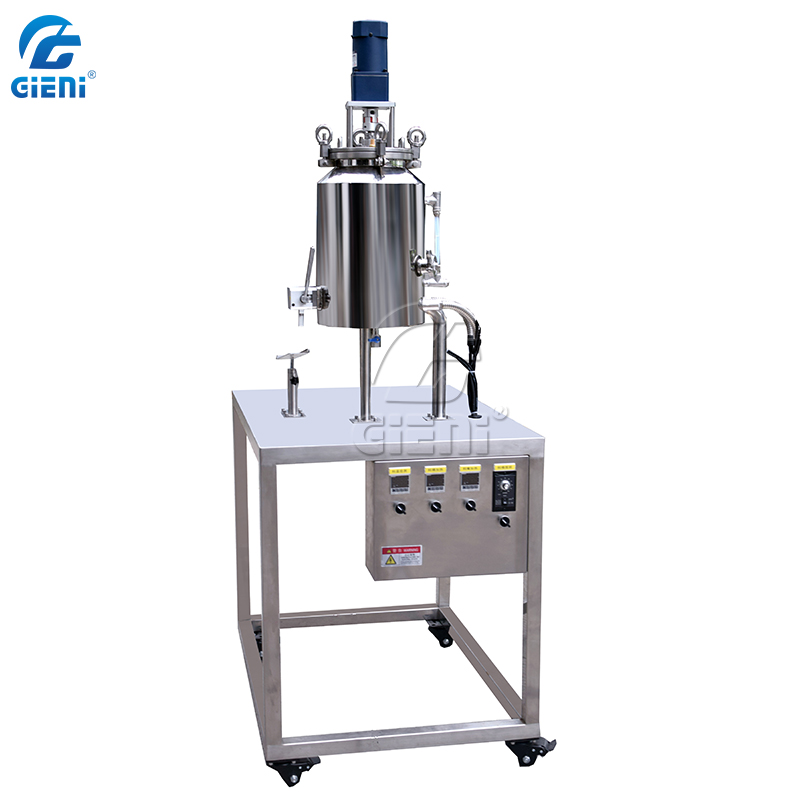
Thermal control is the axis most often added late, after the filling machine has already been ordered. Three temperatures matter: bulk preparation temperature, filling temperature, and the solidification profile after filling.
Upstream, wax-based bulk has to be melted, stirred and de-aerated before it reaches a nozzle. The TSP Hot Pouring Machine integrates heating, stirring and vacuum in a 20 L tank with a sanitary valve without dead angles for lipstick and lip balm. At larger batch sizes, the Cosmetic Melting Tank (MT 300 SE) holds 300 L with oil circulation heating and stirring, and is applied to foundation, lipstick, primer cream and wax-based cosmetic bulk. Intermediate options include the Multi Tank Melting System (MT 20 SE) with six 20 L tanks, the Oil Heating Melting Tank (MT 30SE) at 30 L, the Cosmetic Melting Tank (MT 100 SE) at 100 L, and the Lipstick Dispersion Tank (MT 50P / MT 100P) at 50 L or 100 L for bulk dispersion.
At the filling head, the thermal question is whether the material is still flowable at the moment of dosing. The JHF Hot Filling & Cooling Line covers filling ranges of 1–20 mL, 20–50 mL, 50–100 mL and 100–200 mL, and supports lip balm, sunstick, primer, cleansing cream and similar hot-filled products across tubes, sticks and jars. The HALF SILICONE LIPSTICK LIPBALM FILLING LINE (JSM) integrates mold pre-heating, automatic filling, remelting and circulating cooling into one workflow, with documented capacity of 2,160–3,600 pcs/hour using metal molds and 1,800–3,000 pcs/hour using silicone molds, operated by 4–5 people.
Downstream, cooling determines surface quality. The Lipstick Cooling Tunnel (JCT) is a continuous conveyor-type tunnel using refrigerated air circulation for lipstick and lip balm molds after hot filling, with temperature, conveyor speed, dimensions and power supply customizable to the line. The Automatic Silicone Mold Lipstick Filling Machine (GLU-1300) combines a 30 L tank, electric oil heating, a 112-piece silicone mold and two LEISTER hot air guns at 1,000–1,300 pcs/hour for lipstick diameters of approximately 8–17.1 mm. Where the formula sets cold rather than hot — eyebrow pencil and eyeliner gel — the JPF-12 line runs at 45–50 pcs/min with a cooling temperature of −1 °C to −2 °C and two 5 L tanks.
Step-by-Step Breakdown: Six Selection Steps
- Characterise the formula. Measure viscosity at filling temperature, record whether the material is Newtonian or thixotropic, note pigment or pearl content, and record solvent volatility. A foundation cream confirms this directly: the Toner and Cream Filling Machine (JRS-G2) is specified for material viscosity up to 15,000 mPa.s, which is a useful boundary when comparing cream and lotion paths.
- Choose the dosing principle. Piston for medium-to-high viscosity, auger for free-flowing powder, peristaltic for low-viscosity liquids where cleaning dominates, pressurised or vacuum variants where the formula is volatile or the package is a pouch.
- Set nozzle count and geometry from the container. Compare container diameter and body length against documented ranges — for example 10–125 mm diameter and 40–90 mm body on the JQR-01A — then confirm the nozzle count with the required output.
- Define the thermal path. Decide whether the process needs upstream melting only, melting plus hot filling, or melting, hot filling and controlled cooling. Each step adds both capability and floor space; skipping the cooling step is the most expensive economy on a stick line.
- Integrate capping and labeling. Capping torque, container shape and label placement must be specified together with the filler, because a stable fill does not survive an unstable cap or a misaligned label.
- Validate on the real formula, then order. Run the actual bulk, not a surrogate, and confirm cleaning and changeover times, because those decide the true cost of a multi-SKU line.
Use Cases: Matching Formats to Documented Configurations
Hot-pour sticks and balms: lipstick, lip balm, sunstick, deodorant stick
These formats need a thermal chain rather than a standalone filler. Bulk is prepared in a TSP hot pouring machine or an MT series melting tank, filled hot through a multi-nozzle line such as the JHF or the JSM half-silicone line, and then solidified in a JCT cooling tunnel. Where throughput is the priority, the GLU-1300 silicone mold machine covers 1,000–1,300 pcs/hour with two nozzles. Where shape flexibility matters more, the JSM supports different lipstick shapes by changing the mold configuration and processes soft and high-viscosity materials, including formulas containing pearl.
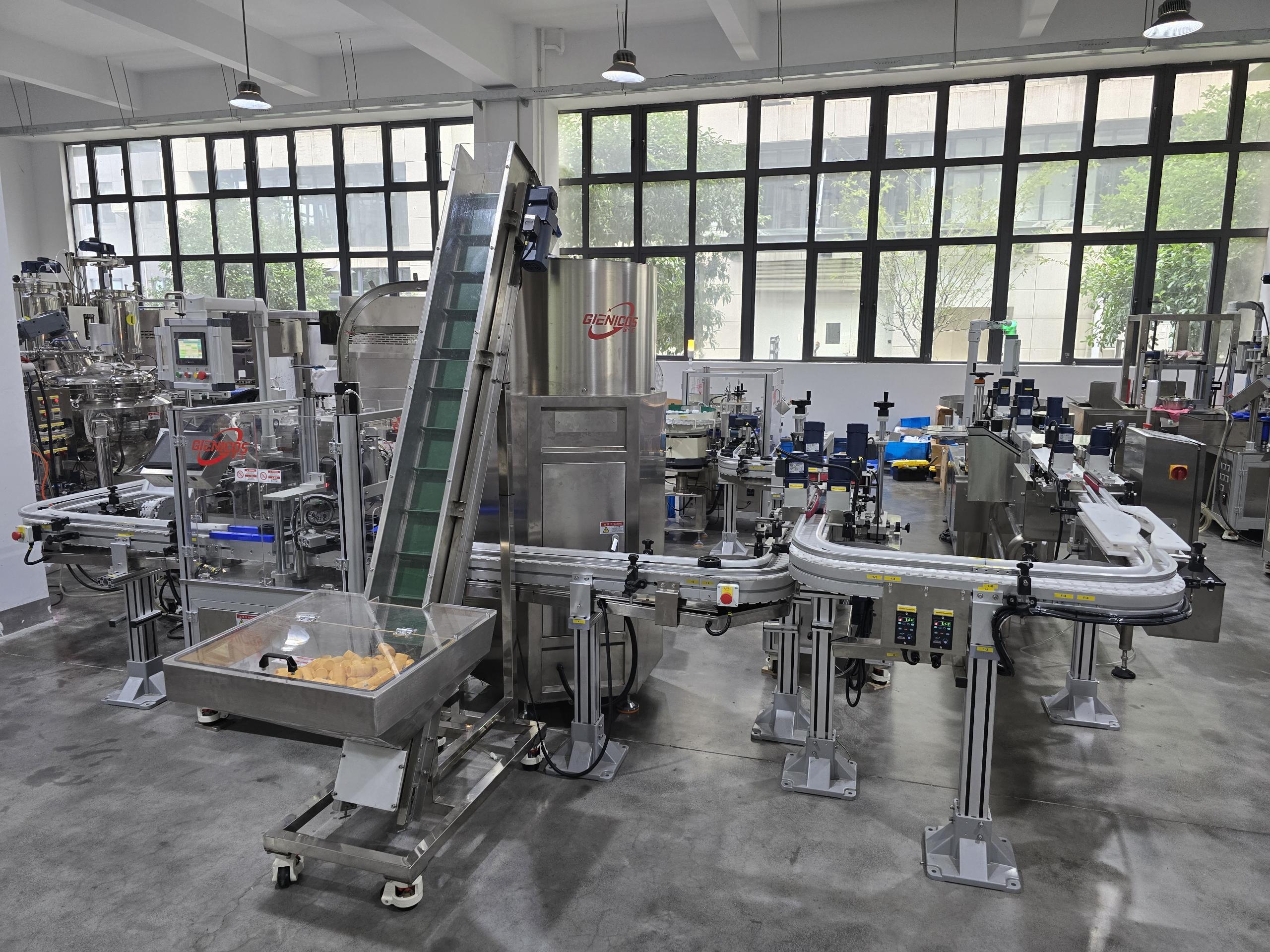
Creams, foundations and emulsions: toner, serum, cream, foundation, cushion
Low-to-medium viscosity emulsions sit on the rotary and dual-nozzle side of the catalogue. The JRS-G3 handles oil, toner, serum and cream from 10–300 mL at up to 50 pcs/min with a 15-minute changeover; the JRS-G2 runs 45 bottles/min at 50 mL for material up to 15,000 mPa.s; the Foundation Filling Machine (JRS-G1) applies full-servo rotary filling at 30–40 pcs/min to cream and liquid foundation, with a quick-release filling valve that supports cleaning and colour change in 2–3 minutes and optional tank heating, pressure and mixing. Cushion formats follow a different logic: the JQL-04C fills 5–20 mL with four servo nozzles at ±0.15 g, while the Air Cushion CC Cream Filling Machine (JQR-02C) handles single or dual colour at 24–30 pcs/min with a 15 L stirred tank and a maximum fill volume of 20 mL.
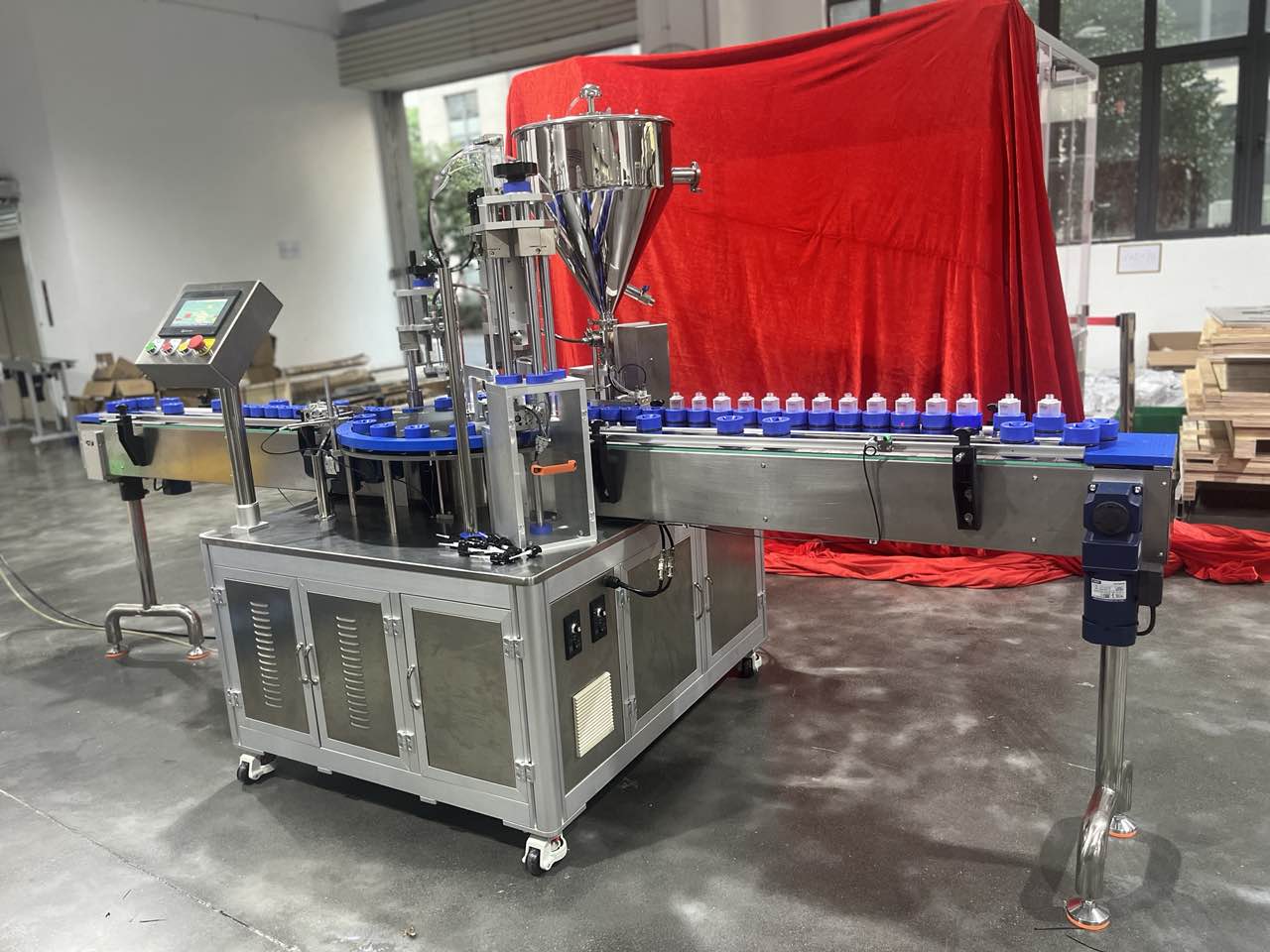
Low-viscosity liquid colour: mascara, lipgloss, lip oil, eyeliner, nail polish
This is the most container-driven group. The JQR-01A fills and caps mascara, lipgloss and foundation liquid at 40–45 PPM with a 2–14 mL range and ±0.1 g precision. Semi-automatic alternatives such as the JR-02M/L dual-nozzle rotary machine and the JR-01M/L single-nozzle machine (with ceramic or SUS pump options) run 30–40 pcs/min for lipgloss, mascara, foundation and lip oil. Nail polish has its own path: the Rotary Nail Polish Filling Machine (JQR-01N) covers 5–30 mL at about ±0.2 g with piston, vacuum or pressurised dosing and includes brush feeding and capping in the rotary sequence, while the Nail Polish Filling and Capping Machine (JQL-02N) runs two servo nozzles at 80 pcs/min for 5–20 mL with ±0.15 g precision.
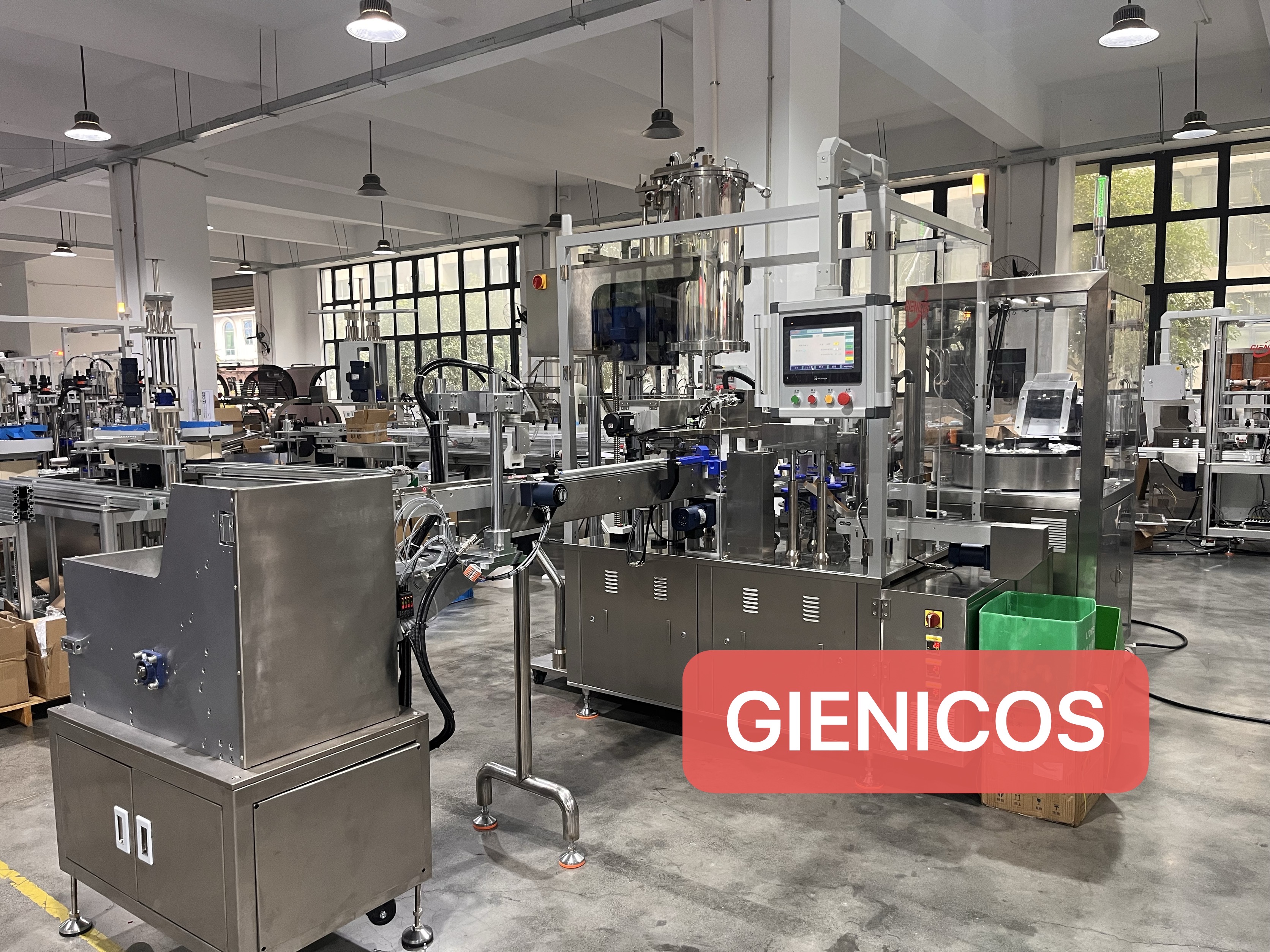
Powder: loose powder and pressed powder
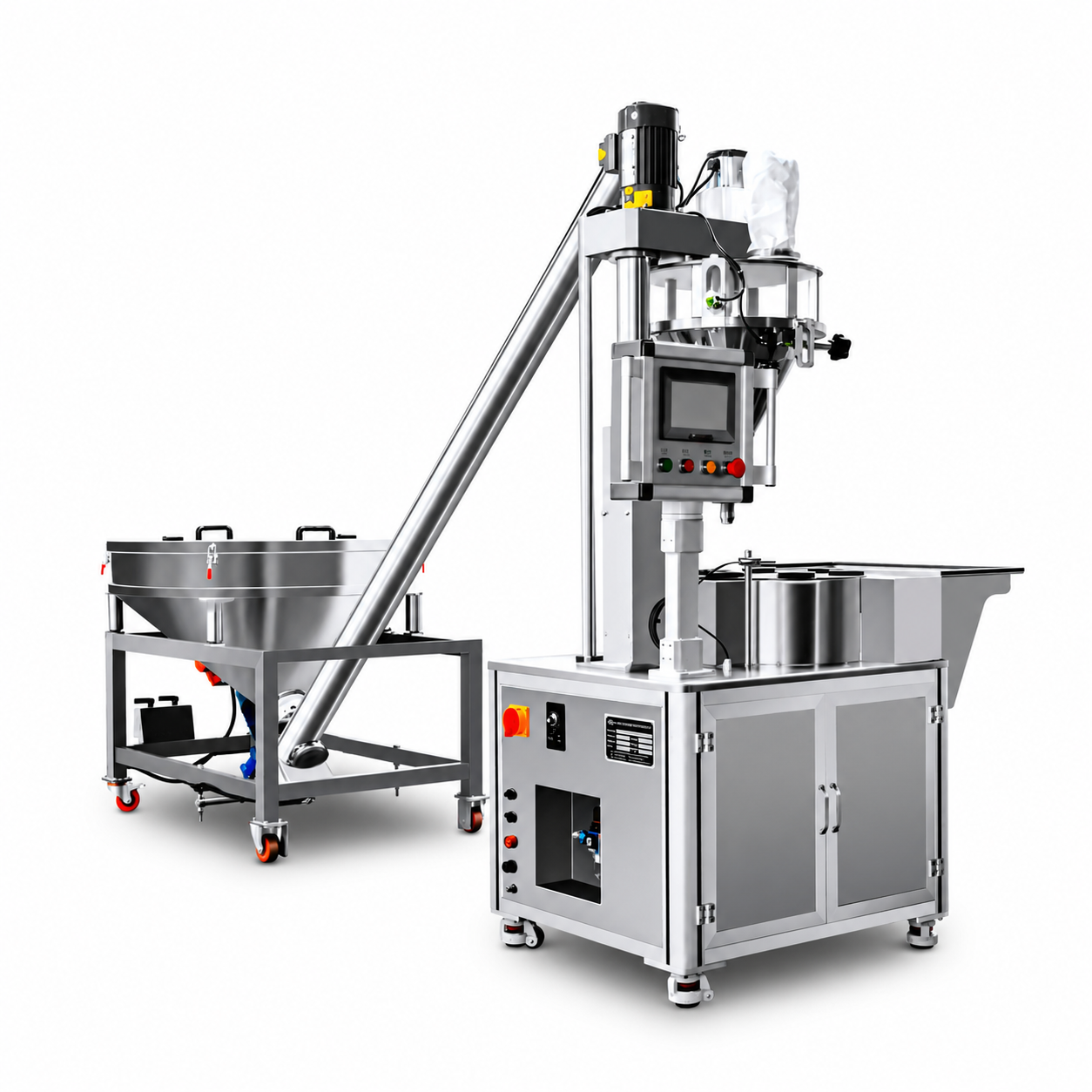
Powder runs on weight, not volume. The JLF-A dual-nozzle auger machine fills loose powder at 30–40 pcs/min from a 25 L hopper, with SUS316L product-contact parts and a Mitsubishi PLC coordinating the fill. The rotary JLF uses weighing-to-fill instead, with screw feeding and a high-precision weighing sensor at 900–1,800 pcs/hour. Upstream preparation belongs to the same logic: the Vibration Powder Sifter (PSF) screens at 40 or 60 mesh through a 440 mm screen, and the High Speed Powder Mixer (JY-CR50) prepares 10 kg batches in a 50 L bowl. Pressed formats use the Automatic Powder Press Machine (GP 050 SE) at 50–60 pcs/min on a four-cavity example with 0.5–1 operator, or the Compact Powder Press Machine (JBC-4) with up to six pans per mold at 720–1,080 pcs/hour.
Tubes and pouches
Two package types sit outside bottle filling entirely. The Tube Filling and Sealing Machine (GFS-40/60) uses servo filling across 5–250 mL (GFS-40) or 5–200 mL (GFS-60) at 30–40 pcs/min or 60–80 pcs/min, for tube diameters of 10–50 mm and lengths of 60–210 mm, handling plastic, aluminium and laminate tubes with a level-controlled tank and optional heating and mixing. Pouch formats use the JR-01P, which fills 2–10 mL at ±0.1 g and 20–30 pouches/min with a 20 L pressurising tank and adjustable servo capping torque.
A referenced production case
One documented configuration involves the Lipgloss Mascara Filling Machine (JMG) applied to lipgloss and lipcream production at a project scale of 20 sets of equipment, deployed across the United States, Poland, Indonesia and Thailand, with a five-year project duration and reported stable operation with on-time service support. The same line type operates under cosmetic clean-room conditions with GMP clean-grade compatibility, PLC and touch-screen control, and automatic precise filling, automatic wiper loading and pressing and ten-head automatic capping by servo motor at 80 pieces per minute — a configuration typically extended with MES and remote monitoring, automatic check weighing and rejection, automatic labeling, and sleeve shrink labeling.
Capping and Labeling Integration
Capping and labeling are specified last but fail first. A capping unit that applies fixed torque will crack a thin-walled lipgloss cap and leave a heavy mascara cap loose; a labeling unit sized for a 30 mm bottle will not hold a 15 mm lipstick tube.
The Semi Automatic Rotary Capping Machine (JR-01X) applies servo capping at 30–40 pcs/min with adjustable torque to round and square bottles, using single-phase 220 V power and 1.5 kW — suitable for lipgloss, liquid lipstick, mascara and concealer packaging. For labeling, three approaches are documented. The Bottom Color Code Labeling Machine (JTB-815S) applies bottom color-code labels to 15–30 mm diameter, 50–110 mm long containers at 60–90 pcs/min with ±1 mm accuracy, which is the standard fit for lipstick and lipgloss. The Powder Case Top and Bottom Labeling Machine (JTB-812) labels both faces of powder cases at 50–80 pcs/min with ±1 mm accuracy across 30–100 mm diameters. The Horizontal Round Container Labeling Machine (JTB) handles slim round containers that cannot stand steadily at 0–25 m/min for 1–2.5 cm diameter and 2.5–10 cm height. Where a full-sleeve look is required, the Sleeve Shrink Labeling Machine (JSS-01) runs at 100 pcs/min with PE, PVC, OPS or PET film of 0.035–0.045 mm thickness, film heating up to 200 °C and film cut precision of ±0.25 mm.
Comparison Table: Documented Configurations at a Glance
| Configuration | Dosing principle | Documented range / capacity | Thermal function | Typical fit |
|---|---|---|---|---|
| Servo Piston Filling Machine (JSFL 1-2) | Servo piston, single or dual nozzle | Liftable tank | — | Lip balm, lipstick, lip cream, high-viscosity products |
| Vertical Dual Nozzle Filling Machine (JMF) | Vertical dual nozzle, dual 20 L tanks | 22–28 pcs/min with one operator; cleaning approx. 30 min | — | High-viscosity material on a small footprint |
| Lipgloss Mascara Filling Machine (JMG) | Servo piston, 10–12 pcs per cycle | 60–72 pcs/min mid-speed; 80–100 pcs/min high-speed | Optional heating / pressurising tank | Mascara, lipgloss, lip oil, eyeliner in GMP clean rooms |
| Automatic Mascara Lipgloss Filling Machine (JQR-01A) | Rotary filling with capping | 40–45 PPM; 2–14 mL; ±0.1 g; containers 10–125 mm | — | Mascara, lipgloss, foundation liquid |
| Toner and Cream Rotary Filling Machine (JRS-G3) | Servo piston rotary | 10–300 mL; ≤50 pcs/min; ±0.5 g / ±0.5%; changeover 15 min | — | Oil, toner, serum, cream |
| Rotary Nail Polish Filling Machine (JQR-01N) | Piston, vacuum or pressurised | 5–30 mL; approx. ±0.2 g | — | Nail polish, essential oil, perfume, massage oil |
| Hot Pouring Machine (TSP) | Material preparation unit | 20 L tank | Heating, stirring, vacuum; sanitary valve without dead angle | Lipstick and lip balm bulk before filling |
| Cosmetic Melting Tank (MT 300 SE) | Bulk preparation | 300 L | Oil circulation heating with stirring | Foundation, lipstick, primer cream, wax-based bulk |
| Automatic Silicone Mold Lipstick Filling Machine (GLU-1300) | Servo piston, 2 nozzles | 1,000–1,300 pcs/hour; 112-piece silicone mold; lipstick dia. approx. 8–17.1 mm | Electric oil heating; two LEISTER hot air guns | Silicone-mold lipstick production |
| Lipstick Cooling Tunnel (JCT) | Post-fill solidification | Continuous conveyor tunnel | Refrigerated air circulation; temperature and conveyor speed customizable | Lipstick and lip balm molds after hot filling |
| Automatic Loose Powder Filling Machine (JLF-A) | Dual-nozzle auger | 30–40 pcs/min; 25 L hopper; SUS316L contact parts | — | Loose powder and face powder |
| Rotary Loose Powder Filling Machine (JLF) | Rotary weighing-to-fill | 900–1,800 pcs/hour; 25 L tank | — | Weight-critical loose powder dosing |
| Tube Filling and Sealing Machine (GFS-40/60) | Servo filling and sealing | 5–250 mL / 5–200 mL; 30–40 or 60–80 pcs/min; tube 10–50 mm dia. | Heating and mixing optional | Plastic, aluminium and laminate tubes |
| Semi Automatic Rotary Capping Machine (JR-01X) | Servo capping | 30–40 pcs/min; adjustable torque | — | Downstream capping of round and square bottles |
FAQ
Are GIENICOS hot filling and melting machines CE certified?
Yes. The TSP Hot Pouring Machine is covered by CE certification ATGZAHS190528008-M1, and the same certificate covers the MT-1, MT-4, MT-6, MT-100 and MT-300 melting tanks. The Multi-color Hot Filling Machine carries CE certificate AT58250SC100097, and the JY-CR50 and JY-CR200 High Speed Powder Mixers carry certificate AT18250SC100526. GIENICOS products hold CE certification and the company exports roughly 80% of its output to the EU, USA and Asia. For customs purposes, cosmetic filling machines are classified under HS Code 8422.30, with 8422.30.91 covering machinery for opening, filling and closing containers in the Harmonized Tariff Schedule (USITC).
Which configuration handles high-viscosity wax-based bulk without weight drift?
Servo piston dosing is the appropriate principle for wax-based and high-viscosity material. The Servo Piston Filling Machine (JSFL 1-2) is a single- or dual-nozzle unit with a liftable tank specified for lip balm, lipstick, lip cream and similar products. The Vertical Dual Nozzle Filling Machine (JMF) pairs two nozzles with dual 20 L tanks and runs 22–28 pcs/min with a single operator at a cleaning time of approximately 30 minutes. Where multiple colours are required, the Multi-color Hot Filling Machine (JYF-4) fills up to four colours with servo piston control, a 20 L effective tank volume, SUS316L product-contact parts and ±0.1 g precision.
How should cooling be handled after hot filling?
Cooling is a separate process step, not a by-product of filling. The Lipstick Cooling Tunnel (JCT) is a continuous conveyor-type tunnel using refrigerated air circulation for lipstick and lip balm molds after hot filling, with temperature, conveyor speed, dimensions and power supply customizable to the production line. For integrated lines, the JHF Hot Filling & Cooling Line combines filling and cooling across 1–20 mL, 20–50 mL, 50–100 mL and 100–200 mL ranges with 2, 4, 6 or 16 nozzles and up to 60 pcs/min in a six-nozzle configuration, while the JSM line includes mold pre-heating, automatic filling, remelting and circulating cooling in one workflow. Cold-set gel formats use different parameters: the JPF-12 eyebrow pencil and eyeliner gel line runs at 45–50 pcs/min with a cooling temperature of −1 °C to −2 °C.
Can a machine be validated on our own formula before we commit to a full line?
Yes. The Trial Sample Filling Machine (JLG-10H) is built for that purpose: ten filling nozzles, a 1–19 mL range, 100–130 pcs/min, a 25 L tank, SS316L product-contact parts, bottle diameters of 12–20 mm and servo piston dosing with servo lifting. GIENICOS works on an OEM/ODM basis with customization of voltage, logo, automation degree, tank size, filling method and speed request, accepts a minimum order of one unit, performs a 100% OQC test before shipping, and quotes a lead time of 45–80 days.
What should a cosmetic filling machine manufacturer supply for hot-fill lipstick production?
Hot-fill lipstick production needs five linked blocks: bulk preparation (TSP Hot Pouring Machine or MT series melting tanks), hot filling (JSM half-silicone line at 2,160–3,600 pcs/hour with metal molds or 1,800–3,000 pcs/hour with silicone molds, or the GLU-1300 silicone mold machine at 1,000–1,300 pcs/hour), cooling (JCT Lipstick Cooling Tunnel), capping (JR-01X Semi Automatic Rotary Capping Machine at 30–40 pcs/min with adjustable servo torque) and labeling (JTB-815S bottom color-code labeling at 60–90 pcs/min with ±1 mm accuracy, or JSS-01 sleeve shrink labeling at 100 pcs/min). GIENICOS supports this scope with OEM/ODM customization, one-unit minimum order, 45–80 days lead time, a 12-month warranty covering manufacturing defects, remote technical support and onsite visit support, plus full-life service support. A complete machine overview is available in the downloadable catalogue at 2026 CATALOGUE (PDF).
Conclusion
Pump, nozzle and thermal control are not three separate purchase decisions — they are one decision expressed three ways. The dosing principle has to match the flow behaviour of the formula; the nozzle system has to match both the dosing principle and the container; and the thermal path has to hold the material in a fillable state and then set it correctly. Once those three are fixed, output figures, capping torque and label placement become solvable variables rather than sources of risk.
The practical checklist for the evaluation stage is short: confirm viscosity and thermal behaviour with the actual bulk, match the dosing principle to that behaviour, size nozzle count against container geometry and target speed, decide whether cooling is part of the line, and specify capping and labeling against the same container. Buyers who complete those five checks usually discover that the machine they need is defined by the product, not by the catalogue.
Next Step: Sample, Quotation or Line Layout
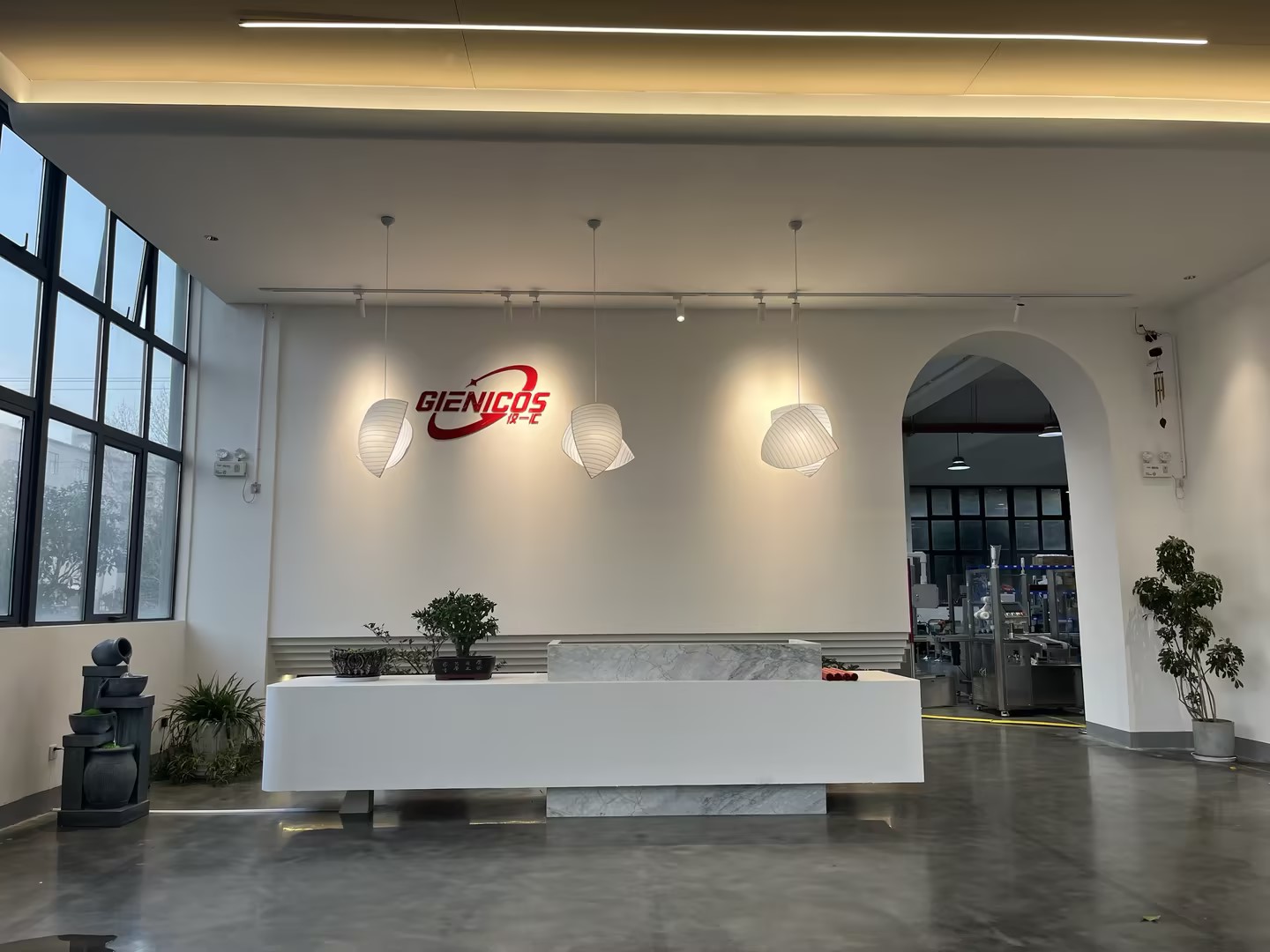
Shanghai GIENI INDUSTRY CO., LTD. (GIENICOS) builds cosmetic filling, hot filling and packaging equipment under an OEM/ODM model, with one-unit minimum order, 45–80 days lead time and remote plus onsite technical support.
Send your formula viscosity, container dimensions and target output for a configuration recommendation and quotation. Email: sales@genie-mail.net · Tel / WhatsApp: +86 134 8206 0127 · Website: www.gienicos.com · Download the 2026 catalogue.
Have Questions or Need More Details?
Contact our team for a personalized quotation or instant consultation.
Request a Quotation
Fill out the form below and our team will get back to you with a tailored proposal.
WhatsApp Direct Chat
Prefer to chat in real-time? Message us on WhatsApp for instant assistance & quick answers.
- Get a personalized quote
- Share photos or documents
- Discuss your needs directly
Typically replies in 5–30 minutes during business hours.