Cosmetic Filling Machines Ranked by Product Format: Lipstick, Mascara, Cream and Powder
Most buyers start with a search for a cosmetic filling machine and end up comparing machines that were never meant to do the same job. The filling stage is defined less by the cosmetic category than by the physical state of the bulk: lipstick is poured hot and solidified in a mold, mascara is filled cold into a slim bottle around a wiper, cream and toner are dosed by volume into jars and bottles, and loose powder flows as a solid. One machine cannot serve all four formats without a compromise in precision, thermal control or container handling.
Answer first — the format-fit ranking:
- Lipstick and wax-based sticks: Rank 1 is the JLG-10/12 Semi Automatic Lipstick Filling Machine; Rank 2 is the JCT Lipstick Cooling Tunnel, the module that turns hot filling into a usable line; Rank 3 (high-volume upgrade) is the GLU-1300automatic silicone mold lipstick filling machine.
- Mascara, lipgloss and liquid colour: Rank 1 is the JQH-02 Automatic Lipgloss Filling and Capping Machine; Rank 2 is the JQR-01A Automatic Mascara Lipgloss Filling Machine; Rank 3 is the JR-02M/L semi-automatic rotary dual-nozzle filling machine.
- Cream, toner and foundation: Rank 1 is the JRS-G3 Toner and Cream Rotary Filling Machine; Rank 2 is the JRS-G1 semi-automatic rotary foundation filling machine.
- Powder (loose and pressed): Rank 1 is the JLF linear powder filling machine, prepared by the JY3-CR100 high-speed powder mixer and PSF vibration sifter.
The ranking scores format fit, published precision and throughput, and process completeness. It is not a market-share, price or sales-volume ranking.
Problem Definition: why a generic machine shortlist fails
Three mismatch types account for most of the wasted evaluation time in this category. They appear before any price discussion, which is why buyers at the research stage should resolve them first.
Thermal mismatch. Wax-based bulk must be kept molten through the nozzle, the tank and the mold; lipstick filling therefore needs heated nozzles, preheated silicone molds and a cooling step after dosing. A cold-fill machine cannot be adapted by adding a heater, because the entire path from tank to nozzle is designed around temperature stability. Liquid colour cosmetics and creams, by contrast, are normally filled at ambient or mildly heated conditions, and their risk is aeration, foaming and viscosity drift rather than solidification.
Container mismatch. Mascara and lipgloss bottles are slim, often irregular in shape, and they arrive with a wiper and a cap that must be fitted in the correct sequence. Filling these containers on a machine designed for wide-mouth jars creates handling problems long before it creates filling problems. Creams and toners run in jars and rigid bottles; loose powder runs in wide tins and cases.
Integration mismatch. A filler is only one station. A lipgloss line needs wiper loading and servo capping after the nozzle; a lipstick line needs cooling and demolding after the mold; a powder line needs mixing and sifting upstream and case labelling downstream. Ranking a machine without its neighbouring stations produces a shortlist that cannot be commissioned as a line.
The cost of getting this wrong is structural: an incorrectly matched filler locks the factory into manual rework, a second machine purchase, or a line that runs below its intended output for years.
Industry Background: what the market data says
The commercial context supports a format-first view. According to Future Market Insights, the global cosmetic filling machines market was valued at USD 476.80 million in 2025 and is projected to reach USD 718.63 million by 2036. Fortune Business Insights reports that Asia Pacific dominated the filling machine market with a 33.08% share in 2025, which is consistent with the concentration of contract manufacturing capacity in that region.
Automation is also shifting the baseline. Future Market Insights projects that automatic filling machines will hold a 41.2% share of the cosmetic filling technology market in 2026. In practical terms, more buyers now meet automatic configurations during evaluation than in the past, which raises the cost of a format mismatch: an automatic line is less forgiving of a wrong thermal or container assumption than a semi-automatic unit that can be re-tooled cheaply.
For procurement and trade documentation, cosmetic filling machinery sits under HS Code 8422.30, with 8422.30.91 covering machinery used in opening, filling and closing containers, as listed by the Harmonized Tariff Schedule maintained by the USITC. Buyers importing a full line should confirm the classification per machine rather than per project.
How this ranking was built
Each machine was scored against the format it was designed to serve, using criteria that a production or procurement engineer can verify from published specifications:
- Format fit: does the design address the thermal state, viscosity and container type of the product?
- Process completeness: does the machine close the loop on its own stage, for example filling plus wiper loading plus capping, or filling plus cooling plus demolding?
- Published precision and throughput: only figures stated by the manufacturer are used. Where a figure is not published, the comparison table says so instead of estimating.
- Automation level versus batch pattern: semi-automatic and automatic configurations are ranked separately where they serve different production volumes.
- Modularity: whether the unit can be combined with melting, cooling, labelling or inspection equipment without redesign.
The ranking, format by format
Format 1 — Lipstick and wax-based sticks
RANK 1JLG-10/12 Semi Automatic Lipstick Filling Machine
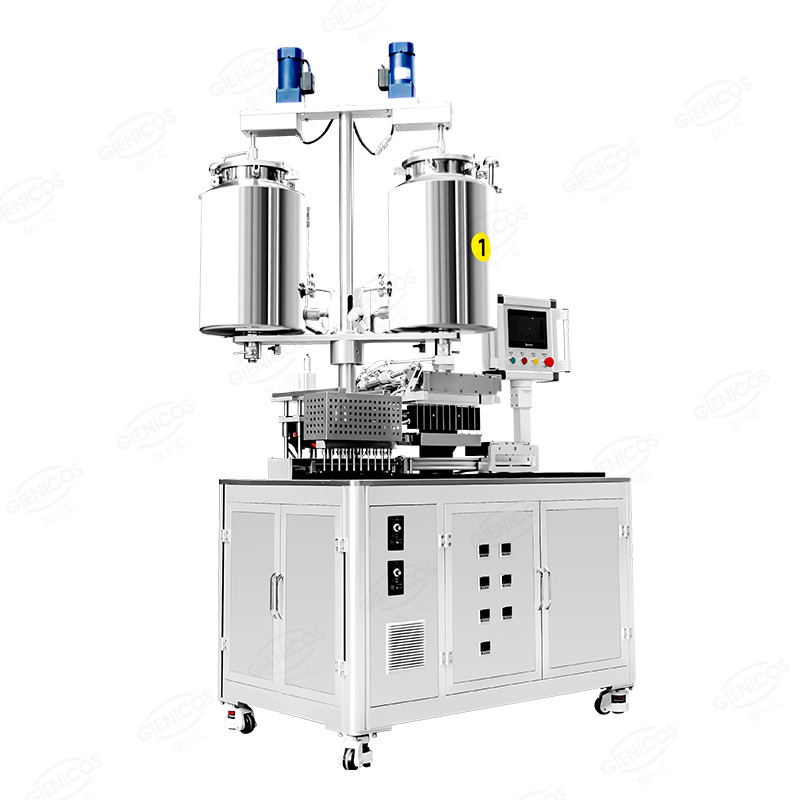
The JLG-10/12 belongs to the Lipstick Lipbalm Filling Series and is built for hot-pour molding rather than for bottle filling. It is a stainless-steel machine with a 10-nozzle or 12-nozzle filling configuration, a filling volume range of 1–20 mL and a filling precision of ±0.1 g. It handles lipstick, lipbalm and lipgloss.
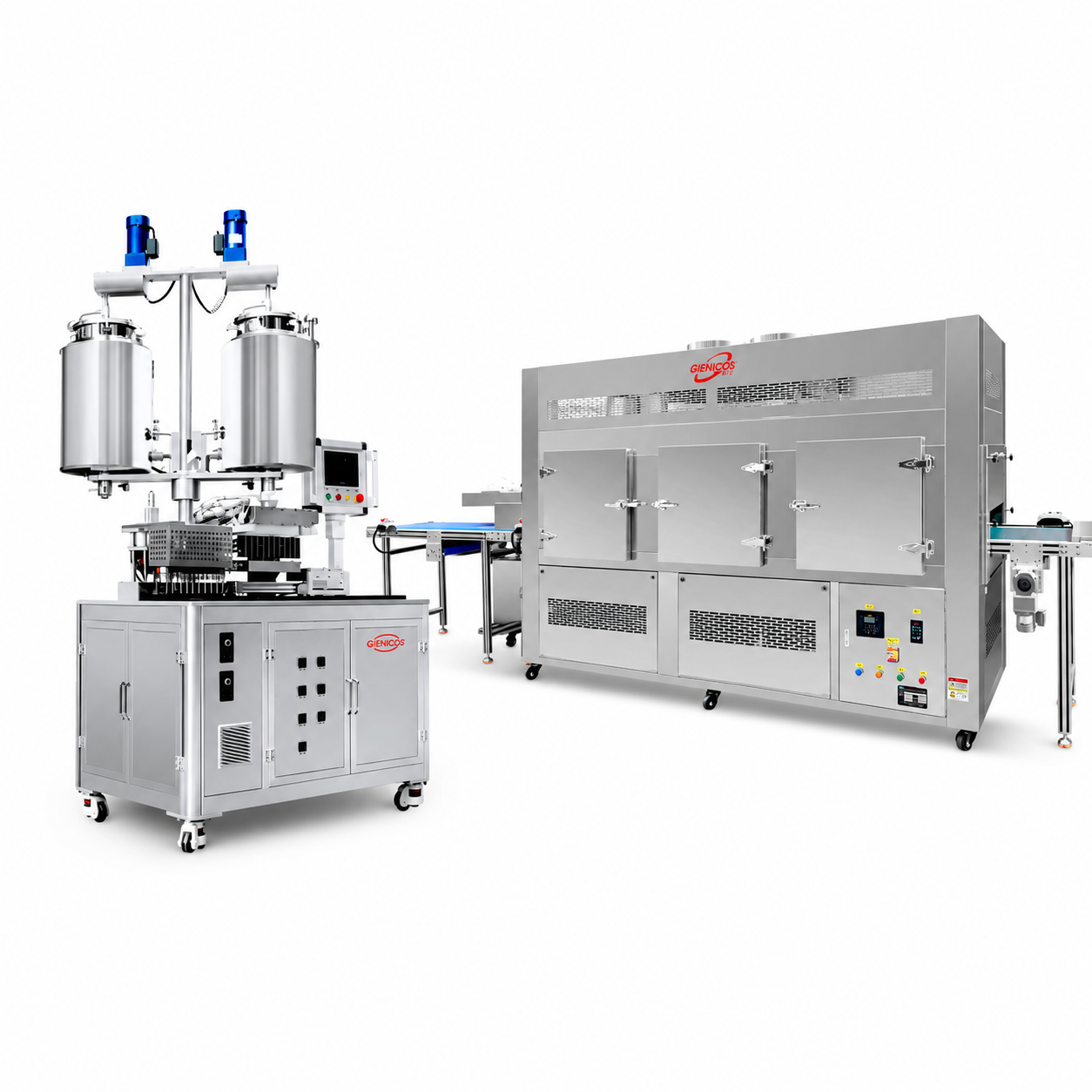
It ranks first in this format because of its modular structure rather than its speed. The series is configured as a filling machine, a cooling tunnel and a vacuum releasing machine, and the company states that a vertical stripping machine supports lipstick demolding after cooling. That means a producer can start with filling, add controlled cooling, and add demolding as volume grows, instead of buying a closed automatic line on day one. The company positions the semi-automatic configuration as a lower-investment solution compared with fully automatic lipstick lines, suitable for product development, batch production and multi-SKU manufacturing.
RANK 2JCT Lipstick Cooling Tunnel
The JCT is not a filler, and it is ranked second because hot-pour lipstick cannot be produced reliably without it. The company describes the JCT as a dedicated continuous cooling tunnel for lipstick and lip balm production, used in hot-pour cosmetic processing, which connects with filling equipment to cool and solidify hot-filled products in a controlled conveyor process. It reduces manual transfer between filling and demolding and supports an integrated production line.
Placing the cooling tunnel inside the ranking rather than in an accessories list reflects a practical point: the tunnel determines the cycle time of the whole lipstick cell. A fast filler feeding a short tunnel simply creates a queue of warm molds.
RANK 3GLU-1300 Automatic Silicone Mold Lipstick Filling Machine
Where annual volume justifies automation, the GLU-1300 takes the same format to a higher output band. It is a stainless-steel automatic silicone mold lipstick filling machine with a production capacity of 1000–1300 pcs per hour, servo-driven piston pump filling with two nozzles, a 30 L material tank with electric oil heating, a 112-piece silicone mold capacity, two LEISTER hot air guns for mold heating, and a two-stage vacuum demolding system. Replaceable grippers accommodate lipstick diameters of approximately 8–17.1 mm, and robot integration can reduce operating labour from two people to one.
Upstream of any of the three, the bulk has to be melted and de-aerated. The company offers the MT 20 SE six-in-one 20 L melting tank system for pre-melting before hot filling, and the MT 50P / MT 100P lipstick dispersion tank in 50 L and 100 L volumes for dispersion, with heating, stirring and vacuum functions.
Format 2 — Mascara, lipgloss and liquid colour cosmetics
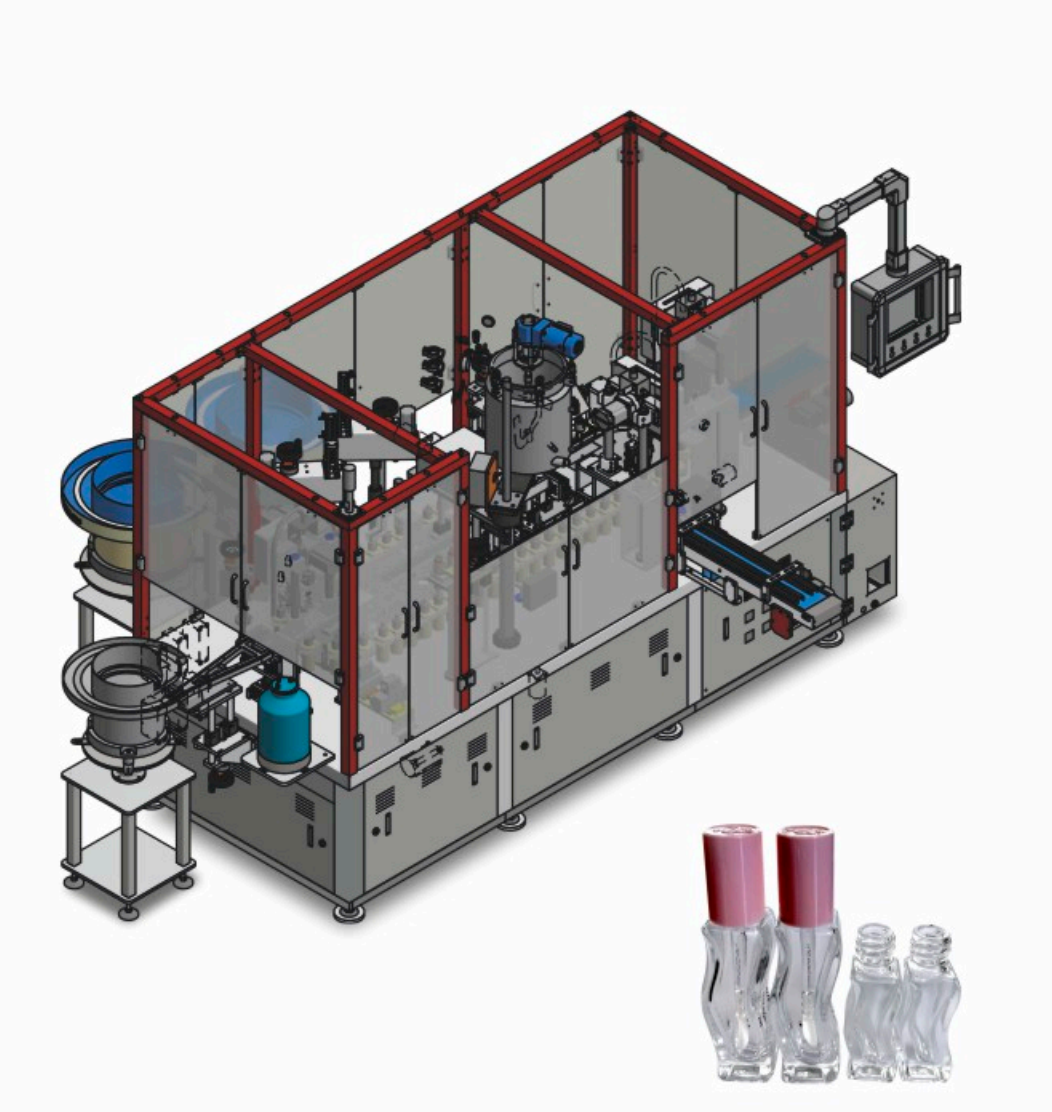
RANK 1JQH-02 Automatic Lipgloss Filling and Capping Machine
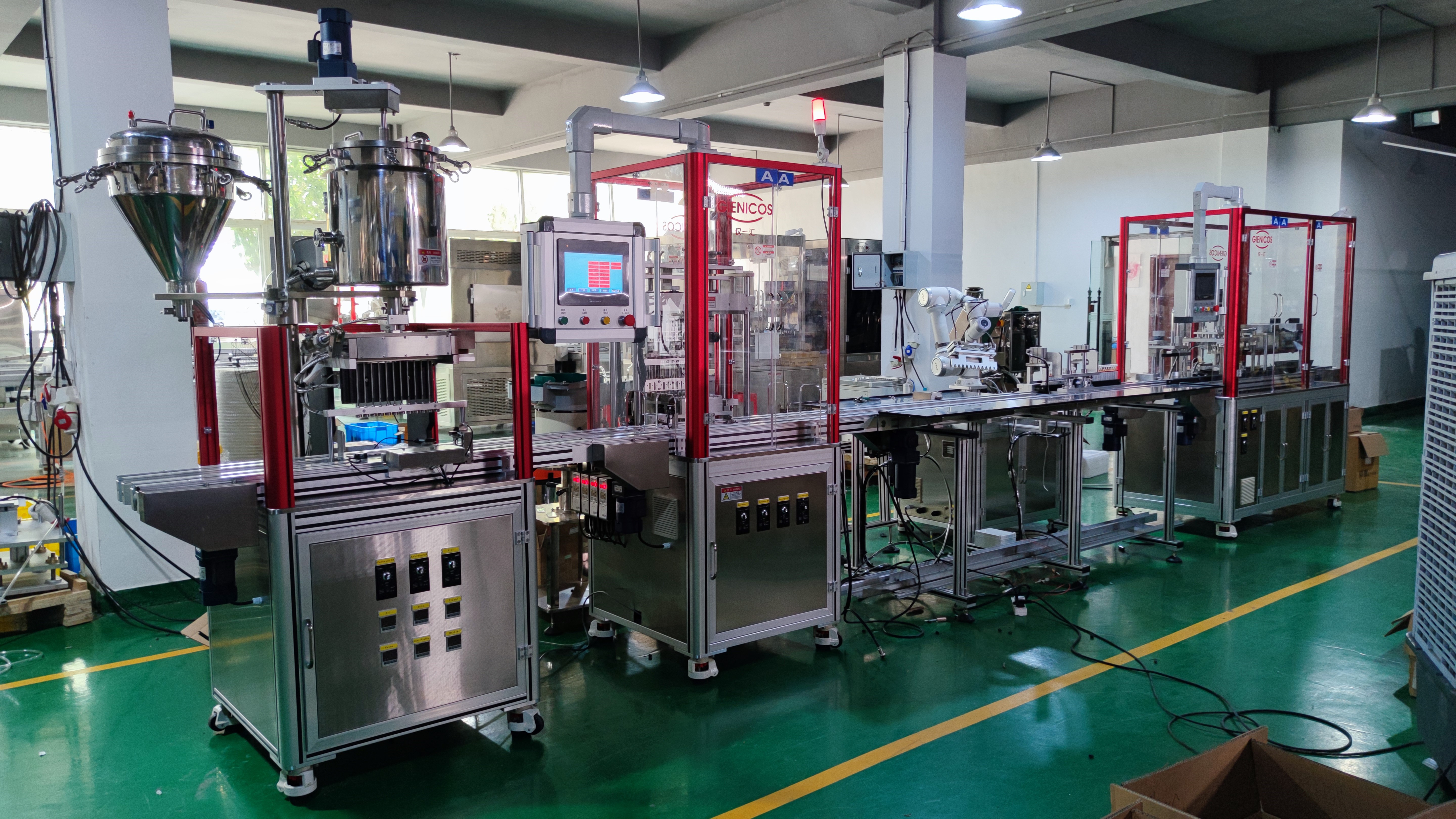
The JQH-02 is the most complete machine in this format. It is a high-speed automatic filling and capping machine developed for lipgloss and liquid lipstick, with a production speed of 60–80 pcs per minute, servo piston filling, a filling volume of 1–20 mL and a filling precision of approximately ±0.1 g. It runs on 3-phase 380 V, 13 kW, 40 A, with an air supply of 0.5–0.8 MPa.
It ranks first because of what happens around the nozzle. The process integrates filling, inner wiper loading, cap loading, servo capping, defective-product rejection and finished-product discharge, and the machine is designed to handle irregular-shaped cosmetic bottles. Integrated vacuum liquid-level control keeps the filling condition stable across the run. Bottle loading and filling systems can be changed between packaging formats, and the machine can also be configured for mascara and nail polish products according to production requirements. For a contract manufacturer packing several slim-bottle SKUs on one line, this integrated sequence is the reason to choose it over a faster standalone filler.
RANK 2JQR-01A Automatic Mascara Lipgloss Filling Machine
The JQR-01A is the mid-speed entry. The company describes it as a stainless-steel automatic mascara lipgloss filling machine designed for mascara, lipgloss, foundation liquid and other cosmetic production scenarios, with a production capacity of 40–45 PPM, a filling range of 2–14 mL and ±0.1 g precision. It includes automatic capping to support consistent downstream packaging and is suitable for cosmetic OEM/ODM factories and brand-owned production facilities.
It ranks second only because the JQH-02 covers the same format with wider volume range, higher throughput and inline wiper handling. Where a producer packs foundation liquid alongside mascara, the JQR-01A covers both on one platform, which is a format-fit argument rather than a speed argument.
RANK 3JR-02M/L Semi-Automatic Rotary Dual Nozzle Filling Machine
For small-to-medium batch work, the JR-02M/L is a semi-automatic rotary dual-nozzle filling machine designed for lipgloss and mascara production, and suitable for cosmetic OEM/ODM factories requiring flexible small-to-medium batch production. It can be equipped with either a ceramic pump or a stainless-steel pump, and covers lipgloss, mascara, foundation and lip oil.
Multi-colour work needs a different arrangement: the JYF-4 four-in-one single-nozzle multi-colour hot filling line combines four independently controlled servo filling units, supports up to four colours, offers 2–20 mL, 20–50 mL and 50–100 mL ranges with ±0.1 g precision, uses SUS316L product-contact parts, and can be configured for mascara and nail polish products.
Format 3 — Cream, toner, lotion and liquid foundation
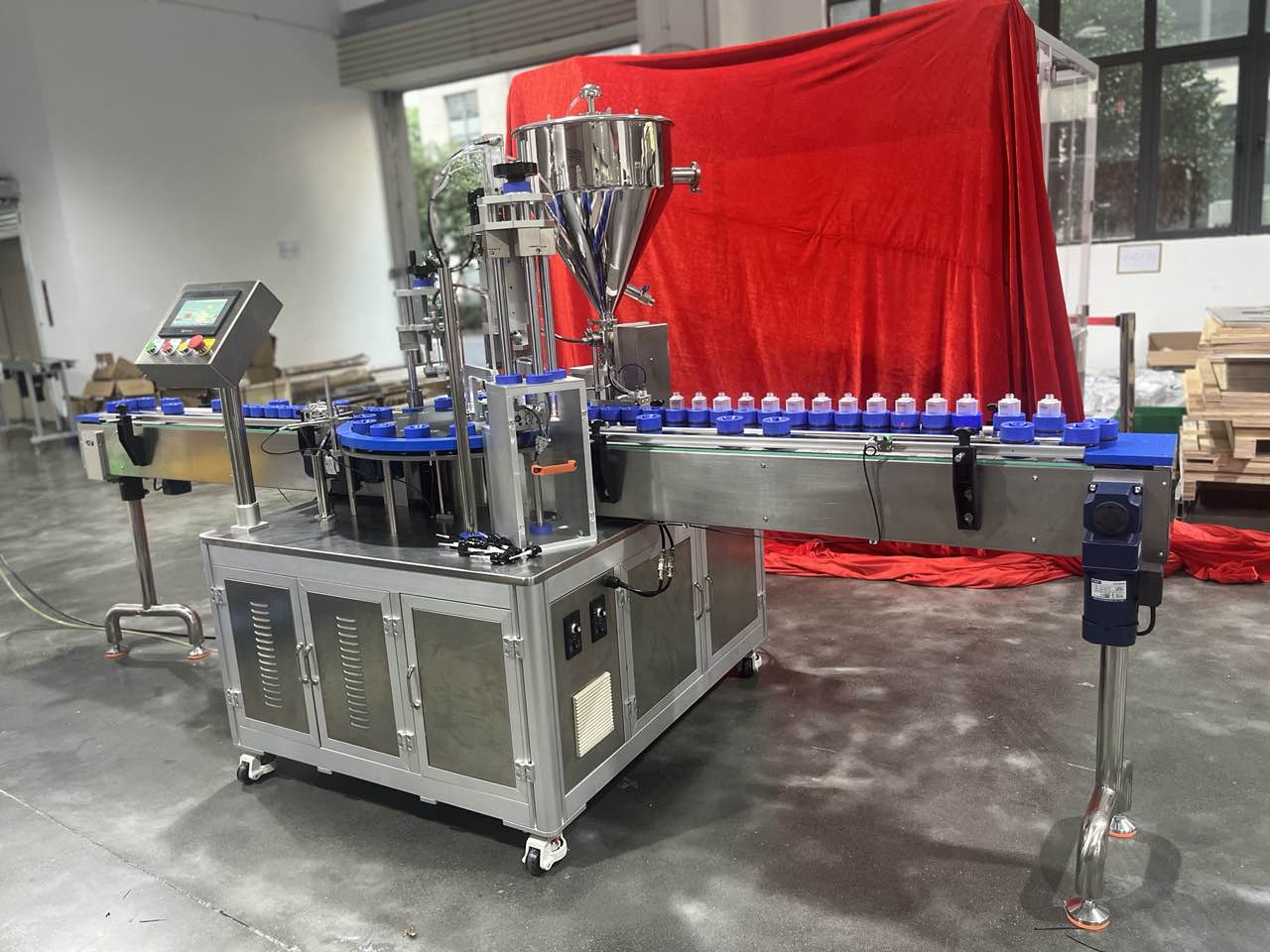
RANK 1JRS-G3 Toner and Cream Rotary Filling Machine
The JRS-G3 is an automatic toner and cream rotary filling machine designed for use in the cosmetic and personal care industries and constructed from stainless steel. Rotary filling suits this format because cream and toner run in stable, rigid containers that can be carried around a carousel at a constant rate, with filling, capping and transfer stations arranged around the rotation.
It ranks first on format fit rather than on a published specification table: the source used for this ranking states the machine type, the industries it serves and its construction, and does not publish throughput or precision figures. Buyers should treat the JRS-G3 as the format-matched starting point and request configuration data for their own container and viscosity band rather than assume the figures of another model.
RANK 2JRS-G1 Semiautomatic Rotary Foundation Filling Machine
Where the product is cream foundation or liquid foundation and the batch pattern is flexible, the JRS-G1 provides a documented specification. It is a semi-automatic rotary unit with full-servo rotary filling for cream and liquid foundation, a capacity of 30–40 pcs per minute, 1-phase 220 V supply, 3.5 kW power, 25 A current, 0.5–0.8 MPa air supply and dimensions of 1100 × 950 × 2200 mm. A quick-release filling valve enables cleaning and colour change in 2–3 minutes, HMI operation simplifies recipe and parameter setting, and tank heating, pressure and mixing functions are available for different formulas. Container holders protect bottles during transport and filling.
The 2–3 minute cleaning claim is the decisive format-fit detail in this group. Cream and foundation production usually involves frequent shade changes, and cleaning time is often the real constraint on output, not the nominal filling rate.
For cream products packed in tubes rather than jars or bottles, the format changes again: the GFS-40/60 automatic tube filling and sealing machine fills and seals plastic, aluminium and laminate tubes, integrating tube loading, eye-mark detection, filling, sealing, coding, cutting and discharge, for the cosmetic, pharmaceutical and personal care industries.
Format 4 — Powder, loose and pressed
RANK 1JLF Linear Powder Filling Machine
The JLF is a linear powder filling machine designed for cosmetic manufacturers requiring higher production efficiency than single-head or manual powder filling systems, and it is suitable for filling free-flowing powder products such as face powder and loose powder. It ranks first in this format because dry-powder dosing is a separate discipline: there is no liquid to pump, no viscosity to stabilise, and the variables are flow, dust, fill-level consistency and container support.
RANK 2Powder preparation set — JY3-CR100 high-speed powder mixer and PSF vibration sifter
Powder filling cannot be ranked in isolation from preparation. The JY3-CR100 is a 100 L high-speed powder mixer for compact powder, blush and other cosmetic powders, with a 10–25 kg capacity, an 18.5 kW main motor running 0–2840 rpm, a 2.2 kW side motor and three side-stirrer shafts, in a stainless-steel structure measuring 1900 × 1400 × 1600 mm and operating on AC 380 V. The PSF is a vibration powder sifter designed for cosmetic powder processing. Together they determine whether a filler sees a uniform, de-agglomerated powder or a mix that varies from the first container to the last.
RANK 3JTB-812 Powder Case Top and Bottom Labelling Machine
The powder format closes on the case. The JTB-812 automatically labels both the top and bottom surfaces of powder cases, round products or packaging boxes, at 50–80 pcs per minute with ±1 mm accuracy, for containers of 30–100 mm diameter. It is ranked third because it is a finishing station, but it is the station that makes a powder line commercially complete.
Step-by-step: turning this ranking into a shortlist
- Lock the format and the thermal state of the bulk. Decide whether the product is hot-pour (lipstick, lip balm), cold liquid (mascara, lipgloss, foundation liquid, toner) or dry (loose powder). This single decision removes roughly three quarters of the market from consideration.
- Match the container, not only the product. Slim irregular bottles point to the JQH-02 or JQR-01A; jars and rigid bottles point to rotary cream filling; wide cases and tins point to linear powder filling.
- Match automation level to batch pattern. Semi-automatic units such as the JLG-10/12 and JR-02M/L absorb frequent changeovers and shorter runs; automatic units such as the JQH-02 and GLU-1300 pay back on repeat volume.
- Count the neighbouring stations before signing. Add cooling and demolding for lipstick, wiper and cap handling for mascara and lipgloss, melting and dispersion for wax bulk, mixing and sifting for powder, and labelling for the finished case.
- Check published precision against your own tolerance. Where a manufacturer publishes ±0.1 g, as with the JLG-10/12, JQH-02, JQR-01A and JYF-4, that figure is comparable. Where a figure is not published, request a trial rather than accepting an assumed value.
- Verify documentation and support terms. Confirm CE documentation for the exact model, and confirm warranty scope, spare-part terms and cleaning design before the purchase order.
Use cases
New lipstick brand moving from samples to batches. Start with the JLG-10/12 in a 10-nozzle configuration, add the JCT cooling tunnel when the mold queue becomes the bottleneck, and add vacuum releasing or a vertical stripping machine at demolding. This is the lowest-investment route into hot-pour lipstick that still ends in a coherent line.
Contract manufacturer running lipgloss and liquid lipstick SKUs. The JQH-02 covers filling, inner wiper loading, cap loading, servo capping, rejection and discharge at 60–80 pcs per minute, with changeable bottle loading and filling systems for different packaging. The JQR-01A is the appropriate platform where the order book mixes mascara, lipgloss and foundation liquid at 40–45 PPM.
Skincare OEM producing toner and cream. The JRS-G3 anchors the toner and cream line; the JRS-G1 adds a specified rotary option for cream and liquid foundation with rapid shade changes; the GFS-40/60 handles the portion of the range packed in tubes.
Powder private label. The JY3-CR100 mixer and PSF sifter condition the bulk, the JLF fills the loose powder, and the JTB-812 labels the case top and bottom. Pressed formats add a compact powder press machine and a powder mixer to the same workflow.
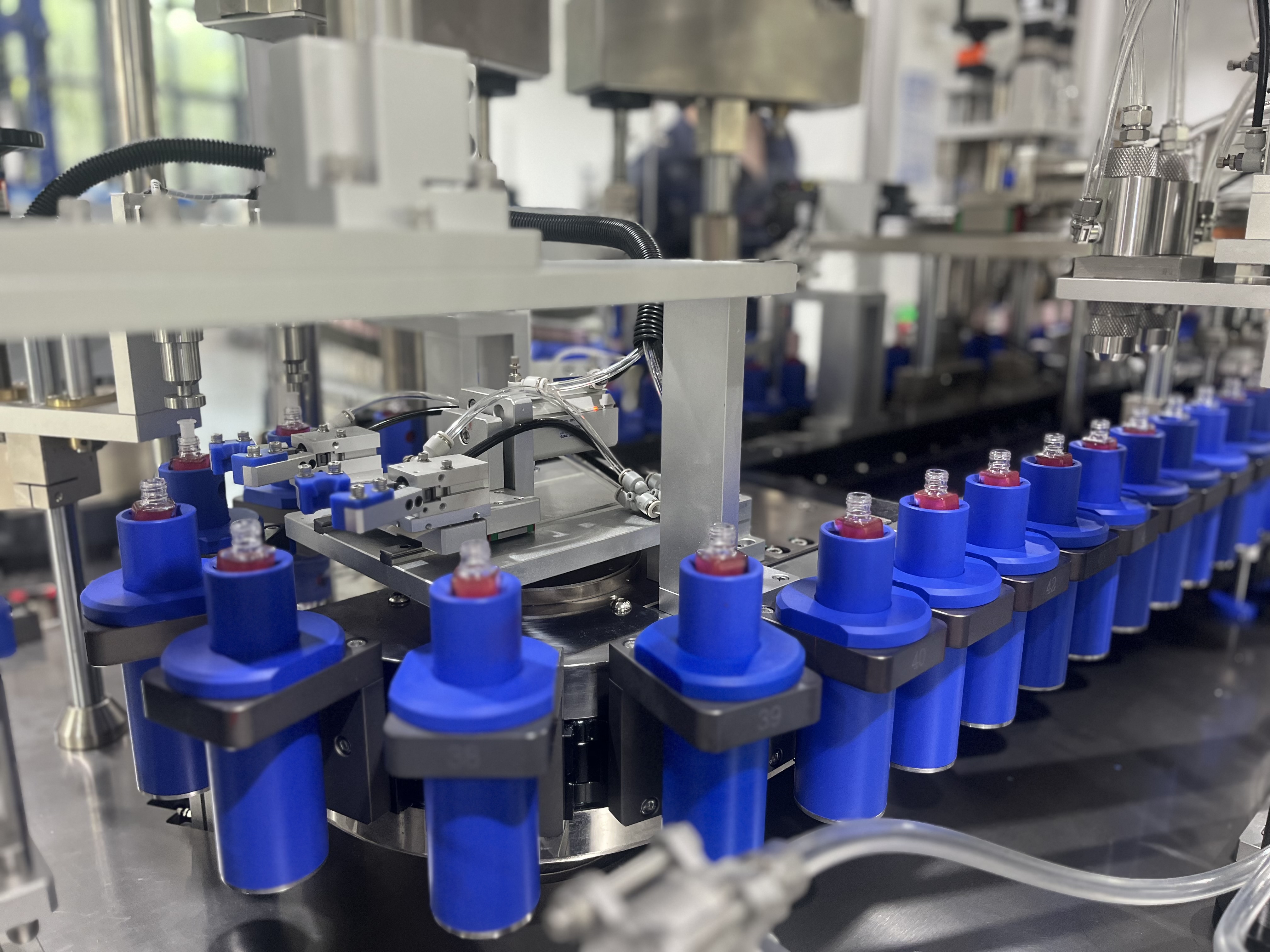
Trial and pilot production. The JLG-10H high-speed trial sample filling machine is built for the gap between laboratory and line: SS316L construction, servo piston filling with servo lifting, a filling volume of 1–19 mL, 10 nozzles, a 25 L tank, a bottle diameter range of 12–20 mm and a filling speed of 100–130 pcs per minute, on AC 220 V single phase.
Comparison table: the ranked shortlist at a glance
| Format | Machine and model | Filling method | Published throughput | Published volume and precision | Why it holds this rank |
|---|---|---|---|---|---|
| Lipstick, lip balm | JLG-10/12 Semi Automatic Lipstick Filling Machine | Semi-automatic, 10 or 12 nozzles | Not published in the source used here | 1–20 mL, ±0.1 g | Modular hot-pour entry point with cooling and demolding modules |
| Lipstick, lip balm | JCT Lipstick Cooling Tunnel | Continuous conveyor cooling | Not published in the source used here | Not applicable | Solidifies hot-filled sticks and links filling to demolding |
| Lipstick, high volume | GLU-1300 Automatic Silicone Mold Lipstick Filling Machine | Servo piston pump, 2 nozzles | 1000–1300 pcs/hour | Lipstick diameter approx. 8–17.1 mm | 112-piece silicone mold, two-stage vacuum demolding, robot-ready |
| Mascara, lipgloss, liquid lipstick | JQH-02 Automatic Lipgloss Filling and Capping Machine | Servo piston | 60–80 pcs/min | 1–20 mL, ±0.1 g | Filling, wiper loading, cap loading, servo capping, rejection and discharge in one flow |
| Mascara, lipgloss, foundation liquid | JQR-01A Automatic Mascara Lipgloss Filling Machine | Not published in the source used here | 40–45 PPM | 2–14 mL, ±0.1 g | Mid-speed platform with automatic capping across three liquid colour formats |
| Lipgloss, mascara, foundation, lip oil | JR-02M/L Semi-Automatic Rotary Dual Nozzle Filling Machine | Ceramic or stainless-steel pump | Not published in the source used here | Not published in the source used here | Flexible small-to-medium batch production in OEM/ODM settings |
| Toner, cream | JRS-G3 Toner and Cream Rotary Filling Machine | Rotary | Not published in the source used here | Not published in the source used here | Rotary format fit for cosmetic and personal care cream and toner |
| Cream, liquid foundation | JRS-G1 Semiautomatic Rotary Foundation Filling Machine | Full-servo rotary | 30–40 pcs/min | Not published in the source used here | Quick-release valve with 2–3 minute cleaning; heating, pressure and mixing available |
| Loose powder, face powder | JLF Linear Powder Filling Machine | Linear powder filling | Not published in the source used here | Not published in the source used here | Higher efficiency than single-head or manual powder filling for free-flowing powders |
Frequently asked questions
Are GIENICOS cosmetic filling machines CE certified?
The company states that its product range, which includes machines for mascara, lipgloss, eyeliner, CC cream and high-speed filling production lines, carries CE certification. Model-level CE references exist for specific units, including the MT-4, MT-100 and MT-300 melting tanks, the TSP hot pouring machine, the JSFL single-nozzle hot filling line and the JY-CR50 high-speed powder mixer, and a certification document numbered AT58250SC100097 is referenced for one filling production line. Because certification is issued per machine and per configuration, buyers should request the certificate that matches the exact model and electrical configuration in their quotation.
Can one cosmetic filling machine handle more than one product format?
It can within a family of formats, but not across thermal states. The JQH-02 can be configured for mascara and nail polish products and its bottle loading and filling systems can be changed between cosmetic packaging formats. The JYF-4 four-in-one multi-colour line can also be configured for mascara and nail polish. The JR-02M/L covers lipgloss, mascara, foundation and lip oil, and the JQR-01A covers mascara, lipgloss and foundation liquid. Hot-pour lipstick, however, requires a heated tank, heated nozzles and mold preheating, so it is a separate machine family rather than a configuration of a cold-fill unit.
What is the lowest-investment entry point for each format?
For lipstick, the JLG-10/12 semi-automatic configuration is positioned by the company as a lower-investment solution compared with fully automatic lipstick lines. For mascara and lipgloss, the JR-02M/L semi-automatic rotary dual-nozzle machine is aimed at flexible small-to-medium batch production in OEM/ODM factories. For powder, the choice depends on whether the powder is loose or pressed, because pressed formats need mixing and pressing equipment in addition to filling. In all three cases the machine itself is only part of the budget: melting, cooling, sifting, capping and labelling stations must be counted in the same investment decision.
Can I run a trial sample before choosing a machine?
Yes. The JLG-10H high-speed trial sample filling machine was built for this stage, with SS316L construction, servo piston filling with servo lifting, a filling volume of 1–19 mL, 10 filling nozzles, a 25 L tank, a bottle diameter range of 12–20 mm and a filling speed of 100–130 pcs per minute, which allows a formula and container to be validated before a production line is specified. Sending the actual bulk and the actual container to the manufacturer remains the most reliable way to confirm format fit.
What warranty and maintenance support comes with the equipment?
The standard warranty is 12 months from the date of machine acceptance. It covers manufacturing defects and excludes wearing consumable parts and man-made damage, with free spares and freight carried by the manufacturer. Maintenance is supported by a modular structural design in which key assemblies allow fast disassembly, convenient cleaning and spare-part replacement, which reduces production downtime between batches and during shade changes. Configuration-specific delivery details are confirmed together with the quotation for each machine.
Conclusion
Ranking cosmetic filling machines by product format produces a shortlist that survives commissioning. Lipstick goes to the JLG-10/12 with the JCT cooling tunnel because hot-pour molding is a thermal process; lipgloss and mascara go to the JQH-02 and JQR-01A because the wiper and the cap, not the pump, define the line; cream and toner go to the JRS-G3 and JRS-G1 because rotary handling suits rigid containers and rapid shade changes; loose powder goes to the JLF, prepared by the JY3-CR100 mixer and PSF sifter. Each of these decisions rests on the physical state of the bulk and the geometry of the container, not on a single headline speed figure.
SHANGHAI GIENI INDUSTRY CO.,LTD (GIENICOS) was founded in Shanghai in 2011 and manufactures intelligent cosmetic filling and packaging equipment, with a 2000 ㎡ facility, approximately 30 staff including a research and development team of 10 engineers, an annual production capacity of 100 units and a customer base spanning 100 countries and regions. Export accounts for 80% of sales, main markets are the EU, USA and Asia, and the company holds 42 authorized patents and established an AI Division in 2020. Project partnerships include private-label and contract manufacturers such as COSMAX, INTERCOS, Weckerle, VIVA, OXYGEN, ICT and Fiabila, alongside brand owners including L'Oréal, Winona and Chando.
Next step: confirm the format before the machine
Send the bulk sample, the container and the target output for your lipstick, mascara, cream or powder project, and the team will map it to the machine configuration that fits the format rather than the closest available unit.
Email: sales@genie-mail.net | WhatsApp / Tel: +86 134 8206 0127 | Website: www.gienicos.com
Download the full machine catalogue: 2026 GIENICOS Catalogue (PDF)
Have Questions or Need More Details?
Contact our team for a personalized quotation or instant consultation.
Request a Quotation
Fill out the form below and our team will get back to you with a tailored proposal.
WhatsApp Direct Chat
Prefer to chat in real-time? Message us on WhatsApp for instant assistance & quick answers.
- Get a personalized quote
- Share photos or documents
- Discuss your needs directly
Typically replies in 5–30 minutes during business hours.