Semi-Automatic vs. Automatic Mascara & Lipgloss Filling Machine: A Head-to-Head Buyer Decision
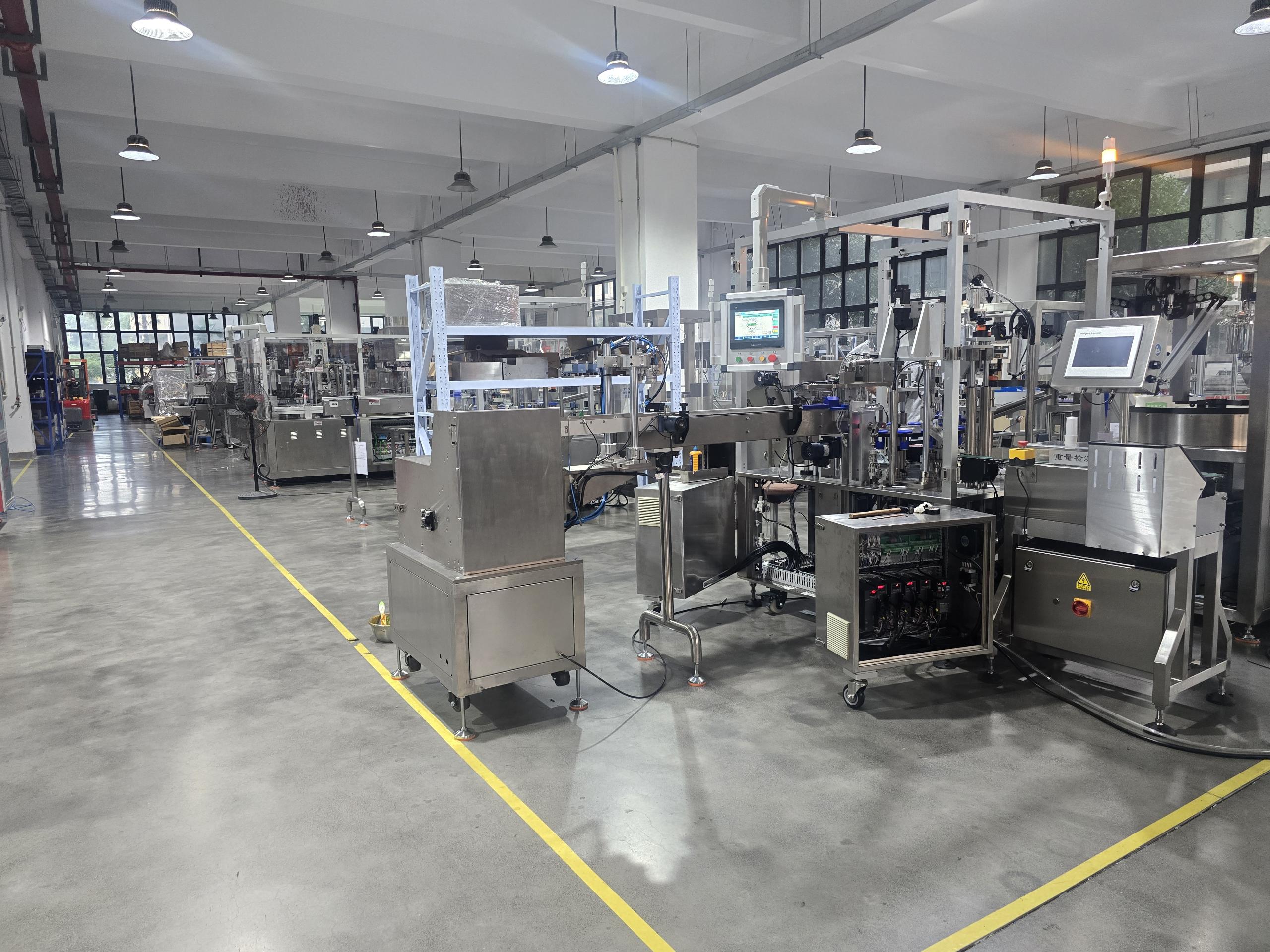
The GIENICOS manufacturing site in Jiading, Shanghai, where semi-automatic and automatic cosmetic filling equipment is assembled and checked before shipment.
The Decision in One Paragraph
If you run a narrow SKU set with sustained volume, and you want filling, wiper insertion, brush-cap feeding and capping handled inside one machine cycle, an automatic mascara and lipgloss filling machine is the correct purchase. GIENICOS builds two automatic units for that pattern: the JQR-01A rotary automatic mascara filling and capping machine at 40–45 PPM, and the JQH-02 high-speed automatic lipgloss filling and capping machine at 60–80 pcs/min.
If you run many SKUs with frequent changeovers, small-to-mid batches, or you are still validating formulations and cap formats, the semi-automatic rotary machines are the better fit: the JR-01M/L single-nozzle unit and the JR-02M/L dual-nozzle unit, both running 30–40 pcs/min at a published filling accuracy of ±0.1 g, on a single-phase 220 V supply, with a fraction of the control complexity of an integrated line.
The rest of this article is the decision framework behind that paragraph: the variables that actually separate the two options, the step sequence to work through before you sign, and the capping-integration question that quietly decides both your labour count and your line cost.
Problem Definition: Why This Decision Gets Made Badly
Both machine types are quoted as “mascara and lipgloss filling machines,” and both often appear on the same quotation sheet. The distinction that matters is not the machine category — it is the production pattern the machine will be asked to serve for the next several years.
Three questions are commonly skipped, and each of them is expensive to correct after installation.
- Changeover frequency. The semi-automatic JR-01M/L covers a 2–14 mL range or a 10–50 mL range on the same platform by changing spare parts, and offers a ceramic pump or SUS pump option. An automatic machine still accepts a broad container envelope — the JQR-01A takes containers 10–125 mm in diameter and 40–90 mm long excluding the cap — but brush geometry, wiper inserts and cap format each become tooling items.
- Who owns capping. A semi-automatic filling machine does not cap. Filling at 30–40 pcs/min and capping at 30–40 pcs/min on a JR-01X semi-automatic rotary capping machine are two stations and two operator decisions. On the JQR-01A and JQH-02, filling and capping sit inside the same machine cycle, which is why those machines are quoted as complete machines rather than filling heads.
- Labour and clean-room reality. GIENICOS specifies its equipment for cosmetic GMP clean-room workshops, where every additional manual handling step is both a contamination risk and a permanent headcount line in the operating budget. This is the most common reason a factory that “only” needed 40 pcs/min ends up buying automatic.
The recurring mistake is comparing headline speed as if it were output. It is not. Output is the speed of the slowest linked step in your line — and in most mascara and lipgloss projects, that step is capping, wiper insertion or brush-cap feeding, not filling.
Industry Background: What the Category Is Doing in 2026
The direction of the market is documented. According to Future Market Insights, the global cosmetic filling machines market was valued at USD 476.80 million in 2025 and is projected to reach USD 718.63 million by 2036. Fortune Business Insights reports that Asia Pacific dominated the filling machine market with a 33.08% share in 2025. FMI further projects that automatic filling machines will hold a 41.2% share of the cosmetic filling technology market in 2026.
Read together, those three figures describe a market that is expanding while shifting its centre of gravity toward automatic technology — without eliminating semi-automatic equipment, which remains the on-ramp for most new cosmetic production cells.
A note on sub-segment forecasts. Published estimates for adjacent categories diverge sharply because research houses define the segment differently. One estimate puts the automatic lipstick filling machines market at USD 1.2 billion by 2033, growing at a 5.8% CAGR from 2025; a narrower definition of the same category produces a figure an order of magnitude smaller. Treat sub-segment numbers as directional signals about where capital is flowing, not as a basis for sizing your own investment.
For a buyer at the decision stage, the practical implication is this: automation is becoming the reference standard of the category, which changes what suppliers quote, how spare parts and service ecosystems are structured, and what a machine is worth at resale or upgrade time. That makes supplier relationship continuity a technical consideration, not a soft one.
Detailed Solution: The Two Machine Families, Head to Head
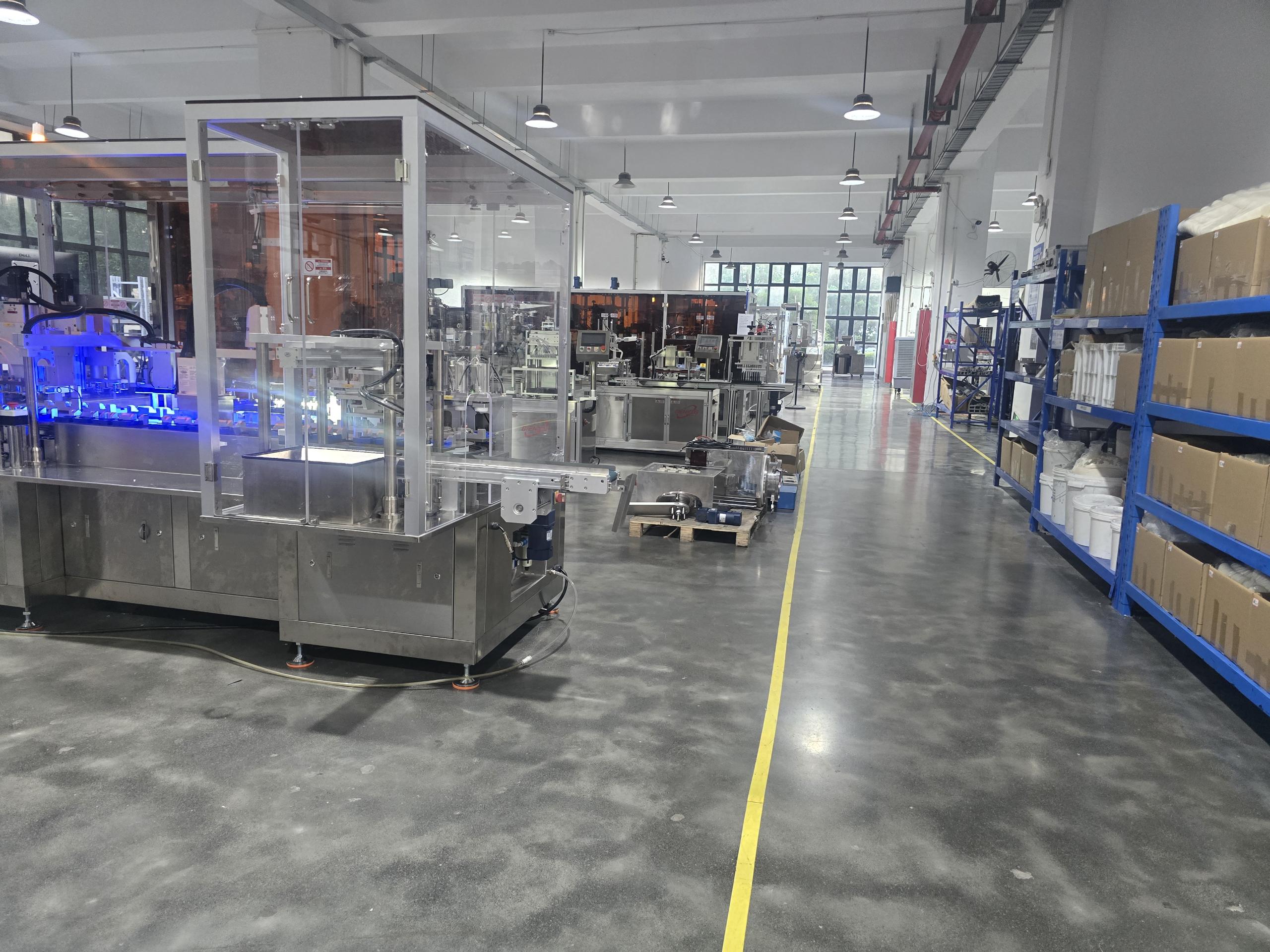
On the GIENICOS production floor, machine configuration is confirmed against container format, output target and capping method before build.
Semi-Automatic: JR-01M/L and JR-02M/L
GIENICOS builds its semi-automatic mascara and lipgloss filling family in two configurations.
JR-01M/L — Semi Automatic Mascara Lipgloss Filling Machine (single nozzle). Rotary filling structure with one nozzle; pump option of ceramic pump or SUS pump; filling range of 2–14 mL or 10–50 mL by changing spare parts; production capacity of 30–40 pcs/min with lipgloss as the reference product; AC220V single phase 50/60 Hz; 3.8 kW; air supply 0.6–0.8 MPa at ≥800 L/min; machine size 1750 × 1100 × 2200 mm. GIENICOS specifies it for lipgloss, mascara, foundation, lip oil and other liquid colour cosmetics.
JR-02M/L — Semi Automatic Mascara Lipgloss Filling Machine (dual nozzle). Rotary filling structure with two nozzles; filling volume 1–20 mL; filling accuracy ±0.1 g; production capacity 30–40 pcs/min; semi-automatic operation type; Euro-style build; specified for lipgloss and mascara.
The value of this configuration is elasticity rather than throughput. A rotary machine with swappable spare parts moves across a wide fill-volume spread without a second machine, and because there is no integrated capping cycle, format changeover stays with the operator instead of depending on a servo program and dedicated tooling.
For high-viscosity mascara bulks at lower volume, GIENICOS also builds the JMF economic vertical dual nozzle filling machine: dual 20 L tanks, 22–28 pcs/min with one operator, AC220V single phase 50/60 Hz, 4 kW, air supply 0.6–0.8 MPa at ≥300 L/min, machine size 810 × 570 × 1906 mm, and a stated cleaning time of approximately 30 minutes, specified for high-viscosity cosmetic materials. That published cleaning time is worth noting: it is one of the few changeover numbers a buyer can actually plan a shift around.
Automatic: JQR-01A and JQH-02
JQR-01A — Automatic Mascara Lipgloss Filling Machine (rotary filling and capping). Production capacity 40–45 PPM; filling range 2–14 mL; filling precision ±0.1 g; container diameter range 10–125 mm; container length 40–90 mm excluding cap; 380 V / 220 V; 7 kW; air pressure 0.6–0.8 MPa; machine size 2350 × 2150 × 1900 mm; machine weight 900 kg. Application coverage: mascara, lipgloss and foundation liquid.
JQH-02 — Automatic Lipgloss Filling and Capping Machine (high speed). Filling volume 1–20 mL; servo piston filling; production speed 60–80 pcs/min; filling precision ±0.1 g; 3-phase 380 V; 13 kW; 40 A; air pressure 0.5–0.8 MPa.
Notice what changes between the two automatic units. The JQR-01A is the slower machine but accepts a far wider container envelope, from 10 mm to 125 mm in diameter. The JQH-02 roughly doubles throughput inside a tighter 1–20 mL fill band. Choosing between them is a container-and-volume question, not a quality question — both are published at ±0.1 g.
Full-Line Automatic: the JMG Lipgloss and Mascara Line
JMG — Lipgloss Mascara Filling Machine (linear high-speed line). Mid-speed 60–72 pcs/min; high-speed 80–100 pcs/min. Servo piston filling, 10–12 pcs per cycle, with static or fall-while-filling options. Return-suction anti-drip nozzle to reduce bottle-mouth pollution; no-bottle no-fill detection; servo torque capping with adjustable torque and speed for cap protection; customizable feeding tank with heating, pressurization or lifting options; robot-aided automation for bottle loading, brush-cap feeding and inner wiper insertion. SUS316L wetted parts, GMP-compliant, easy disassembly and cleaning, with global-brand key components specified for stable long-run performance. Suitable for mascara, lipgloss, lip oil and eyeliner.
Inner wiper insertion and brush-cap feeding are the specific functions that separate a mascara line from a liquid filling machine. Mascara is not a bottle of liquid with a cap on top: it is a filled tube, a wiper and a brush that must assemble in the correct order without contaminating the bulk. That sequence — not raw filling speed — is where an automatic line earns its cost.
Why Capping Integration Changes the Math
JR-01X — Semi Automatic Rotary Capping Machine. Servo capping for round and square bottles; 30–40 pcs/min; adjustable capping torque; single-phase 220 V; 1.5 kW; 7 A; 0.5–0.8 MPa. GIENICOS specifies it for lipgloss, liquid lipstick, mascara and concealer packaging.
Pairing the JR-01M/L or JR-02M/L (30–40 pcs/min filling) with the JR-01X (30–40 pcs/min capping) produces a balanced two-station cell: no step is faster than the other, so nothing queues. What you gain is operator control — every cap passes in front of a person, and torque adjustment stays in hand. What you pay for is a second station, a second set of change parts, and a second operating decision in every cycle.
An automatic machine removes that balancing problem by definition. On the JQR-01A and JQH-02, capping runs inside the same machine as filling, so the published 40–45 PPM and 60–80 pcs/min are machine figures rather than filling-head figures. On the JMG line, servo torque capping with adjustable torque and speed protects caps at 60–100 pcs/min without an operator holding a torque setting.
The practical rule for the decision stage: if you cannot continuously staff both a filling station and a capping station inside a GMP clean room, integrated capping — not filler speed — is the feature that decides the purchase.
Long-Horizon Fit: The Part of the Decision That Outlasts the Purchase
SHANGHAI GIENI INDUSTRY CO., LTD. (GIENICOS) was founded in Shanghai in 2011 and manufactures intelligent cosmetic filling and packaging equipment as well as robotic loading and unloading system solutions. The company holds 42 authorised patents covering invention patents, utility model patents and software copyrights, and established its AI division in 2020.
Two facts in that profile matter to a semi-versus-automatic decision. First, GIENICOS states that it maintains project partnerships with private-label and contract manufacturers including COSMAX, INTERCOS, Weckerle, VIVA, OXYGEN, ICT and Fiabila, as well as brand owners including L’Oréal, Winona and Chando — companies that typically scale production in stages. Second, the company states that customised development for key-account clients, rather than standard mass-produced universal machines, is its main direction, and that all its machines are designed on a modular concept.
In practice, that combination supports a staged purchase: a semi-automatic cell today that shares feeding, cleaning and service logic with the automatic line added later. When two machines are bought from the same modular family, the second purchase is an extension of an existing relationship rather than a new supplier evaluation — which is the difference between a machine choice and a supply-ecosystem choice.
Step-by-Step Breakdown: An Eight-Step Buyer Sequence
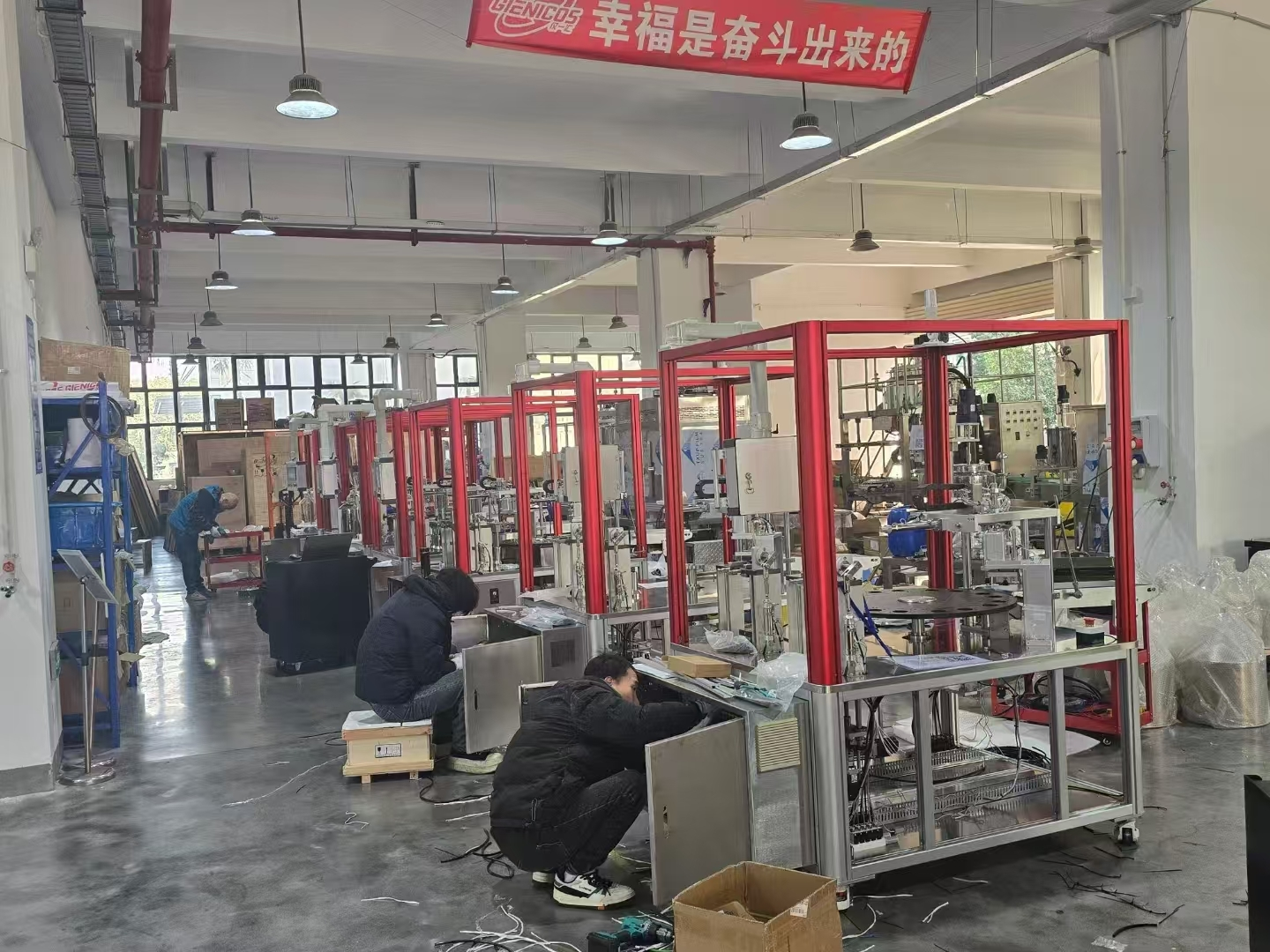
GIENICOS produces cosmetic filling and packaging equipment for colour cosmetics and skincare, including configurations for GMP clean-room workshops.
Work through these steps in order. Each one narrows the option set before the next question is asked.
- Step 1 — Count SKUs and changeovers per week. If your weekly schedule contains many lipgloss and mascara variants at low volume each, the semi-automatic family with swappable spare parts covers more of that spread per machine. If a small number of SKUs run continuously, an automatic machine's fixed configuration is an advantage rather than a constraint.
- Step 2 — Convert demand into pcs/min, then keep the number honest. The semi-automatic machines publish 30–40 pcs/min. The JQR-01A publishes 40–45 PPM; the JQH-02 publishes 60–80 pcs/min; the JMG line publishes 60–72 pcs/min mid-speed and 80–100 pcs/min high-speed. If your real requirement is 35 pcs/min, the semi-automatic band already covers it.
- Step 3 — Decide whether capping is integrated. A separate JR-01X runs at 30–40 pcs/min with adjustable servo capping torque, matching the semi-automatic filling band. If you need capping inside the same cycle, move to the JQR-01A, JQH-02 or JMG.
- Step 4 — Check container geometry. The JQR-01A accepts container diameters of 10–125 mm and container lengths of 40–90 mm excluding the cap. Confirm your tube, its cap and the brush assembly against that envelope before comparing anything else.
- Step 5 — Check utilities and floor space. The JR-01M/L runs on AC220V single phase, 3.8 kW, with air at ≥800 L/min, in a 1750 × 1100 × 2200 mm footprint. The JQR-01A requires 380 V/220 V at 7 kW and occupies 2350 × 2150 × 1900 mm at 900 kg. The JQH-02 requires 3-phase 380 V at 13 kW and 40 A. Utility capacity is often the real constraint on automatic upgrades.
- Step 6 — Check material contact and cleaning. GIENICOS applies SUS316L stainless steel to wetted parts that contact cosmetic bulk, where many competitors use SUS304, and specifies global-brand key components for long-run stability. The company also states that key assemblies on its machines support fast disassembly, convenient cleaning and spare-part replacement to minimise production downtime — a design characteristic that matters most in exactly the frequent-changeover scenario where semi-automatic equipment is chosen.
- Step 7 — Confirm commercial terms and the validation route. GIENICOS states a minimum order quantity of 1 unit, delivery terms of FOB, CNF, CIF or DDP, payment on T/T at 40%/60%, and acceptance criteria of FAT on site or video inspection before shipment. The standard warranty is 12 months from the date of machine acceptance, covering manufacturing defects and excluding wearable consumable parts and man-made damage, with free spares and freight carried by GIENICOS.
- Step 8 — Map the growth path before you sign, not after. Decide now whether the semi-automatic cell is a stepping stone to an automatic line or a permanent fit. Stating that openly at the specification stage is what allows feeding logic, cleaning routines and service access to stay compatible across both stages.
Use Cases: Five Production Profiles and the Machine That Fits
Profile A — Private-label factory with a wide lipgloss and mascara catalogue, batches in the low thousands. Flexible, frequent-changeover production with formula variation is the scenario GIENICOS lists among the conditions its equipment is designed for. The JR-02M/L dual-nozzle semi-automatic machine (1–20 mL, ±0.1 g, 30–40 pcs/min) with a JR-01X capper covers the fill range and keeps tooling change with the operator.
Profile B — Brand-owned production base with one or two hero mascara SKUs running year-round. Stable volume and a fixed container favour an integrated cycle. The JQH-02 runs 60–80 pcs/min with servo piston filling and capping in the same machine; the JQR-01A at 40–45 PPM is the alternative when container sizes vary across the range.
Profile C — Contract manufacturer scaling into high-volume mascara with brush assembly. This is where the JMG line applies: robot-aided bottle loading, brush-cap feeding and inner wiper insertion, return-suction anti-drip nozzles, no-bottle no-fill detection and servo torque capping, with SUS316L wetted parts and GMP-compliant construction. A filling-only machine cannot substitute for wiper and brush-cap handling at this stage.
Profile D — Formula development and pilot production. Small volumes that still need controlled filling suit the semi-automatic platform with a ceramic or SUS pump option. Where the pilot cell also has to produce trial samples, the JLG-10H high-speed trial sample filling machine offers 10 nozzles, 1–19 mL filling volume, 100–130 pcs/min, a 25 L tank, SS316L product-contact parts, AC220V single phase, and servo piston filling with servo lifting, for bottle diameters of 12–20 mm.
Profile E — High-viscosity mascara bulk at low volume with frequent cleaning. The JMF vertical dual nozzle machine was specified for high-viscosity cosmetic materials, with dual 20 L tanks, 22–28 pcs/min with one operator and a stated cleaning time of approximately 30 minutes — a configuration that trades throughput for viscosity handling and cleaning speed.
Comparison Table: Published Specifications Side by Side
| Decision dimension | Semi-automatic (JR-01M/L, JR-02M/L) | Automatic (JQR-01A, JQH-02) |
|---|---|---|
| Filling structure | Rotary; single nozzle (JR-01M/L) or dual nozzle (JR-02M/L) | Rotary filling and capping (JQR-01A); servo piston filling and capping (JQH-02) |
| Production capacity | 30–40 pcs/min | 40–45 PPM (JQR-01A); 60–80 pcs/min (JQH-02) |
| Filling range | 2–14 mL or 10–50 mL by changing spare parts (JR-01M/L); 1–20 mL (JR-02M/L) | 2–14 mL (JQR-01A); 1–20 mL (JQH-02) |
| Filling accuracy | ±0.1 g (JR-02M/L) | ±0.1 g (JQR-01A and JQH-02) |
| Capping | Separate station: JR-01X semi-automatic rotary capping machine, 30–40 pcs/min, adjustable servo torque | Integrated in the filling machine cycle |
| Container envelope | Not stated in the published specification | Diameter 10–125 mm; length 40–90 mm excluding cap (JQR-01A) |
| Voltage and power | AC220V, 1 phase, 50/60 Hz, 3.8 kW (JR-01M/L) | 380 V / 220 V, 7 kW (JQR-01A); 3-phase 380 V, 13 kW, 40 A (JQH-02) |
| Air supply | 0.6–0.8 MPa, ≥800 L/min (JR-01M/L) | 0.6–0.8 MPa (JQR-01A); 0.5–0.8 MPa (JQH-02) |
| Footprint and weight | 1750 × 1100 × 2200 mm (JR-01M/L) | 2350 × 2150 × 1900 mm, 900 kg (JQR-01A) |
| Stated application | Lipgloss, mascara, foundation, lip oil, other liquid colour cosmetics (JR-01M/L); lipgloss, mascara (JR-02M/L) | Mascara, lipgloss, foundation liquid (JQR-01A) |
All values above are published specifications from the GIENICOS product data for the named models. Where a value is not published for a model, the table states so rather than estimating.
FAQ
Do the semi-automatic and automatic mascara and lipgloss filling machines meet EU compliance requirements?
GIENICOS states that its product range, including machines for mascara, lipgloss, eyeliner and CC cream as well as high-speed filling production lines, carries CE certification. As an example of the standards applied within the wider equipment portfolio, the JY-CR50 and JY-CR200 High Speed Powder Mixers meet the requirements of EN 60204-1:2018 and EN ISO 12100:2010. For trade and customs classification, cosmetic filling machines fall under HS Code 8422.30, with 8422.30.91 covering machinery for opening, filling and closing containers. Because the applicable declaration depends on the exact configuration quoted and the destination market, buyers should request the certificate and declaration for their specific machine rather than relying on category-level statements.
Can one machine run both mascara and lipgloss, and how much customisation is available?
Yes. The JR-01M/L is specified for lipgloss, mascara, foundation, lip oil and other liquid colour cosmetics, with a filling range of 2–14 mL or 10–50 mL by changing spare parts and a choice of ceramic or SUS pump. The JR-02M/L covers 1–20 mL of lipgloss and mascara with dual nozzles. On customisation, GIENICOS states that customised development for key-account clients is a core direction: products are iterated and upgraded according to customers’ production requirements, formula features and workshop conditions, and all machines are designed on a modular concept that is flexible and easy to operate. Standard mass-produced universal machines are explicitly not the company’s main direction. Where a machine’s published filling range does not match your container, the change is a spare-part and tooling question, not a new-machine question.
What drives the price difference between a semi-automatic and an automatic machine?
Three things. First, automation depth: adding servo capping and in-cycle handling shows up in power and footprint — 3.8 kW on single-phase 220 V for the JR-01M/L against 7 kW for the JQR-01A and 13 kW at 40 A for the JQH-02. Second, component grade: GIENICOS applies SUS316L stainless steel to wetted parts that contact cosmetic bulk, where many competitors use SUS304, and sources critical components from suppliers such as Mitsubishi and Schneider, where competitors commonly select domestic local brands; on that basis GIENICOS positions its equipment roughly 10–20% higher in cost than the Guangdong competitor set it is compared against, with the difference applied to filling tolerance of ±0.1–0.2 g under long-run production, product yield and unplanned downtime. Third, entry terms: the minimum order quantity is 1 unit, so the step from a semi-automatic cell to an automatic machine is a configuration decision rather than a volume threshold.
Can we validate the machine with our own formulation before committing?
The stated acceptance criteria are FAT on site or video inspection before shipment, with a minimum order quantity of 1 unit, so validation is normally arranged around the quoted configuration rather than a general sample programme. Mascara and lipgloss bulks vary widely in viscosity and volatility, which is why the specification step should confirm the nozzle type and the pump option — ceramic or SUS on the JR-01M/L — against your actual bulk. Where a pilot cell also needs to produce trial samples, the JLG-10H high-speed trial sample filling machine provides 10 nozzles, a 1–19 mL filling volume, 100–130 pcs/min, a 25 L tank, SS316L product-contact parts and servo piston filling with servo lifting.
What are the delivery terms and payment schedule, and how is delivery timing handled?
Delivery terms are FOB, CNF, CIF or DDP, with payment on T/T at 40%/60%, and acceptance by FAT on site or video inspection before shipment. Delivery timing is confirmed with the quotation rather than published as a fixed figure, because it depends on the configuration: whether capping is integrated, the container format and change parts, whether the feeding tank includes heating, pressurization or lifting, and whether robot-aided bottle loading, brush-cap feeding or inner wiper insertion is included. The standard warranty is 12 months from the date of machine acceptance, covering manufacturing defects and excluding wearable consumable parts and man-made damage, with free spares and freight carried by GIENICOS. To start a configuration review, send your container format, target output and bulk viscosity to sales@genie-mail.net or reach the team on WhatsApp at +86 134 8206 0127, and request the current catalogue as a reference point for the specification discussion.
Conclusion: The Decision Rule and the Next Step
The head-to-head resolves to one question: is your production pattern elastic or stable?
Elastic — many SKUs, frequent formula and format changeovers, batches that vary week to week, formulations still under development — points to the semi-automatic family. The JR-01M/L and JR-02M/L deliver 30–40 pcs/min at a published ±0.1 g, across a 1–20 mL or 2–14 / 10–50 mL filling range, on single-phase 220 V, and pair naturally with a JR-01X capper at the same 30–40 pcs/min band.
Stable — a narrow SKU set, continuous volume, and a requirement that capping happen inside the machine rather than beside it — points to the automatic family. The JQR-01A (40–45 PPM, container diameter 10–125 mm) suits mixed container sizes; the JQH-02 (60–80 pcs/min, servo piston) suits volume within a 1–20 mL band; the JMG line (60–72 pcs/min mid-speed, 80–100 pcs/min high-speed) is the answer when brush-cap feeding and inner wiper insertion are part of the job.
The final check is the one most often postponed: whether the machine you buy today can be extended into the line you will need in three years, from a supplier that will still be supporting it. GIENICOS builds on a modular concept, applies SUS316L to wetted parts, states a 12-month warranty from machine acceptance, and works on customised development with key-account clients — all of which determine what the second machine costs you, not just the first.
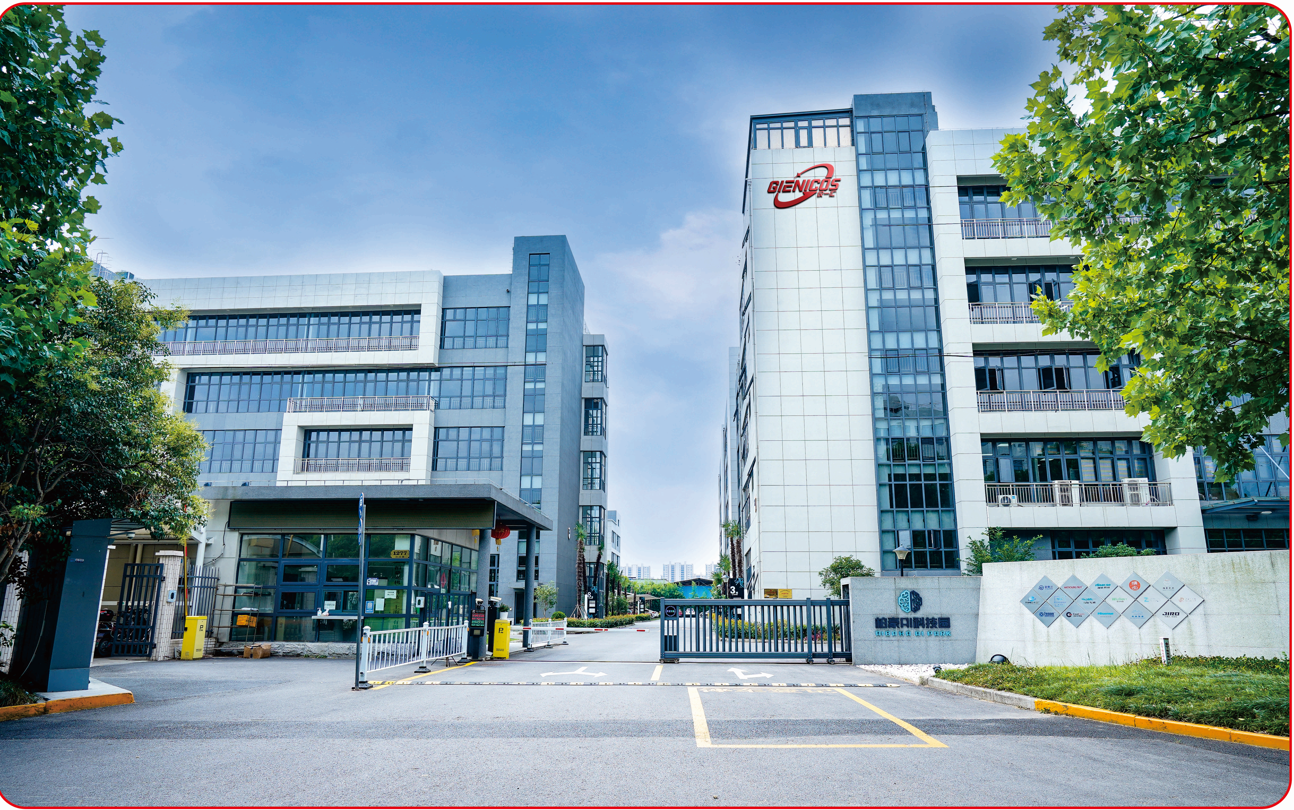
Factory visits, video inspection and pre-shipment acceptance can be arranged at the GIENICOS facility in Jiading, Shanghai.
Next step. Send your container format, target output per shift, bulk viscosity and cap type to GIENICOS, and the semi-automatic versus automatic comparison can be reduced to two quoted configurations you can validate side by side.
Contact: Yoyo · sales@genie-mail.net · Tel/WhatsApp +86 134 8206 0127 · WWW.GIENICOS.COM
Download the full equipment catalogue: GIENICOS 2026 Catalogue (PDF)
Have Questions or Need More Details?
Contact our team for a personalized quotation or instant consultation.
Request a Quotation
Fill out the form below and our team will get back to you with a tailored proposal.
WhatsApp Direct Chat
Prefer to chat in real-time? Message us on WhatsApp for instant assistance & quick answers.
- Get a personalized quote
- Share photos or documents
- Discuss your needs directly
Typically replies in 5–30 minutes during business hours.