
Melting Tanks and Filling Machines: How the Cosmetic Production Process Begins
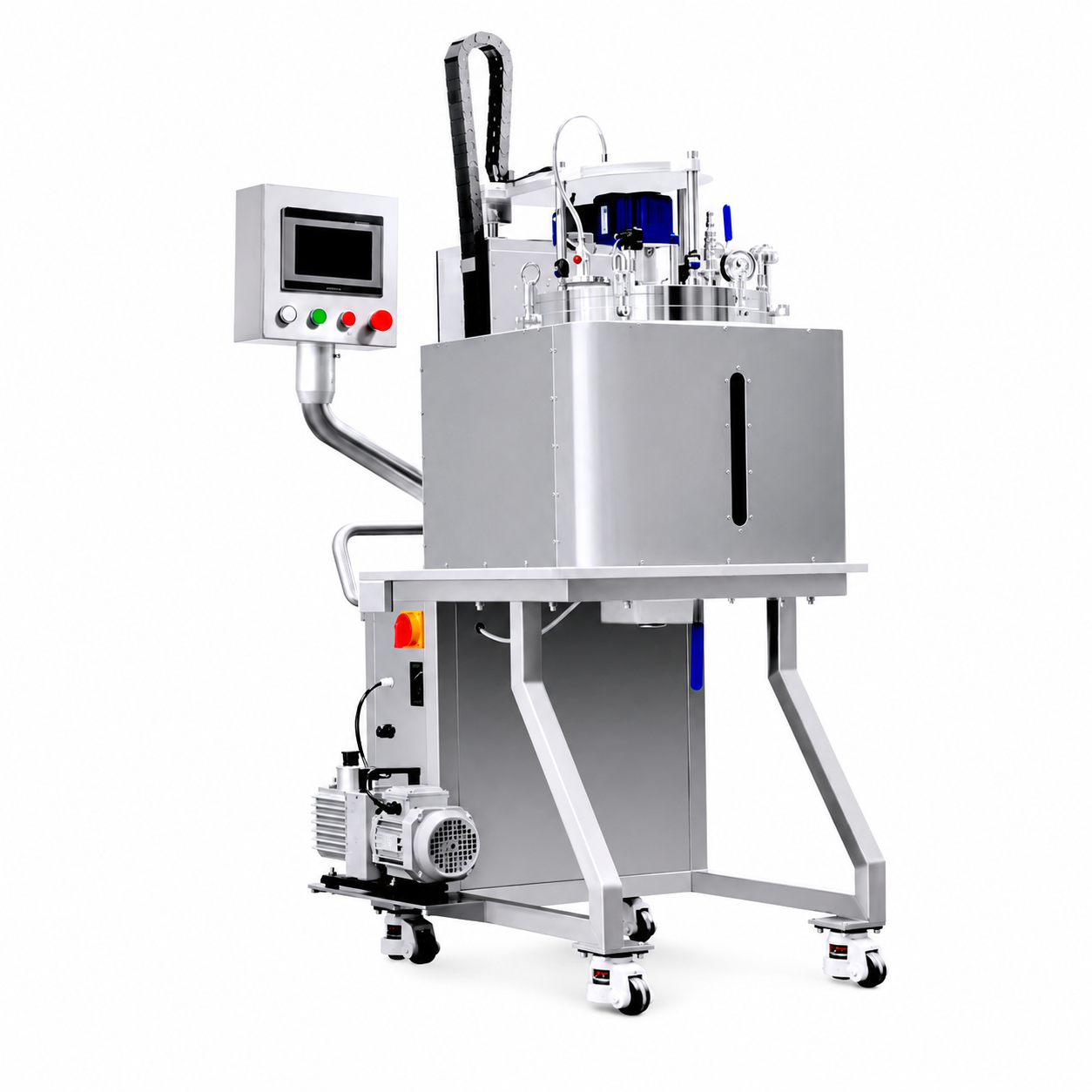 MT 30SE 30 L oil heating melting tank — the upstream material preparation unit in a wax-based cosmetic line.
Cosmetic production does not begin at the filling nozzle. For lipstick, lip balm, foundation sticks and other wax-based products, the first functional machine on the line is a heated tank — a Cosmetic Melting Tank or an Oil Heating Melting Tank — where solid and semi-solid raw materials are melted, mixed, deaerated and held at a stable temperature before anything can be dosed into a container.
This guide is written for people who are new to cosmetic manufacturing and equipment specification. It explains how the upstream melting and dispersion stage works, how it connects to the hot filling stage, where a Lipstick Dispersion Tank fits in the sequence, and how the whole melt-to-fill path decides whether a line can actually run at its rated speed. GIENICOS (SHANGHAI GIENI INDUSTRY CO., LTD.) is a Shanghai-based manufacturer of intelligent cosmetic filling and packaging equipment, founded in 2011, with a 2,000 ㎡ factory in Jiading District and approximately 80% of its output exported to the EU, USA and Asia.
Why the First Machine on a Cosmetic Line Is Usually a Tank
New entrants almost always specify the filling machine first. The questions are familiar: how many nozzles, how many pieces per minute, what filling precision, which container sizes. For a liquid product such as lipgloss or toner, that approach works. For a wax-based product it breaks down.
A lipstick bullet is formed by cooling, not by pumping. The material has to leave the tank inside a workable temperature window, be dosed into a mold or a container before viscosity rises too far, and then cool at a controlled rate. If the bulk has been held too long without stirring, pigment and wax can separate. If it has not been deaerated under vacuum, air stays suspended in the mass and shows up later as pin holes or a dull surface. If it arrives at the filler too cool, the dosing system may still deliver an accurate volume while the molded stick fails on release, streaking or weight distribution.
The practical consequence is that melting and filling behave as one thermal system, even when they are purchased as two separate machines. Temperature, vacuum level, stirring time and transfer distance are decided upstream, and the filling machine inherits all of them. That is why an equipment list for a new cosmetic line is better read as a sequence than as a catalogue.
Industry Background: Why Upstream Equipment Is Being Specified Earlier
The market signals point in the same direction for buyers entering the category. The global cosmetic filling machines market was valued at USD 476.80 million in 2025 and is projected to reach USD 718.63 million by 2036 (Future Market Insights, 2026). Asia Pacific accounted for a 33.08% share of the wider filling machine market in 2025 (Fortune Business Insights, 2026). Automatic filling machines are projected to hold a 41.2% share of the cosmetic filling technology market in 2026 (FMI). Within the sub-segment, the automatic lipstick filling machine market is projected to reach USD 1.2 billion by 2033, growing at a 5.8% CAGR from 2025 (Strategic Revenue Insights, 2026), although published estimates for this sub-segment vary widely because “lipstick filling machine” can describe either a single unit or a complete line.
For importers, the equipment also has a clear trade identity: cosmetic filling machines fall under HS Code 8422.30, specifically 8422.30.91 for machinery used in opening, filling and closing containers (USITC Harmonized Tariff Schedule).
Three implications for a first-time line builder:
- Automation is the mainstream configuration, which moves the constraint upstream — the preparation stage starts to limit output rather than manual dosing.
- Because filling speed rises, any inconsistency created during melting is repeated at every cycle instead of being averaged out by hand.
- Equipment is normally purchased as a set, so the melting side has to be specified before the filling side can be finalized.
The Upstream Cell: Melting, Dispersion and Holding
Upstream equipment performs four jobs: heat, homogenize, deaerate and hold. Different tank models emphasize different combinations of those functions, and the specification of each model indicates which role it was designed for.
Cosmetic Melting Tanks for Medium and Large Batches
The MT 100 SE is a 100 L cosmetic melting and mixing tank in stainless steel construction, with heating, stirring and vacuum functions, an air-spring assisted tank lid and a flange-type lid structure designed for vacuum operation. It is intended for lipstick, lip balm and other wax-based cosmetic bulk, and for larger-batch material preparation.
The MT 300 SE is a 300 L industrial cosmetic melting tank with an oil circulation type heating system and a stirring function, intended for foundation, lipstick, primer cream and other wax-based bulk. Where the 100 L unit covers medium batches, the 300 L unit is the larger-batch preparation stage of the same sequence.
Oil Heating Melting Tanks for Small and Medium Batches
The MT 30SE is a 30 L oil heating melting tank built for cosmetic material pre-melting, intended for lipstick, lip balm and wax-based production. It combines heating, mixing and vacuum functions in a stainless steel vessel, with a lifting tank lid for loading and cleaning and a high-sanitary bottom valve for discharge. Its typical role is pre-melting bulk material before downstream filling and molding, and it is designed to work with lipstick molding production equipment. The 30 L working volume places it in small-to-medium batch production, which is the realistic starting point for most new lipstick and lip balm operations.
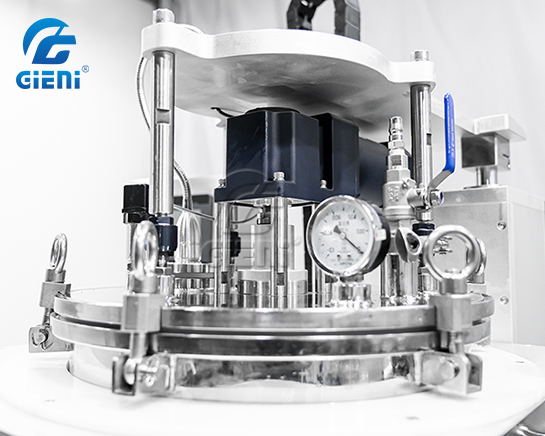 Lifting tank lid on the MT 30SE melting tank — it improves loading access and shortens cleaning between batches.
Where a Lipstick Dispersion Tank Fits
A melting tank heats material; a dispersion tank makes it uniform. The Lipstick Dispersion Tank MT 50P / MT 100P is available in 50 L and 100 L volumes with heating, stirring and vacuum functions, a fixed dispersion tank lid and automatic lid lifting. The 100 L version supports medium-to-large batch cosmetic production and is positioned as an upstream material preparation unit before hot filling or lipstick molding. In practice, dispersion is the stage where pigment is distributed through the wax base and where batch-to-batch colour consistency is decided.
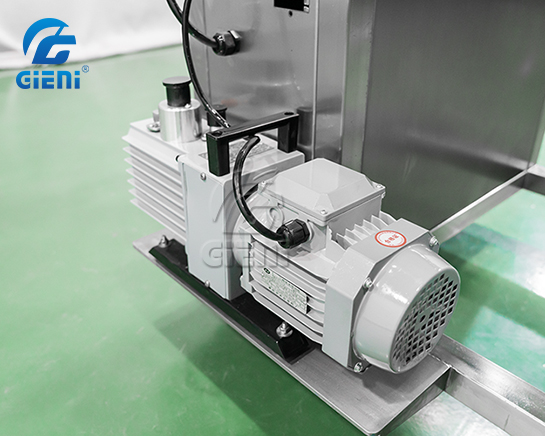 Vacuum unit on a cosmetic melting tank — deaeration is what keeps entrained air out of the finished stick.
Multi-Tank and Hot Pouring Configurations
The MT 20 SE is a six-in-one melting system built from six 20 L tanks, each with heating, stirring and vacuum functions, a sanitary valve without dead angle and an optional timing start function. Multiple small tanks allow different shades or formulas to be prepared and held in parallel, which matters when a line changes colour several times a day.
The TSP / MT 20P is a 20 L cosmetic hot pouring machine for lipstick and lip balm material. It integrates heating, stirring and vacuum functions in a stainless steel body with a sanitary valve without dead angle, and is intended for small-batch material preparation and pouring. On compact and pilot lines it is often the first unit in the process.
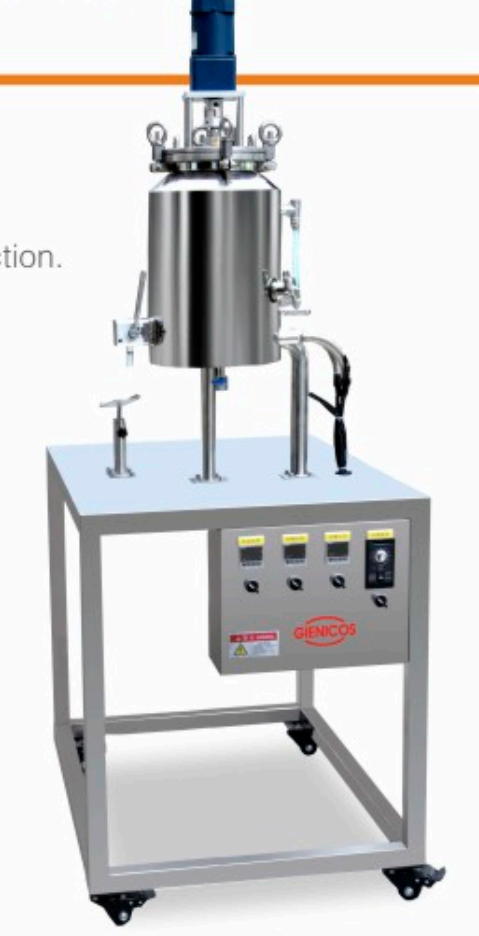 MT 20P / TSP 20 L hot pouring machine — heating, stirring and vacuum in a single 20 L vessel.
What the four upstream functions actually do. Heating controls viscosity and therefore the ability of the material to flow and be dosed. Stirring prevents pigment and wax from separating during a hold. Vacuum removes air that was entrained during charging and mixing, which is what later appears as surface defects. Lid lifting and a sanitary discharge valve without dead angle exist for a less visible reason: faster, cleaner changeover between shades and fewer residue traps in the product path.
Where Melting Ends and Hot Filling Begins
Hot filling equipment takes the prepared bulk and doses it into molds or containers. Four configurations cover most wax-based and high-viscosity production, and each one assumes a specific upstream material condition.
JSFL 1-2 servo piston filling machine. Available with a single nozzle or dual nozzles, it is designed for lip balm, lipstick, lip cream and other high-viscosity cosmetic products. It uses a liftable material tank and servo-controlled piston dosing, and is intended for cosmetic hot filling and high-viscosity filling. The machine can be used with conveyor systems for continuous production and, per its published specification, can be integrated with upstream melting systems and downstream cooling or packaging equipment. The single-nozzle hot filling line, model JSFL, is certified to European Conformity (CE) standards.
JYF-4 multi-color hot filling machine. A four-in-one single nozzle multi-color hot filling line. Its four filling units can be controlled independently and support up to four colours, with customization available. Filling volume ranges are 2–20 mL, 20–50 mL and 50–100 mL, dosing is by servo piston through fixed-position nozzles, filling precision is ±0.1 g, and the tank has a 20 L effective volume with SUS316L product-contact parts.
JHF hot filling and cooling line. A multi-functional lipbalm and chapstick hot filling and cooling line with filling range options of 1–20 mL, 20–50 mL, 50–100 mL and 100–200 mL, and 2, 4, 6 or 16 nozzles depending on configuration. Maximum output reaches up to 60 pcs/min with the six-nozzle configuration. It can be configured as a modular hot filling line, a jar hot filling line or a fully automatic multi-nozzle line, with layouts for sticks, tubes and jars, and is suitable for lip balm, sunstick, primer, cleansing cream and Vaseline. The published specification also positions it for cosmetic laboratories, pilot production and flexible manufacturing, with filling volumes from small-dose 0.5 mL applications up to approximately 250 mL.
GLU-1300 automatic silicone mold lipstick filling machine. Rated at 1000–1300 pcs/hour, it uses a servo-driven piston pump with two filling nozzles, a 30 L material tank with electric oil heating, a 112-piece silicone mold, and two LEISTER hot air guns whose blowing rate and heating rate can be adjusted for different formulas. Applicable lipstick diameter is approximately 8–17.1 mm, and replaceable grippers with adjustable gripping tension accommodate different stick sizes. Robot integration can reduce operating labour from approximately two people to one.
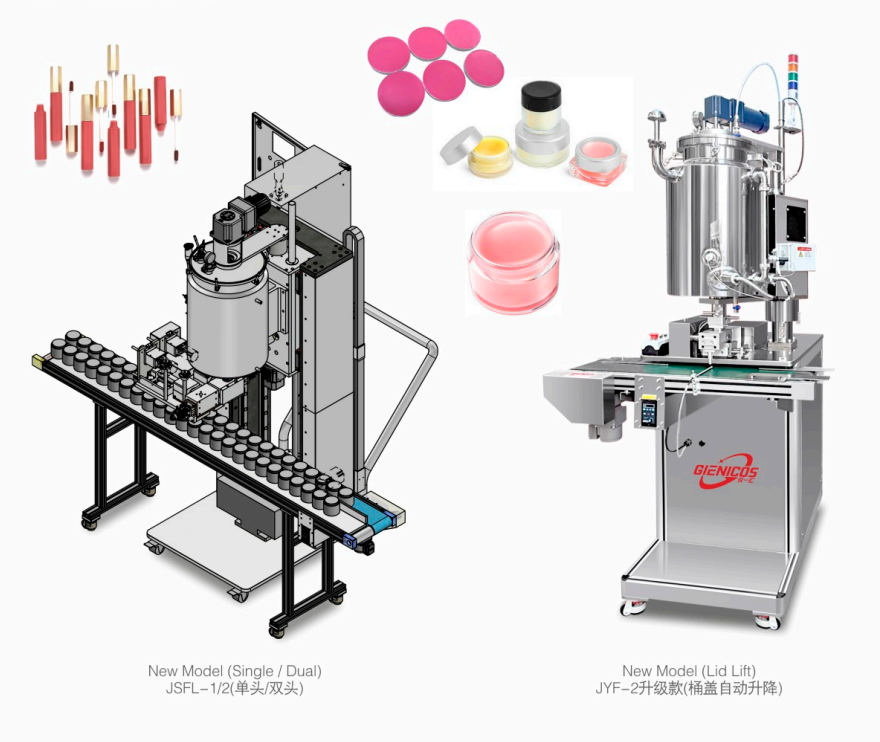 JSFL servo piston filling machine — the downstream unit that inherits the temperature, vacuum and viscosity set by the melting tank.
JCT lipstick cooling tunnel. Continuous cooling and solidification equipment for lipstick production lines, using refrigerated air circulation and a continuous conveyor-type cooling method. It is built from stainless steel conveyor components with an insulated industrial cooling chamber and is applied to lipstick and lip balm molds after hot filling. Temperature, conveyor speed, dimensions and power supply are customizable according to line requirements.
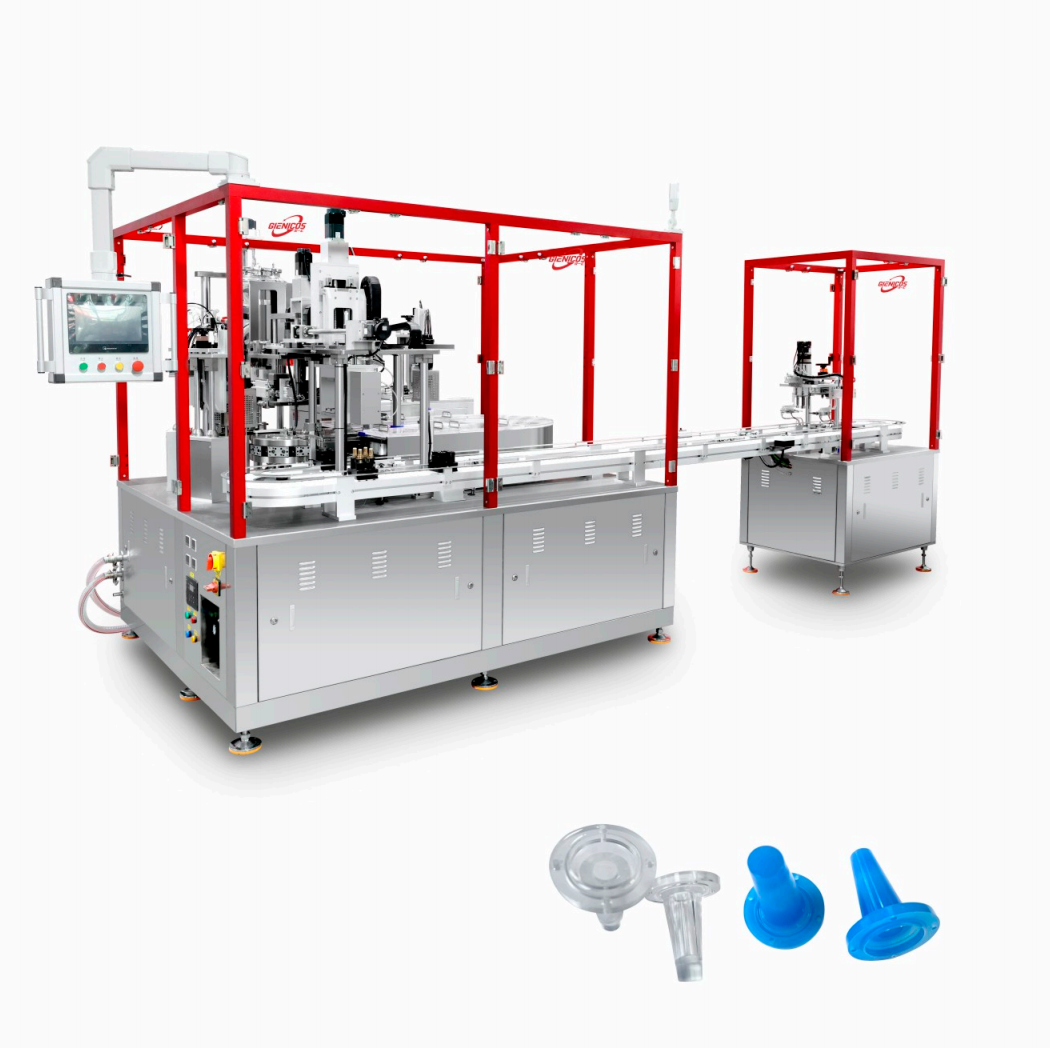 GLU-1300 silicone mold lipstick filling machine — hot filling and mold handling inside one automatic unit.
The dividing line between the two stages is thermal, not mechanical. Upstream equipment owns temperature, vacuum and homogenization; downstream equipment owns repeatability of dose, mold handling and cooling. A liftable tank, a heated transfer path and a pressure-stable feed are what allow a servo piston filler to hold ±0.1 g on a high-viscosity material. When a buyer asks the filler to compensate for unstable bulk, the usual result is an accurate dose of material in the wrong state.
Step-by-Step Breakdown: From Bulk Material to a Filled Unit
A complete wax-based cosmetic line runs through nine recognizable stages. The first five are upstream, and they are the ones most often under-specified by first-time buyers.
- Batch planning and recipe check. Establish whether the formula is wax-based (requires melting and cooling) or liquid (direct filling). Powder products such as compact or loose powder follow an entirely different route.
- Charging and melting. Waxes, oils and butters are loaded into a Cosmetic Melting Tank — MT 100 SE for medium batches, MT 300 SE for larger batches — or into an Oil Heating Melting Tank such as the 30 L MT 30SE for smaller batches. Heating brings the mass into a flowable state.
- Mixing and dispersion. In a Lipstick Dispersion Tank MT 50P / MT 100P, pigment and powders are distributed through the molten base. Multi-tank systems such as the MT 20 SE allow several shades to be prepared and held in parallel.
- Vacuum deaeration. Air drawn in during charging and mixing is removed so it does not appear as surface defects after solidification.
- Holding and transfer. Material is held at a defined temperature with stirring and transferred to the filler. Lifting lids and sanitary discharge valves support clean, fast changeover.
- Hot filling and dosing. The bulk is dosed into molds or containers: JSFL for single or dual-nozzle high-viscosity filling, JYF-4 for multi-colour stick formats, JHF for modular hot filling combined with cooling, and GLU-1300 for silicone-mold lipstick production at 1000–1300 pcs/hour.
- Cooling and solidification. Filled molds pass into a JCT cooling tunnel or an integrated JHF cooling section. Cooling rate affects shrinkage and surface quality.
- Demolding. Silicone-mold systems use controlled release; the GLU-1300 uses a two-stage vacuum demolding system with gripper tension adjustable for the 8–17.1 mm diameter range.
- Finishing and inspection. Downstream packaging can include the JR-01X semi-automatic rotary capping machine (servo capping, 30–40 pcs/min, adjustable torque), the JTB-815S bottom colour code labeling machine for lipstick and lipgloss (stable output up to 90 pcs/min) and the JSS-01 sleeve shrink labeling machine (100 pcs/min).
Use Cases: Which Cosmetic Products Actually Need a Melting Tank?
The decision rule is simple: if a formula solidifies at room temperature, melting belongs in the same purchase decision as filling. If it stays liquid, the melting tank is optional and the filler becomes the primary choice.
- Lipstick, lip balm and foundation sticks. Full route required: melting (MT 30SE, MT 100 SE, MT 300 SE), dispersion (MT 50P / MT 100P), hot filling (JSFL, JYF-4, GLU-1300) and cooling (JCT or JHF).
- Multi-shade stick ranges. The JYF-4 supports up to four colours with independently controlled filling units, which suits brands producing several shades on one line.
- Lipgloss, mascara, eyeliner and liquid lipstick. These do not require wax melting or mold cooling. They are filled directly: the JQR-01A automatic rotary mascara filling and capping machine runs at 40–45 PPM with a 2–14 mL range and ±0.1 g precision, and the JQH-02 high-speed lipgloss filling and capping machine runs at 60–80 pcs/min with a 1–20 mL range.
- Skincare cream, lotion, toner and serum. Thermal control still matters, but there is no solidification step. The JRS-G2 dual nozzle servo toner and cream filling machine covers 10–300 mL, handles materials up to 15,000 mPa.s and reaches 45 bottles/min at 50 mL from a 40–45 L tank. The JRS-G3 automatic toner and cream rotary filling machine covers 10–300 mL at up to 50 pcs/min with a 15-minute changeover.
- Powder products. A separate sequence: mixing (JY-CR50, JY3-CR100 or JY-CR200 high speed powder mixers), pulverizing, sifting (PSF vibration powder sifter), pressing (JTC hydraulic up-bottom compact powder machine at up to 8 tons, JBC-4 / JBC-5 bottom-up presses, or the GP 050 SE automatic servo press at 50–60 pcs/min), loose powder filling (JLF rotary weighing-to-fill at 900–1,800 pcs/hour or JLF-A dual nozzle linear filling at 30–40 pcs/min) and robotic assembly (JZF).
- Nail polish and small oil products. The JQR-01N rotary nail polish filling machine covers 5–30 mL with about ±0.2 g precision using piston, vacuum or pressurized filling, and the JQL-02N runs at 80 pcs/min over a 5–20 mL range.
Comparison Table: Matching Upstream Tanks to Downstream Filling
The tables below list published specification values only. Cells marked “Not stated” mean the value is not part of the published specification and is defined per project.
Table A — Melting, dispersion and holding equipment
| Model | Tank volume | Heating | Mixing / stirring | Vacuum | Lid and discharge | Typical role |
|---|---|---|---|---|---|---|
| MT 20P / TSP | 20 L | Yes | Yes (stirring) | Yes | Sanitary valve without dead angle | Small-batch melting and hot pouring for lipstick and lip balm material |
| MT 30SE | 30 L | Yes (oil heating) | Yes (mixing) | Yes | Lifting tank lid; high-sanitary bottom valve | Pre-melting for small-to-medium batches; works with lipstick molding equipment |
| MT 20 SE | 20 L × 6 tanks | Yes | Yes (stirring) | Yes | Sanitary valve without dead angle; optional timing start | Parallel preparation and holding of multiple shades or formulas |
| MT 50P / MT 100P (Lipstick Dispersion Tank) | 50 L / 100 L | Yes | Yes (fixed dispersion tank lid, automatic lifting) | Yes | Automatic lid lifting | Bulk dispersion before hot filling or lipstick molding |
| MT 100 SE | 100 L | Yes | Yes (stirring) | Yes | Air-spring assisted lid; flange design for vacuum | Medium-batch melting and mixing; larger-batch material preparation |
| MT 300 SE | 300 L | Yes (oil circulation type) | Yes (stirring) | Not stated | Not stated | Larger-batch melting and mixing for foundation, lipstick and primer cream bulk |
Table B — Hot filling and cooling equipment
| Model | Equipment type | Filling volume | Nozzles | Output | Specification notes |
|---|---|---|---|---|---|
| JSFL 1-2 | Servo piston filling machine, hot filling / high viscosity | Not stated | 1 or 2 | Not stated | Liftable tank; integrates with upstream melting and downstream cooling or packaging; CE certified as a single-nozzle hot filling line |
| JYF-4 | Four-in-one single nozzle multi-color hot filling line | 2–20 / 20–50 / 50–100 mL | 4 filling units, up to 4 colours | Not stated | ±0.1 g precision; 20 L tank; SUS316L product-contact parts |
| JHF | Multi-functional hot filling and cooling line | 1–20 / 20–50 / 50–100 / 100–200 mL | 2 / 4 / 6 / 16 | Up to 60 pcs/min (6 nozzles) | Modular, jar and fully automatic multi-nozzle layouts for sticks, tubes and jars |
| GLU-1300 | Automatic silicone mold lipstick filling machine | Stick diameter approx. 8–17.1 mm | 2 | 1000–1300 pcs/hour | 112-piece silicone mold; two LEISTER hot air guns; robot option reduces operators from about 2 to 1 |
| JCT | Lipstick cooling tunnel | Not applicable | Not applicable | Not stated | Refrigerated air circulation, continuous conveyor; applied after hot filling; parameters customizable |
FAQ
Are GIENICOS melting tanks and hot filling machines CE certified?
CE certification is documented for the MT-100, MT-300, MT-1 and MT-6 melting tanks and for the TSP hot pouring machine. The single-nozzle hot filling line, model JSFL, is certified to European Conformity (CE) standards. Because certification documentation is issued per machine or line configuration, the exact scope should be confirmed against the model and destination market at quotation stage.
What products can a melting tank plus hot filling line produce?
Wax-based and high-viscosity products: lipstick, lip balm, foundation sticks, lip cream, primer, cleansing cream, sunstick and Vaseline, plus multi-colour stick formats where colour separation matters. Published filling ranges run from 1–20 mL, 20–50 mL and 50–100 mL through to 100–200 mL depending on configuration, with 2, 4, 6 or 16 nozzles. A six-nozzle hot filling configuration reaches up to 60 pcs/min, and silicone-mold lipstick production is rated at 1000–1300 pcs/hour on the GLU-1300.
Can the melting and filling configuration be customized?
Yes. GIENICOS develops configurations around the customer’s production requirements, formula characteristics and workshop conditions, and the machines are built on a modular concept so assemblies remain flexible and easy to operate. Customization is visible at product level: JYF-4 colour count can be customized, JHF nozzle count and filling volumes are set by line configuration, and the GLU-1300 accommodates standard, slim and mini lipstick, lip balm and foundation stick products by changing corresponding spare parts.
Is the equipment easy to maintain and clean, and what is the warranty term?
A modular structural design is used throughout, and key assemblies support fast disassembly, convenient cleaning and spare-part replacement, which minimizes production downtime. The standard warranty is 12 months from the date of machine acceptance; it covers manufacturing defects and excludes wearing consumable parts and man-made damage, with free spares and freight carried by the manufacturer.
How should I evaluate cosmetic filling machine manufacturers for a first line?
Three checks are enough to filter most suppliers. First, whether the manufacturer can supply the upstream melting and dispersion stage as well as the filler, so the thermal path is designed as one system rather than two unrelated purchases. Second, whether published specifications name models, volumes, speeds and precision values that can be compared directly. Third, whether certification and service terms are documented rather than described verbally. GIENICOS publishes model-level specifications across both stages, holds 42 authorized patents covering invention patents, utility model patents and software copyrights, and exports approximately 80% of its output to the EU, USA and Asia, serving customers in 100 countries and regions. To discuss a specific product, container and volume, contact sales@genie-mail.net or +86 134 8206 0127, or download the 2026 catalogue.
Conclusion: Specify the Sequence, Not Just the Machines
Cosmetic production begins in a tank, not at a nozzle. Melting sets temperature and viscosity. Dispersion sets colour uniformity. Vacuum sets surface quality. Hot filling and cooling convert those conditions into a finished stick, a filled jar or a sealed tube. Read as a sequence, the equipment list becomes a set of linked decisions instead of a list of separate purchases.
The most common first-line problem is not an underpowered filler. It is a fast filler receiving bulk that has already left its working window. Buyers who specify melting and filling as one thermal system — matching tank volume and function to the filling range, nozzle count and cooling arrangement that follow — avoid that problem before the first batch is produced.
Start With the Right Upstream Decision
Tell us your product, container and target output, and GIENICOS will map the melting, dispersion, hot filling and cooling stages that fit your line. The 2026 catalogue includes model-level specifications for melting tanks, hot pouring machines, hot filling lines and downstream packaging equipment.
 GIENICOS manufacturing site, Jiading District, Shanghai.
Download the catalogue: 2026 CATALOGUE (PDF)
Email: sales@genie-mail.net | Tel / WhatsApp: +86 134 8206 0127
Website: www.gienicos.com | Certifications: gienicos.com/certifications
Have Questions or Need More Details?
Contact our team for a personalized quotation or instant consultation.
Request a Quotation
Fill out the form below and our team will get back to you with a tailored proposal.
WhatsApp Direct Chat
Prefer to chat in real-time? Message us on WhatsApp for instant assistance & quick answers.
- Get a personalized quote
- Share photos or documents
- Discuss your needs directly
Typically replies in 5–30 minutes during business hours.