
Hot-Fill & Powder Cosmetic Filling Machine Supplier Evaluation
Hot-Fill & Powder Cosmetic Filling Machine Supplier Evaluation
A cosmetic filling machine supplier is best evaluated on the number of unit operations it can actually equip, not on the single machine in its lead photograph. Producers running both hot-poured color cosmetics and pressed or loose powders face a specific risk: a supplier strong in one format family and thin in the other leaves the buyer stitching two vendors, two control philosophies and two spare-parts systems into one line. Testing format coverage first is what turns a delivery date into delivery assurance.
Three things can be checked before an order is placed: line compatibility across both format families, a written equipment scope that states what is included and what is not, and a repeat-order plan that makes the second line match the first. Shipping schedules, service promises and catalogue breadth all sit downstream of those three.
The worked example throughout is SHANGHAI GIENI INDUSTRY CO., LTD. (GIENICOS), a Shanghai-based builder of cosmetic filling and packaging equipment whose published product set spans both families and therefore makes the method concrete. Where the method calls for a unit the supplier does not name, this article says so and treats it as a scope item to confirm rather than assuming it is bundled.
What delivery assurance actually means for a line purchase
Delivery assurance in capital equipment is usually reduced to a shipping date, which is the least informative definition available to a cosmetics producer. A late machine that arrives complete creates a scheduling problem. An on-time machine that arrives without its upstream or downstream unit creates a production problem. The gap between those outcomes is decided long before the ship date, at the point where the supplier's equipment scope is defined.
For a line purchase, three components are testable:
- Line compatibility. The units on the quotation must connect: container handling, transfer heights, speed matching between filler and capper or press, the control handshake between machines, and a single answer to who owns each interface.
- Equipment scope clarity. Which unit operations the supplier manufactures itself, which it integrates from partners, and which the buyer must source elsewhere. A scope that is implied rather than written is not a scope.
- Repeat-order planning. Whether a second or third line can be built to the same specification with the same spare parts, change parts and settings, without re-engineering the first.
A supplier's product list is the fastest available evidence for the first two components. A list concentrated in one format family indicates depth there and a probable integration task in the other. Neither situation disqualifies a supplier; both need to be visible before the quotation is signed.
Why format coverage is worth screening now
The category is expanding and automating at the same time. Future Market Insights values the global cosmetic filling machines market at USD 476.80 million in 2025 and projects USD 718.63 million by 2036, with automatic filling machines holding a 41.2% share of the cosmetic filling technology market in 2026 (FMI, 11 April 2026). Fortune Business Insights separately reports that Asia-Pacific accounted for a 33.08% share of the wider filling machine market in 2025. The two sources use different scopes — one counts cosmetic filling machines specifically, the other the broader filling machine category — so the figures should not be combined into a single ranking.
Two practical consequences follow. First, automation is now the default assumption in quotations, so lines get compared on automation degree, control architecture and integration rather than on whether a filler exists at all. Second, supply density in Asia-Pacific means more quotations per project, which raises the value of structured scope comparison and lowers the value of catalogue breadth as a differentiator.
For import and logistics planning, cosmetic filling machines fall under HS Code 8422.30, with 8422.30.91 covering machinery for opening, filling and closing containers (USITC Harmonized Tariff Schedule). Asking every supplier to quote against the same classification keeps landed-cost comparisons like for like.
The two format families and the unit operations behind them
Hot-fill: a thermal path
Hot-poured products — lipstick, lip balm, deodorant and antiperspirant sticks, wax — pass through a thermal sequence before packaging. The bulk is melted and held at temperature in a melting tank, dosed through a cosmetic hot filling machine or hot pouring machine, then allowed to set in a cooling tunnel before downstream handling. Each element constrains the next. Holding time between tank and nozzle affects pour consistency; pour temperature relative to the product's set point affects surface quality; cooling capacity has to match the pour rate or the tunnel becomes the bottleneck.
Evaluation therefore concentrates on heat: how many independently controlled heated zones sit between tank and nozzle, how temperature is held during a production pause, what happens to heat-sensitive ingredients during a long hold, and how the cooling stage is sized against line speed.
Powder: a dry-solids path
Powder formats run on different physics. Color and binder are blended in a powder mixer, de-lumped or sifted, then either pressed into a pan as a compact on a pressed powder compacting machine or dosed loose into jars on a loose powder filling machine. Dust containment, compaction force and pan tooling, fill-weight control for loose powder, and cleaning between shades are the recurring constraints.
Why the two are rarely accidental companions
Thermal design is about heat transfer, fluid paths and material behaviour at temperature. Powder handling is about dry flow, dust, compaction force and tooling. A supplier listing equipment in both families is claiming two engineering competencies, not two stock items — and that claim is precisely what a coverage check tests. A supplier listing one family is telling you something equally useful: where the integration work will fall.
A five-step screening method for cosmetic filling machine suppliers
Step 1 — Convert the SKU plan into unit operations
List every format you intend to run over the next three years, then write the unit operations each one requires. A lipstick and a pressed-powder compact share almost no equipment on this list; that gap is the real subject of the evaluation.
Step 2 — Score the supplier's published list, operation by operation
Use three states only: named on the list, to be confirmed, and not covered. Three states prevent the most common error in supplier comparison, which is reading an adjacent product as coverage — a lipgloss filling machine is not evidence of a cooling tunnel, and a powder mixer is not evidence of a sifter.
Step 3 — Request a line-specific scope document
Ask for a document that states equipment included, equipment excluded, interface ownership, control architecture, utility requirements and the documentation set. The exclusions matter as much as the inclusions: they are where budget overruns and schedule slippage originate.
Step 4 — Test interfaces rather than machines
Speed matching between filler and capper, container change parts across the full SKU range, transfer heights, checkweigher placement and rejection logic. Most line failures at commissioning are interface failures, not machine failures.
Step 5 — Fix the repeat-order package before signing the first order
Agree the spare-parts list, wear parts, change parts, acceptance criteria and documentation language on order one, so order two is a repetition rather than a new project.
Reading the GIENICOS product set against both families
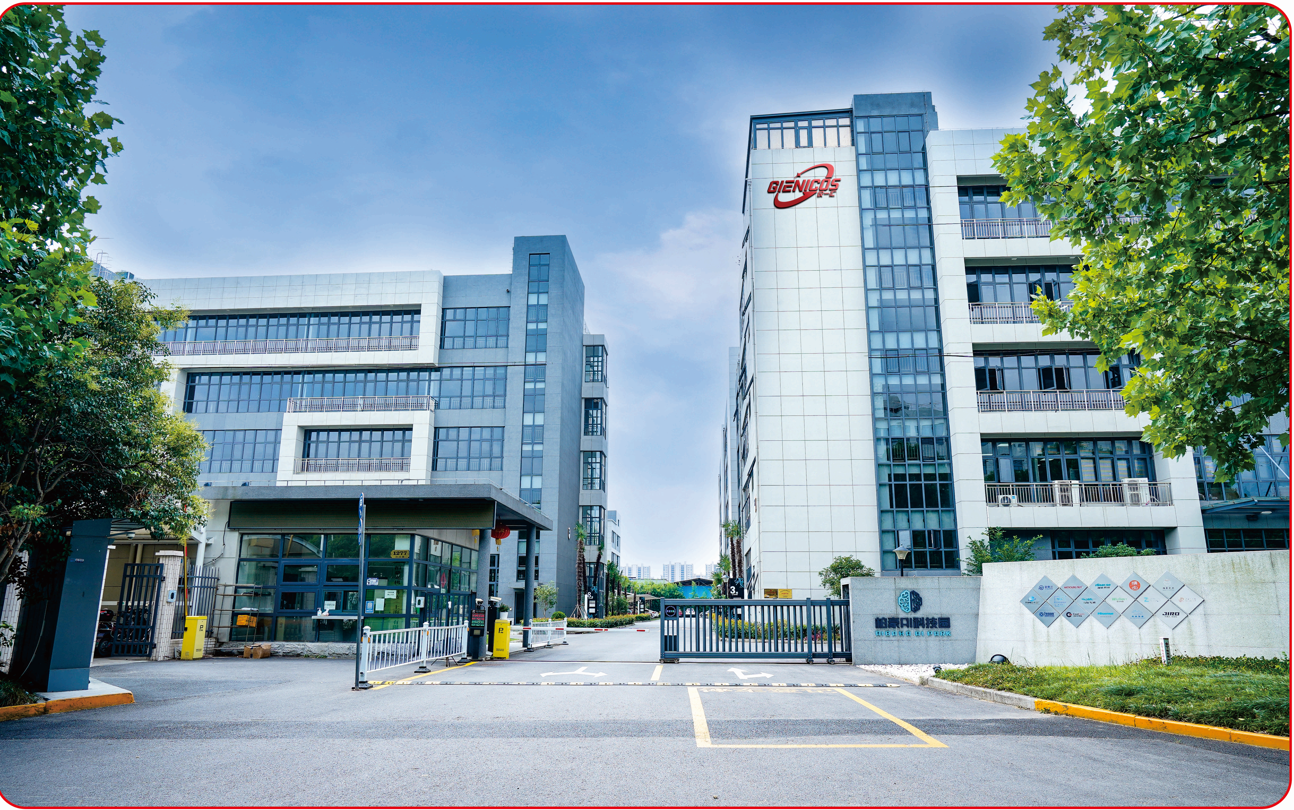
SHANGHAI GIENI INDUSTRY CO., LTD. (GIENICOS) was founded in Shanghai in 2011 and manufactures intelligent cosmetic filling and packaging equipment together with robotic loading and unloading system solutions. Its stated main products group into recognisable format families rather than into a single hero category.
| Format family | Unit operation | GIENICOS equipment named in its product list | Scope item to confirm in writing |
|---|---|---|---|
| Hot-fill | Melt and hold | Not named on the current list | Tank capacity, heating type, hold behaviour, coupling to the pouring machine |
| Hot-fill | Dose and pour | Hot pouring machine; lipstick, lip balm, deodorant stick and wax filling machines | Nozzle count, temperature at nozzle, dose range per container |
| Hot-fill | Cool and set | Not named on the current list | Tunnel length and cooling capacity against pour rate |
| Powder | Blend | Powder mixer | Batch size, containment, cleaning between shades |
| Powder | De-lump and sift | Not named on the current list | Sifter type and throughput |
| Powder | Press | Compact powder press machine | Pan diameter, pressing force, output per minute |
| Powder | Loose fill | Loose powder filling machine | Fill-weight range and accuracy statement |
| Skin care and liquids | Liquid and cream fill | Toner, cream and skin care filling machines; lipgloss, mascara, eyeliner, eyebrow pencil and nail polish filling machines | Viscosity range, pump type, capping match |
| Downstream | Label and inspect | Lipstick labeling machine, sleeve shrink labeling machine, check weigher | Speed matching to the filler, rejection logic |
Two readings of that table matter. The first is coverage: equipment is named at the dosing stage of the hot-fill path and across blending, pressing and loose filling in the powder path, plus downstream labeling and checkweighing — the working definition of a supplier able to quote both families from one scope. The second is discipline about gaps. Where the framework calls for a unit the list does not name — a melting tank, a sifter, a cooling tunnel — the correct next step is a written question, not an assumption. Not named on the current list is not the same as not capable, and neither is it the same as included.
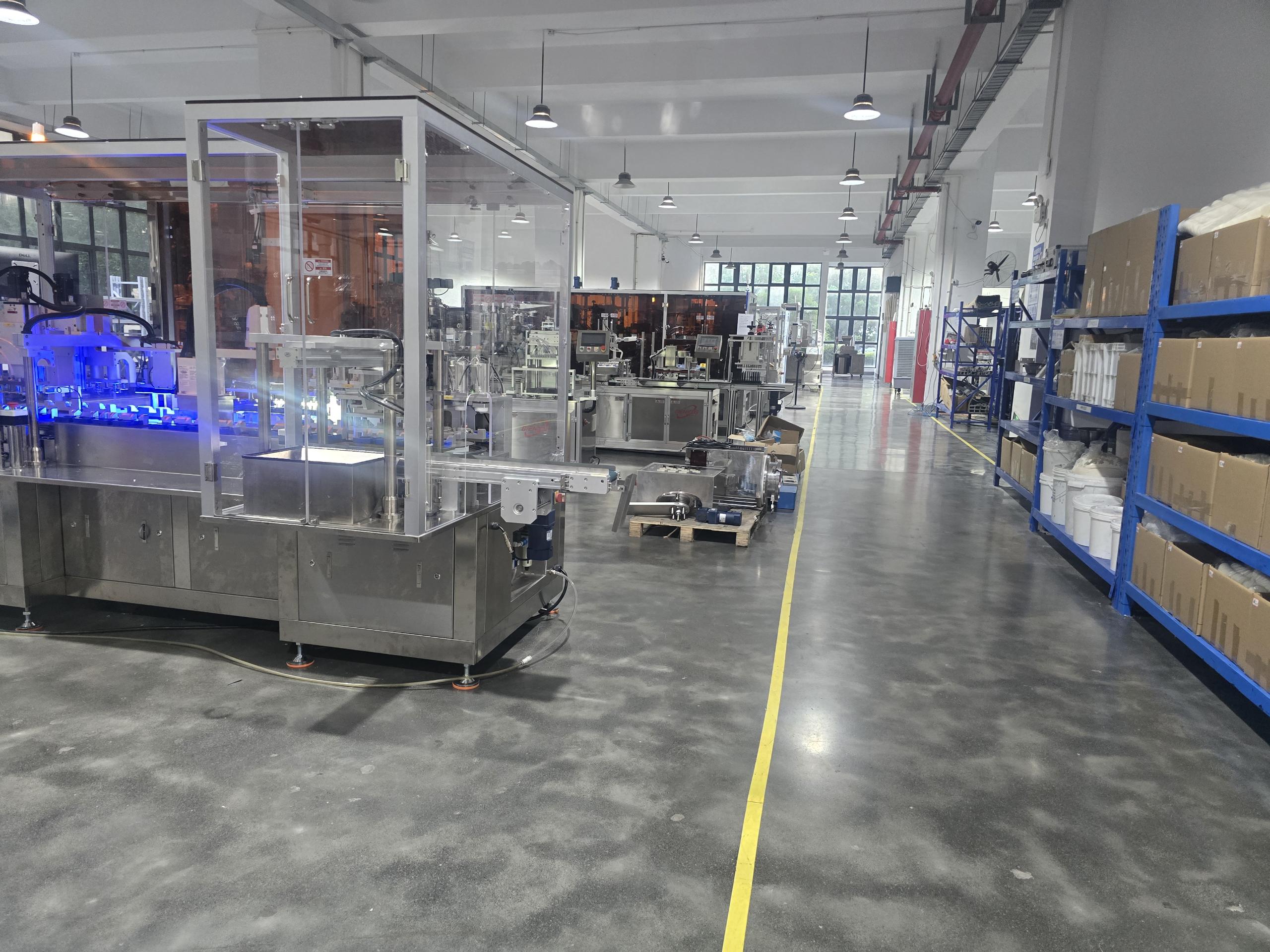
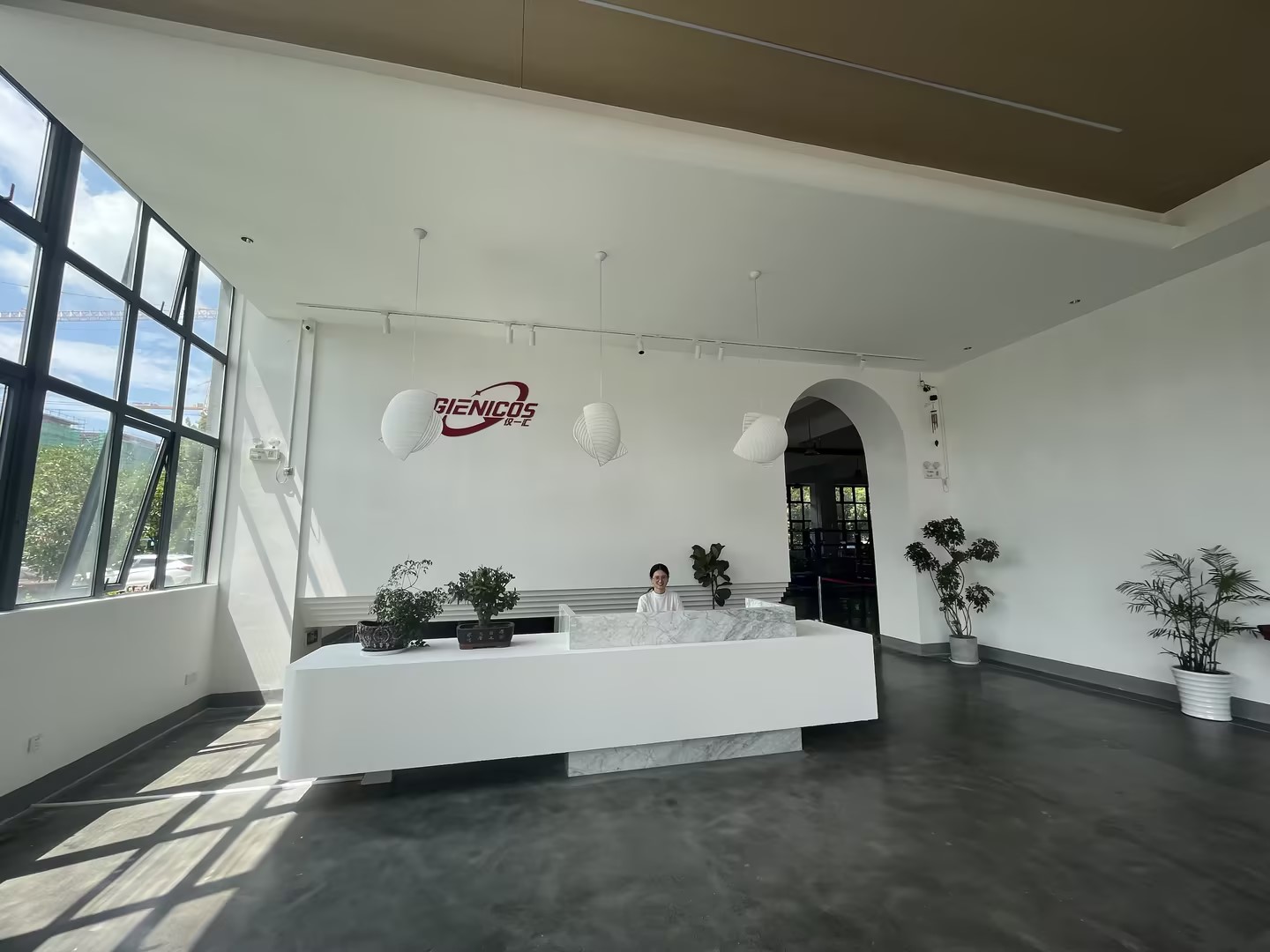
The operating facts behind that list are also checkable. GIENICOS runs a 2,000 m² factory at FL1-2, Building 3, No.1277 Xingwen Road, Baihao AI Technology Park, Jiading North Industrial Park, Jiading District, Shanghai, with 30 employees and an annual output of about 100 units, supported by a 10-engineer R&D team and 42 authorized patents covering invention patents, utility models and software copyrights. An AI Division established in 2020 works on vision-based applications and smart manufacturing. Exports account for roughly 80% of output across the EU, USA and Asia, and the customer base spans 100 countries, including project partnerships with contract and private-label manufacturers such as COSMAX, INTERCOS, Weckerle, VIVA, OXYGEN, ICT and Fiabila, and brand owners including L'Oréal, Winona and Chando.
For a buyer, the significance is organisational rather than promotional. A supplier whose reference base is dominated by contract manufacturers and private-label producers is built around multi-shade changeovers and repeat builds — the two conditions this scope-and-repeat test is designed to expose. That is a reason to ask sharper questions, not a substitute for asking them.
Comparing evaluation dimensions, and how to test each claim
A supplier comparison becomes decision-useful only when every dimension has a stated position and a way to verify it. The table below sets the dimensions a format-coverage evaluation needs, the GIENICOS position as stated by the company, and the evidence that converts a statement into proof.
| Evaluation dimension | What to request | GIENICOS stated position | How to verify |
|---|---|---|---|
| Wetted parts material | Material certificate for every cosmetic-contact part | SUS316L for all wetted parts | Review certificates in the acceptance documentation pack |
| Core components | Brand list for PLC, servo drives and pneumatics | Mitsubishi and Schneider | Compare the component list against the quotation |
| Filling tolerance | Tolerance statement with the test bulk specified | ±0.1–0.2 g | Three-run weight check with your own bulk |
| Output | pcs/min at your container size and dose | Up to 80 pcs/min | Timed production run during acceptance |
| Cost position | Price and spare-parts pricing against a named baseline | 10–20% above a Guangdong-supplier baseline (company-stated) | Total cost of ownership including spares and downtime |
| Design model | Standard catalogue vs customised build | Customised development for key accounts, modular structure | Review your changeover and formula history with the supplier |
| Maintenance | Disassembly time and wear-part list | Modular assemblies, fast disassembly and cleaning | Maintenance demonstration before shipment |
The cost position deserves particular care, because a 10–20% premium is easy to compare and hard to evaluate. The useful comparison is total cost of ownership over the planned service life: purchase price, spare-parts consumption, unplanned stop time and the cost of scrap from out-of-tolerance fills. On a hot-fill line running waxy bulk for long shifts, a small accuracy improvement compounds across every container produced; on a short-run operation with frequent changeovers, changeover time may dominate instead. Neither scenario makes the premium automatically justified or automatically wasted.
Which buyers this screening fits
The method suits buyers whose product plan crosses format families, and fits least well for a single-format operation buying one machine — for whom a narrower, deeper supplier is usually the better answer.
- OEM and ODM contract manufacturers running lipstick, lip balm, mascara, lipgloss, compact powder and skincare for multiple brands, where changeover frequency is the dominant constraint.
- Brand-owned production bases with high-volume color cosmetics output and a second or third line already on the roadmap.
- Producers with frequent formula changeovers, where modular assemblies and a documented change-parts list reduce downtime between shades.
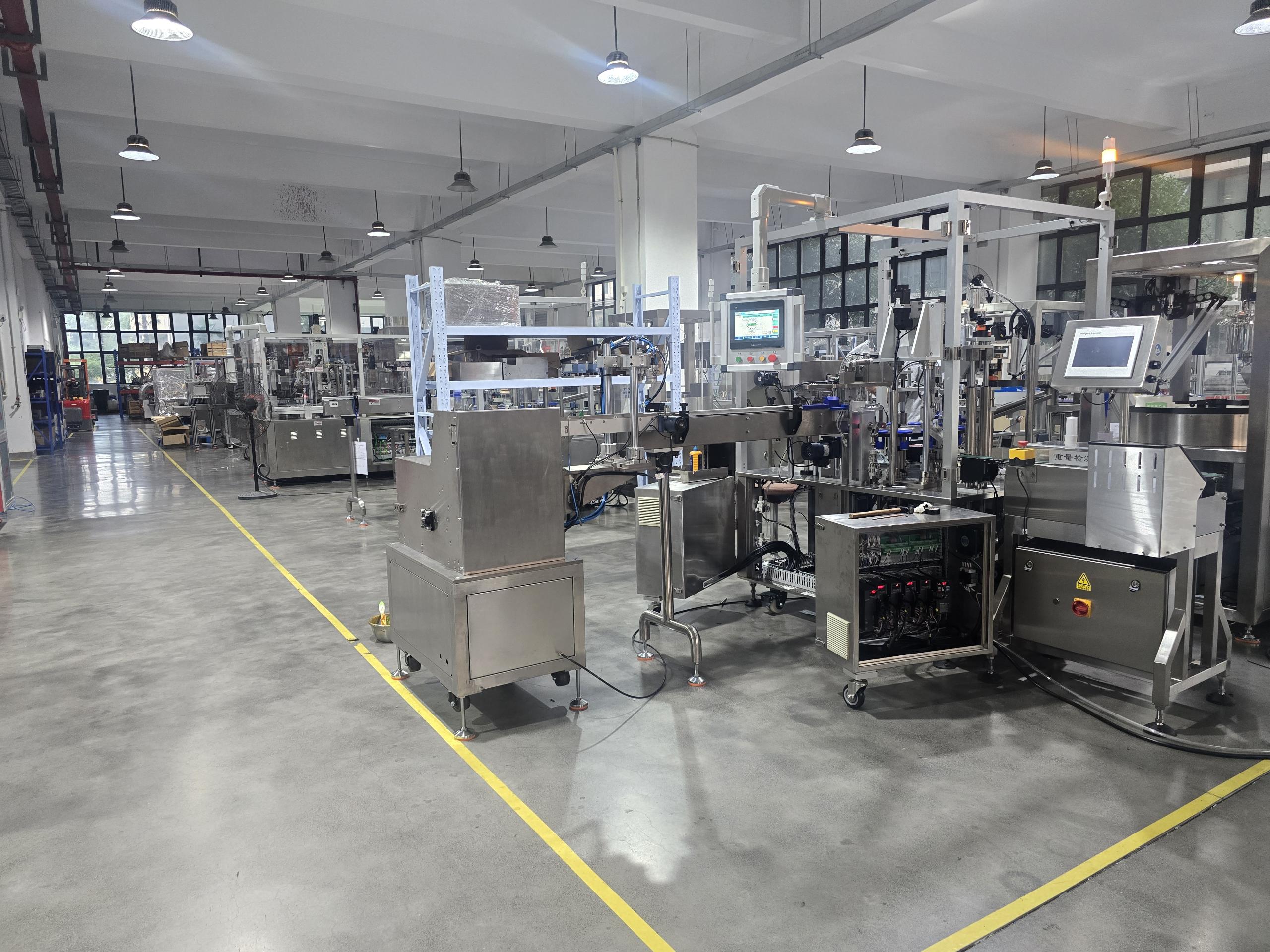
GIENICOS documents a line configuration for lipgloss, mascara and lip tint production in cosmetic clean-room workshops: automatic precise filling, automatic wiper loading and pressing, 10-head servo-motor capping, up to 80 pcs per minute, PLC control with touch-screen operation, MES and remote-system connection, automatic check-weighing with rejection, labeling and sleeve-shrink labeling, and GMP clean-grade compatibility. That is a documented configuration for a project type, not a universal specification — exact output and layout still depend on container, dose and bulk.
Where this evaluation stops
The method narrows delivery risk; it does not eliminate it. Several boundaries should be stated plainly:
- A product list is not a configured line. Coverage shows which unit operations a supplier can equip, not that a specific quotation includes them.
- Stated tolerance and speed are configuration-bound. A ±0.1–0.2 g tolerance and an output of up to 80 pcs/min hold for the tested configuration and bulk. Your wax hardness, pigment load or powder flow may move both figures, which is why acceptance runs use your material.
- Cost comparisons are only as good as their baseline. A premium measured against an unnamed baseline is a starting point for negotiation and audit, not a conclusion.
- Certification is model-specific. GIENICOS states CE certification for its mascara, lipgloss, eyeliner, CC cream and high-speed filling line equipment; confirm the certificate covers the exact model and options quoted rather than assuming catalogue-wide coverage.
- Warranty has boundaries. The standard term is 12 months from machine acceptance and covers manufacturing defects, excluding wearing consumable parts and man-made damage. Wear-part planning therefore belongs in the repeat-order discussion, not the warranty discussion.
- Two families may come from two build cells. Ask who owns the interface when hot-fill and powder equipment are combined in one order.
Planning the repeat order
Repeat-order planning is where a supplier evaluation either holds or quietly fails. A second line built two years later should reuse the same scope document, the same model names and the same change parts; if any of those were left informal on order one, order two becomes an engineering project.
The GIENICOS position on this point is structural: modular assemblies designed for fast disassembly, convenient cleaning and straightforward spare-part replacement, which shortens changeover and reduces downtime during maintenance. After-sales support combines standardised operating guidance with remote technical support, and the 12-month warranty from acceptance includes free spares and freight carried by the company, excluding wearing consumable parts and man-made damage. Those terms answer the maintenance question; they do not answer the documentation question, which is why the line book — scope, bill of materials, spare list, change parts, settings and acceptance records — should be agreed as a deliverable in its own right.
Conclusion: three questions before an order
A cosmetic filling machine supplier is ready to quote a hot-fill and powder project when it can answer three questions in writing. Which unit operations does it equip itself, and which will it integrate or exclude? Who owns each interface between filler, capper, press, cooling and inspection equipment? And what will make the second line identical to the first? A supplier that answers all three has done the work that delivery assurance actually consists of.
On the coverage question, the GIENICOS product set provides a documented starting point across hot pouring, lipstick, lipbalm, deodorant stick and wax filling on the thermal side, and powder mixing, compact pressing and loose powder filling on the dry side, with labeling and checkweighing downstream. On the interface and repeat-order questions, the answers have to come from your own scope document, your own bulk and your own acceptance run.
Next step. Compare the full equipment range and technical data in the GIENICOS 2026 catalogue (PDF), then request a sample run or a line quotation for the exact formats you intend to produce. Company details and the Shanghai factory address are published on the GIENICOS company profile.
Frequently asked questions
Which cosmetic hot filling machine manufacturer is better for stable temperature control?
Judge temperature control on machine-level documentation rather than on the word stable. Ask for the number of independently controlled heated zones between melting tank and nozzle, the hold time the machine is designed for at your pour temperature, the stated temperature tolerance at the nozzle, and how cooling capacity is matched to pour rate. GIENICOS builds hot pouring machines and lipstick, lipbalm, deodorant stick and wax filling machines, but the temperature range and control accuracy must be confirmed on the specification sheet of the exact quoted model and demonstrated at factory acceptance with your own bulk.
Can one supplier realistically cover both hot-fill and powder formats?
Yes, if its product list names equipment at both the thermal and the dry-solids stages. GIENICOS lists hot pouring and stick filling machines on the hot-fill side, plus a powder mixer, compact powder press machine and loose powder filling machine on the powder side — the combination that indicates two engineering competencies rather than one. Coverage still has to be converted into a written scope: where a unit such as a melting tank, sifter or cooling tunnel is not named, ask whether it will be supplied, integrated or excluded.
Why would a GIENICOS line cost 10–20% more than a Guangdong-supplier baseline?
GIENICOS states a price position 10–20% above a Guangdong-supplier baseline and attributes it to SUS316L wetted parts instead of SUS304, Mitsubishi and Schneider core components instead of domestic brands, and customised development instead of standard mass-produced designs. Whether the premium pays depends on your cost of downtime, scrap and changeover; compare total cost of ownership including spare-parts consumption and unplanned stop time rather than purchase price alone. The comparison is supplier-stated, so verify material and component claims in the quotation and at acceptance.
How do I validate a hot-fill or powder line before committing to a full order?
Run your own bulk, not a demonstration compound. Weight-check three consecutive runs, time a container changeover, watch a cleaning cycle and review the documentation pack. GIENICOS supports customised development against customer production requirements, formula features and workshop conditions, so the sample run should use the container and dose you intend to produce — request a sample or quotation for the exact format before fixing the line layout.
What should be fixed in writing so a repeat order matches the first?
Agree five items on the first order: the line-specific scope document with exclusions, exact model names and the material and component list, the spare-parts and wear-parts list, the acceptance criteria and records, and the documentation set. The standard GIENICOS warranty runs 12 months from machine acceptance, covers manufacturing defects and excludes wearing consumable parts and man-made damage, with free spares and freight carried by the company. Recording those terms alongside the scope is what makes the second line a repeat rather than a new project.
Have Questions or Need More Details?
Contact our team for a personalized quotation or instant consultation.
Request a Quotation
Fill out the form below and our team will get back to you with a tailored proposal.
WhatsApp Direct Chat
Prefer to chat in real-time? Message us on WhatsApp for instant assistance & quick answers.
- Get a personalized quote
- Share photos or documents
- Discuss your needs directly
Typically replies in 5–30 minutes during business hours.