
Hot-Fill Lipstick Production: A Cosmetic Filling Machine Manufacturer Checklist
Hot-Fill Lipstick Production: A Cosmetic Filling Machine Manufacturer Checklist
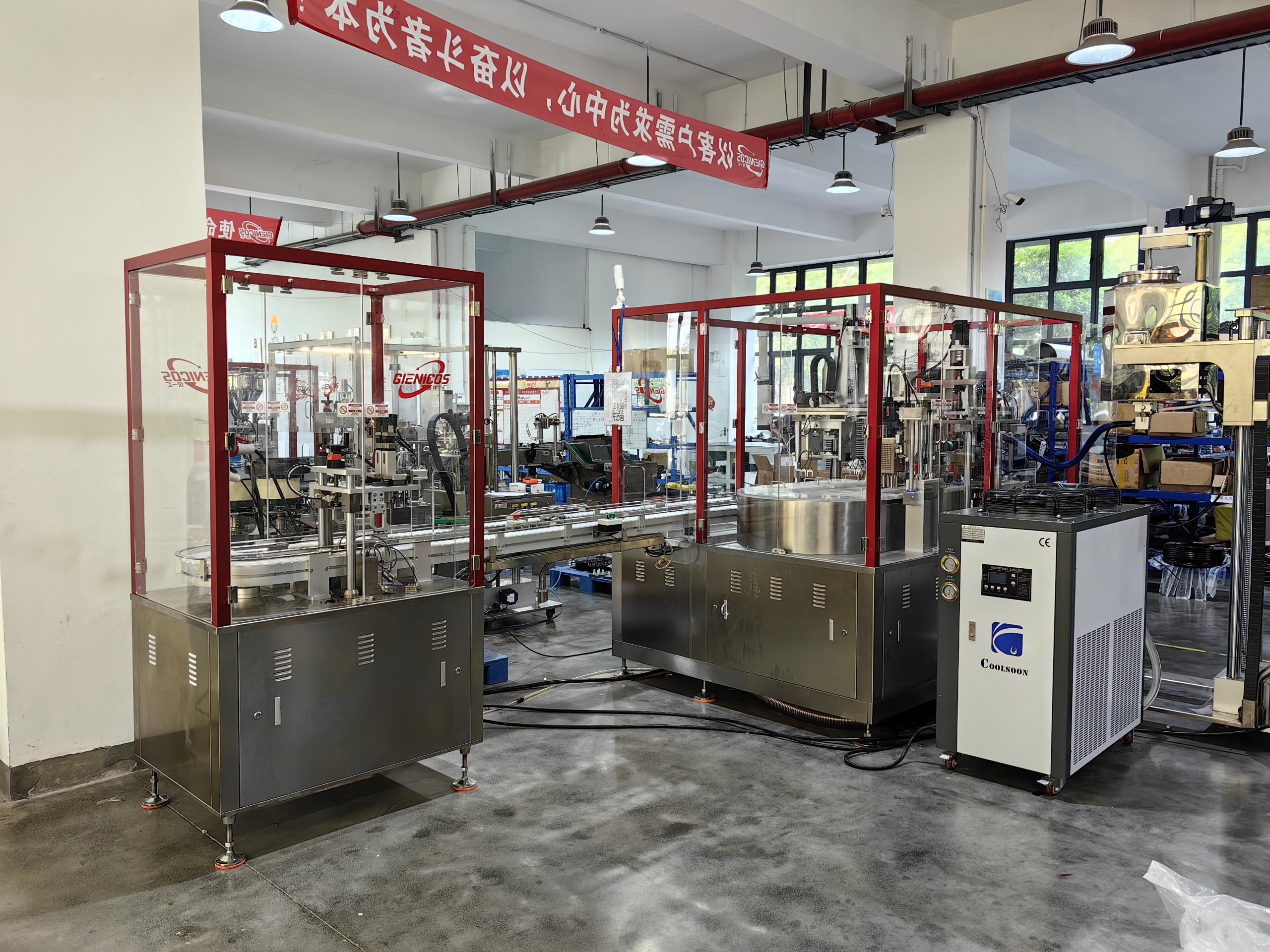
GLU-1300 automatic silicone mold lipstick filling machine in GIENICOS factory site.
Hot-fill lipstick production is not standard bottle filling. Wax-based lipstick bulk must be melted, kept at a controlled temperature, delivered into a mold or package, cooled until solid, and then demolded and assembled. A supplier is therefore not simply providing a cosmetic filling machine; it is providing a process platform that must match the formula, mold type, clean-room environment, labor budget and output target.
This article is a project-based selection guide for technical buyers, private-label producers, laboratory managers, and contract manufacturers working on hot-fill lipstick. It uses GIENICOS product data as a worked example of a manufacturer whose equipment range is organized around color-cosmetic processing rather than generic bottle filling.
Why a hot-fill lipstick project is not a generic bottle-filling project
Searching for a cosmetic filling machine can return machines for lip gloss, mascara, nail polish, loose powder, serum, cream and tube products. Only a small part of that result set is relevant to hot-fill lipstick. A lipstick bullet is normally solid at room temperature; production requires melting the wax, heating the dosing system, filling into a mold or directly into a case, cooling under controlled conditions, and demolding without surface damage. If a potential supplier does not explain this sequence, the machine may dose liquids accurately but still cannot produce a stable lipstick stick.
For project evaluation, the first question is not which machine model to buy. It is which line concept fits the product form. The manufacturer should clearly state whether the product will be poured into a silicone mold, a half-silicone mold, an aluminum mold, or directly into the lipstick mechanism and package. This determines the need for mold preheating, filling nozzles, cooling tunnel time, demolding equipment, and manual or robotic assembly.
This is especially important when a producer runs multiple shades or formulas. Hot-fill lipstick changeovers are not only about cleaning a nozzle. The entire thermal profile and mold set may change. A manufacturer that can discuss these trade-offs is easier to qualify than one that quotes only a generic dosing pump and conveyor.
What the market data tells a buyer
According to Future Market Insights, the global cosmetic filling machine market was valued at USD 476.80 million in 2025 and is projected to reach USD 718.63 million by 2036. The same analyst report expects automatic filling technology to hold a 41.2% share of the cosmetic filling technology market in 2026. In a separate projection from Strategic Revenue Insights Inc., the automatic lipstick filling machine market is expected to reach about USD 1.2 billion by 2033, with a 5.8% compound annual growth rate from 2025. The exact market definitions differ, but the direction is consistent: more manufacturers are moving from manual or semi-manual wax pouring to controlled hot-fill and cooling automation.
That automation shift creates a practical problem for buyers. More suppliers describe themselves as cosmetic filling machine manufacturers, but fewer have real engineering experience with wax rheology, mold heating, cooling profiles, demolding and lipstick assembly. Project work should therefore be evaluated through equipment architecture and manufacturing evidence, not through the number of machines listed on a website.
What a cosmetic filling machine manufacturer should offer for hot-fill lipstick
GIENICOS, the equipment brand of Shanghai GIENI Industry Co., Ltd., is an example of a factory-focused color-cosmetic machinery manufacturer. The company was founded in Shanghai in 2011 and specializes in intelligent cosmetic filling and packaging equipment for makeup and skin care products. Its stated export ratio is about 80%, with main markets in the EU, USA and Asia. For a hot-fill lipstick project, this range matters because the same engineering team must handle upstream melting, filling, capping, labeling, clean-room operation and line integration.
Within the GIENICOS portfolio, hot-fill lipstick and lip balm work is supported by separate process equipment rather than by a single universal filling machine. The relevant units include the following.
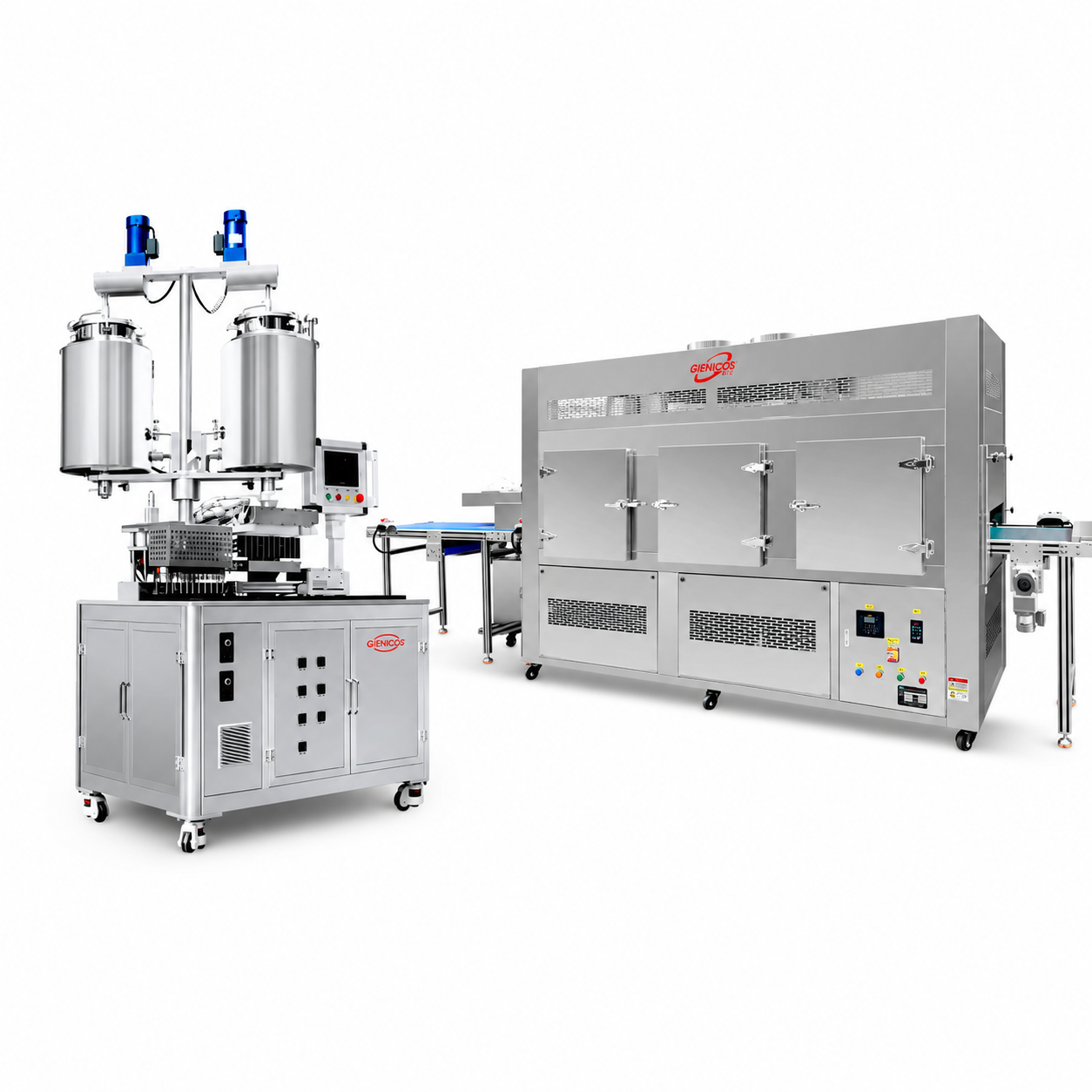
JLG-10/12 semi-automatic lipstick filling series.
Melting, mixing and material preparation
For wax-based lipstick formulas, material preparation is required before filling. The MT-100 SE is a 100 L cosmetic melting and mixing tank designed for lipstick, lip balm and other wax-based formulations. It includes heating, stirring and vacuum functions. The tank lid uses a flange design for vacuum operation and an air-spring-assisted opening system, which improves operator convenience when the tank must be cleaned or refilled. In smaller projects, a 20 L hot pouring machine such as the TSP is also part of the hot-fill family.
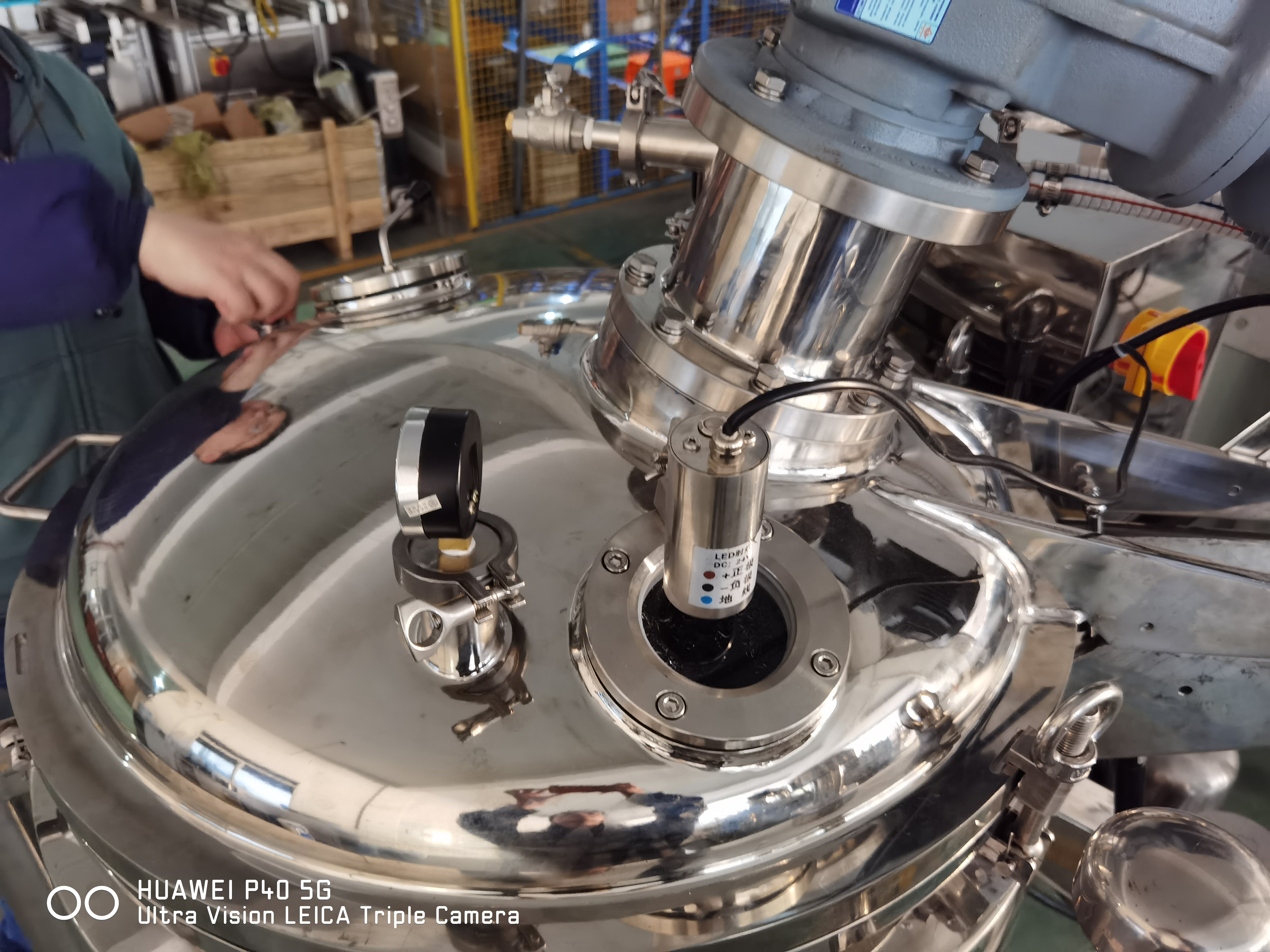
Vacuum lid with light glass on the MT-100 SE cosmetic melting tank.
Semi-automatic lipstick filling and pilot-scale work
The JLG-10/12 is a semi-automatic lipstick filling machine available with 10 or 12 nozzles. It is designed for lipstick, lip balm, lip gloss and similar products using compatible lipstick molds. The filling volume range is 1–20 mL, with a stated filling precision of ±0.1 g. According to the product description, the JLM series can be combined with a cooling tunnel, vertical stripping machine and vacuum releasing equipment for lipstick demolding. This configuration is useful for product development, small-to-medium batch production, and multi-SKU lipstick manufacturing where a lower-investment starting point is needed.
Integrated half-silicone and aluminum-mold line
The JSM half-silicone lipstick and lip balm filling line is a semi-automatic integrated line for larger batch work. It accepts half-silicone molds and aluminum molds, and different lipstick shapes can be produced by changing the corresponding mold set. The stated production capacity is 2160–3600 pieces/hour with metal molds and 1800–3000 pieces/hour with silicone molds. The line includes mold preheating, automatic filling, remelting, circulating cooling, mold release, QC inspection and container screwing-down. It needs approximately 4–5 operators and is intended for soft and high-viscosity lipstick materials, including formulas with pearl or similar decorative ingredients.
Automatic silicone-mold lipstick filling
The GLU-1300 is an automatic silicone-mold lipstick filling machine with a stated output of 1000–1300 pieces/hour. It uses a piston pump filling system, two filling nozzles, a 112-piece silicone mold system, and two LEISTER hot air guns for pre-filling mold heating. The machine supports standard lipstick, slim lipstick, mini lipstick, lip balm and foundation stick products by changing corresponding spare parts. Replaceable grippers cover lipstick diameters of approximately 8–17.1 mm. Under the standard configuration it needs about 2 operators; with robot integration the stated labor requirement can be reduced to approximately 1 person.
This automatic platform suits producers who need repeatable dosing and demolding behavior across long production runs. It is also an example of how a cosmetic filling machine manufacturer can respond to a project requirement by changing mold systems and grippers instead of asking the customer to accept a generic bottle filler.
Cooling and solidification
The JCT is a continuous conveyor-type cooling tunnel for lipstick and lip balm molds after hot filling. It uses refrigerated air circulation and can be customized in temperature, conveyor speed, dimensions and power supply according to line requirements. When connected to a filling machine, it reduces manual transfer and supports a more integrated hot-fill cooling workflow. For a project defined around hot-fill lipstick, this cooling stage is as important as the filler itself.
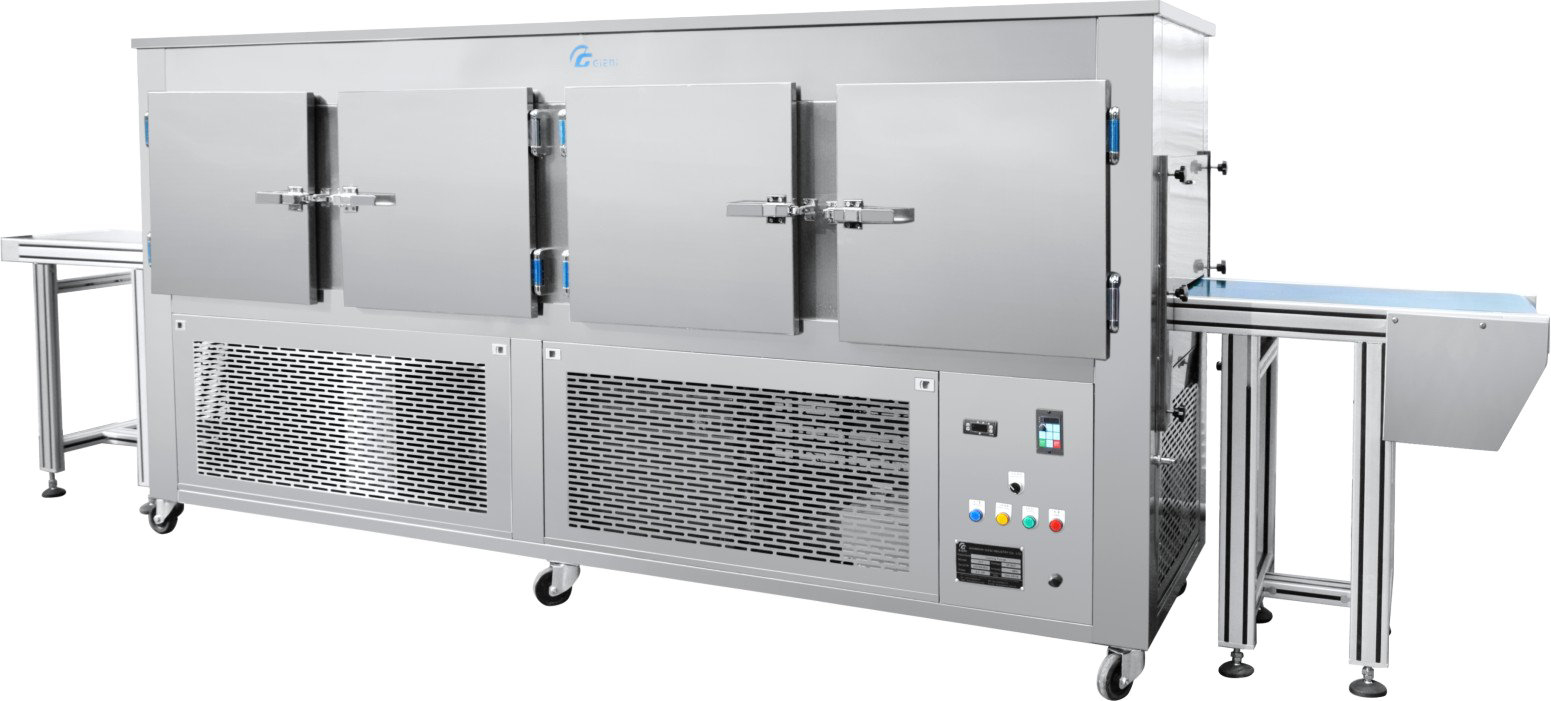
JCT continuous conveyor-type lipstick cooling tunnel.
Manufacturer qualification workflow
A robust qualification process for a hot-fill lipstick project should include the following phases.
- Define the product by formula behavior and fill target. Provide the material type, filling temperature window, fill weight, mold or package drawings, and target output per minute. If the lipstick diameter is already known, compare it with the machine's gripper range. For example, the GLU-1300 is stated for lipstick diameters of approximately 8–17.1 mm.
- Map the entire process. Ask the manufacturer to explain the sequence from melting and mixing to filling, cooling, demolding, assembly and downstream packaging. A quote that covers only a dosing station is incomplete for a wax-based stick product.
- Choose the correct automation level. If the project is in development stage, a JLG-10/12 semi-automatic configuration may fit. For a multi-shade contract manufacturer, the JSM integrated line can handle both aluminum and half-silicone mold sets. For an automated silicone-mold line, the GLU-1300 becomes relevant. Avoid selecting a mascara or lip gloss filler for a hot-fill lipstick project unless the product is actually liquid.
- Verify clean-room and compliance requirements. GIENICOS states that its high-speed lip gloss and mascara line applications are designed for cosmetic clean-room workshop conditions and require GMP clean-grade compatibility. For EU-bound projects, ask for model-specific CE documentation. In the GIENICOS range, the TSP hot pouring machine, TSF hot pouring machine, and MT-1, MT-4, MT-6, MT-100 and MT-300 melting tanks are listed under CE certificate ATGZAHS190528008-M1. The MT-1 CE documentation issued by Anbotek (Guangzhou) Compliance Laboratory Limited references EN 60204-1:2018 and EN ISO 12100:2010. On any full line, request the same documentation for each machine module and compare the model number on the nameplate.
- Check integration and inspection interfaces. In high-speed color-cosmetic projects, GIENICOS describes supporting equipment such as MES system, remote system, automatic check-weighing and rejection, automatic labeling and automatic sleeve shrink labeling. A hot-fill lipstick line may not need every one of those modules, but the manufacturer should confirm which interfaces are available and how the line will be synchronized.
- Confirm factory testing and after-sales support. GIENICOS states that every machine receives 100% OQC testing before shipping. Its stated monthly capacity is about 10 units, and its lead time is 45–80 days. The standard warranty is 12 months from machine acceptance, covering manufacturing defects and excluding wearing consumable parts and man-made damage. Remote technical support, on-site visits and full-life service support are included in the stated service model.
Common use cases for a hot-fill lipstick system
Use case 1: a brand lab developing mini lipsticks. A small production laboratory testing new shades and formulas can begin with the JLG-10/12 semi-automatic 10- or 12-nozzle lipstick filling machine. The line can be configured with a cooling tunnel and vacuum releasing equipment, which gives the lab a complete hot-fill and demolding learning platform without investing in a fully automatic line.
Use case 2: a private-label manufacturer producing multiple lipstick shapes. Contract manufacturers often need to switch between aluminum molds and half-silicone molds because customers supply different package systems. The JSM line is designed for this type of flexible production. Its stated capacity range of 1800–3600 pieces/hour depends on whether silicone or metal molds are used, and the integrated preheating, remelting, cooling and demolding workflow supports multiple shade changeovers.
Use case 3: a plant standardizing on silicone-mold automation. A cosmetics factory running long cycles of standard, slim or mini lipsticks can use the GLU-1300 automatic silicone-mold filling machine. The 112-piece silicone mold system, two LEISTER hot air guns, vacuum demolding and optional robot integration make it a self-contained automated lipstick filling platform. It is especially relevant when the lipstick diameter falls within the stated gripper range of about 8–17.1 mm.
Use case 4: multi-year project evidence in adjacent color-cosmetic production. GIENICOS reports a project in which 20 sets of equipment were used to produce lip gloss and lip cream products in the United States, Poland, Indonesia and Thailand over a five-year period. The customer type included cosmetic brands, OEM/ODM contractors and smaller production labs. The reported result was stable operation and on-time service support. This is not a claim that a single line can do every cosmetic product, but it shows the manufacturer has experience with repeated multi-country color-cosmetic installations.
Hot-fill lipstick line options: quick comparison
| System | Automation level | Stated parameters | Typical project fit |
|---|---|---|---|
| MT-100 SE melting and mixing tank | Upstream material preparation | 100 L tank; heating, stirring and vacuum functions | Wax-based lipstick or lip balm bulk melting before hot filling |
| JLG-10/12 semi-automatic lipstick filling machine | Semi-automatic | 10 or 12 nozzles; 1–20 mL fill volume; ±0.1 g fill precision | Product development, pilot runs, small- and medium-batch lipstick production |
| JSM half-silicone lipstick and lip balm filling line | Semi-automatic integrated line | 2160–3600 pcs/h with metal molds; 1800–3000 pcs/h with silicone molds; 4–5 operators | Multi-SKU lipstick and lip balm batches using different mold systems |
| GLU-1300 automatic silicone-mold lipstick filling machine | Automatic | 1000–1300 pcs/h; 112-piece silicone mold system; about 2 operators or 1 with robot integration | Fully automatic silicone-mold production of standard, slim or mini lipstick |
| JCT lipstick cooling tunnel | Continuous cooling | Conveyor-type refrigerated air circulation; customizable temperature and speed | Cooling and solidifying lipstick molds after hot filling |
Gieni product capacities are manufacturer-stated values; actual output depends on formula, mold, operator and workshop conditions.
FAQ
What compliance documents should a hot-fill lipstick machine supplier provide for EU projects?
Ask for a certificate that identifies the exact model being purchased. GIENICOS states that its TSP hot pouring machine, TSF hot pouring machine, and MT-1, MT-4, MT-6, MT-100 and MT-300 melting tanks are covered by CE certificate ATGZAHS190528008-M1. The CE documentation for the MT-1 melting tank, issued by Anbotek (Guangzhou) Compliance Laboratory Limited, references EN 60204-1:2018 and EN ISO 12100:2010. For a complete line, request a matching certificate for each electrical module and verify the model number on the machine nameplate.
Can one manufacturer provide both semi-automatic and fully automatic hot-fill lipstick systems?
GIENICOS can provide both. The JLG-10/12 is positioned for semi-automatic, pilot and small-batch lipstick work. The JSM is a semi-automatic integrated line using half-silicone or aluminum molds, with a stated capacity of 1800–3000 pieces/hour with silicone molds and 2160–3600 pieces/hour with metal molds. The GLU-1300 is an automatic silicone-mold lipstick filling machine designed for automated production with an optional robot integration. This range allows a producer to choose an operating model based on labor availability, mold strategy and required repeatability.
What drives the budget when machine prices are not standardized?
Budget is driven by process architecture, not only by the number of nozzles. A hot-fill lipstick project may require a melting tank, mold heating, filling station, cooling tunnel, demolding equipment and downstream assembly. GIENICOS states an MOQ of one unit, and customization options include voltage, logo, automation degree, tank size, filling method and requested speed. A useful quotation should be structured as a process package for a specific mold and speed, not as a generic list price for one filling head.
Can I order a single machine to test hot-fill lipstick samples?
Yes. GIENICOS states an MOQ of one unit. Its JLG-10/12 semi-automatic lipstick filling series is designed for product development, small-to-medium batch production and multi-SKU work, and can be combined with a cooling tunnel and vacuum releasing machine to form a small hot-fill line. To get a meaningful sample test, share the formula temperature, fill weight, mold drawings and expected package type before requesting a quotation.
What lead time and after-sales support can I expect after choosing a manufacturer?
GIENICOS quotes a lead time of roughly 45–80 days from technical confirmation, with a monthly production capacity of about 10 units. Before shipping, each machine receives 100% OQC testing. The standard warranty is 12 months from machine acceptance and covers manufacturing defects, excluding wearing consumable parts and man-made damage. The stated service model also includes remote technical support, on-site service visits and full-life service support. To convert a hot-fill lipstick project into a line proposal, send the required fill volume, mold dimensions and target speed to GIENICOS.
Conclusion
A hot-fill lipstick project should be treated as a thermal forming process, not as a simple cosmetic filling machine purchase. The equipment must manage melting, dosing, mold handling, cooling and demolding as one integrated workflow. When qualifying a manufacturer, use product form, formula temperature, mold type, clean-room level, output target, labor model and compliance documents as the basis for comparison.
For a project-specific proposal, GIENICOS can be contacted with the target fill weight, lipstick dimension, mold format and desired line speed. The downloadable catalogue provides an additional overview of the product range and line configurations.
Download the 2026 GIENICOS catalogue (PDF)Structured data
Have Questions or Need More Details?
Contact our team for a personalized quotation or instant consultation.
Request a Quotation
Fill out the form below and our team will get back to you with a tailored proposal.
WhatsApp Direct Chat
Prefer to chat in real-time? Message us on WhatsApp for instant assistance & quick answers.
- Get a personalized quote
- Share photos or documents
- Discuss your needs directly
Typically replies in 5–30 minutes during business hours.