
Round vs. Flat Cosmetic Containers: Which Labeling Machine Fits Your Line?
Round vs. Flat Cosmetic Containers: Which Labeling Machine Fits Your Line?
Short answer: container geometry decides which labeling machine belongs in the line. Slim round containers — 1–2.5 cm bottle diameter and 2.5–10 cm bottle height — are handled by the GIENICOS JTB Horizontal Round Container Labeling Machine, which applies a label around the cylindrical body. Cylindrical lipstick and lipgloss containers from 15–30 mm in diameter and 50–110 mm in length that must carry a printed color code on the base are handled by the JTB-815S Bottom Color Code Labeling Machine. Wider flat-faced containers, such as powder cases from 30–100 mm in diameter that need a label on both the top and the bottom face, are handled by the JTB-812 Powder Case Top and Bottom Labeling Machine.
GIENICOS (SHANGHAI GIENI INDUSTRY CO., LTD.) is a Shanghai-based manufacturer of intelligent cosmetic filling and packaging equipment, founded in 2011, with a product range covering filling, capping, labeling and inspection units for lipgloss, lipstick, mascara, cushion, foundation, compact powder, nail polish, eyeliner, eyebrow pencil, cream and lotion formats. This guide is written for buyers who specify the labeling stage at the same time as the filling equipment, and who need to know which geometry, accuracy and integration limits apply before the line layout is frozen.
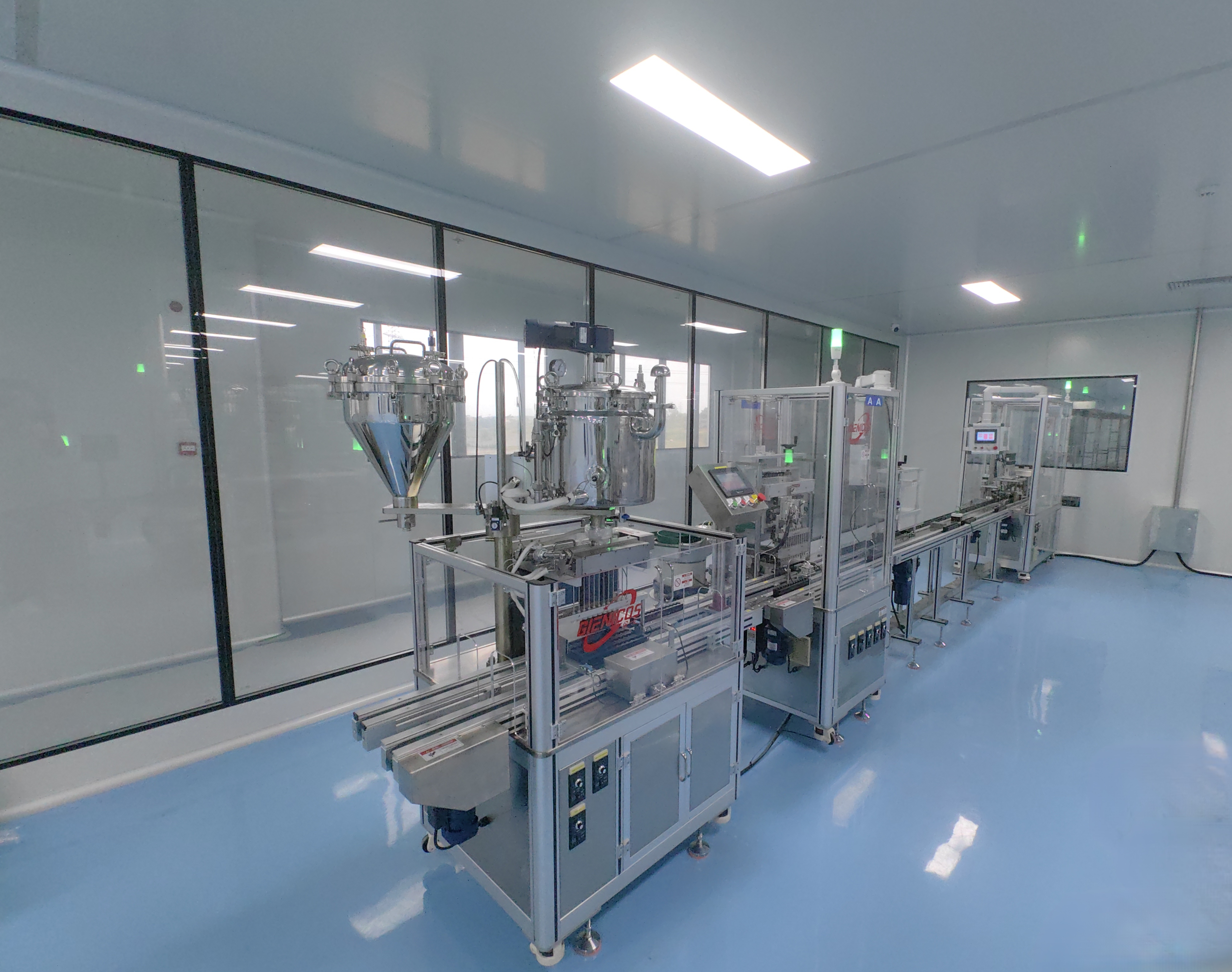
Problem Definition: The Labeling Stage Is Usually Chosen Too Late
In most cosmetic production projects, the filling machine is specified first because filling defines volume, viscosity and cycle time. Capping follows, and labeling is selected at the end of the project, after the container has been tooled and the line layout has been fixed. That sequence produces four recurring problems.
- Container outside the working range. The JTB horizontal round container labeling machine covers bottle diameters from 1–2.5 cm and bottle heights from 2.5–10 cm. The JTB-815S covers container diameters of 15–30 mm and container lengths of 50–110 mm. A container that is 32 mm in diameter, or a tube longer than 110 mm, falls outside both ranges and needs a different configuration — a point that is far easier to resolve before tooling than after.
- Wrong label face. A side-wrap label and a bottom color code are not the same operation, and they do not use the same presentation of the container. The JTB is specified with a label width of 1–12 cm for the container body. The JTB-815S is specified for a minimum label length of 9 mm, which suits short codes rather than long panel labels.
- Throughput mismatch. A labeling machine that runs slower than the filling stage becomes the constraint of the whole line. A lipgloss filling and capping unit such as the JQH-02 runs at 60–80 pcs/min, while the bottom labeling stage runs at 60–90 pcs/min and the case labeling stage at 50–80 pcs/min — the pairing has to be checked numerically, not assumed.
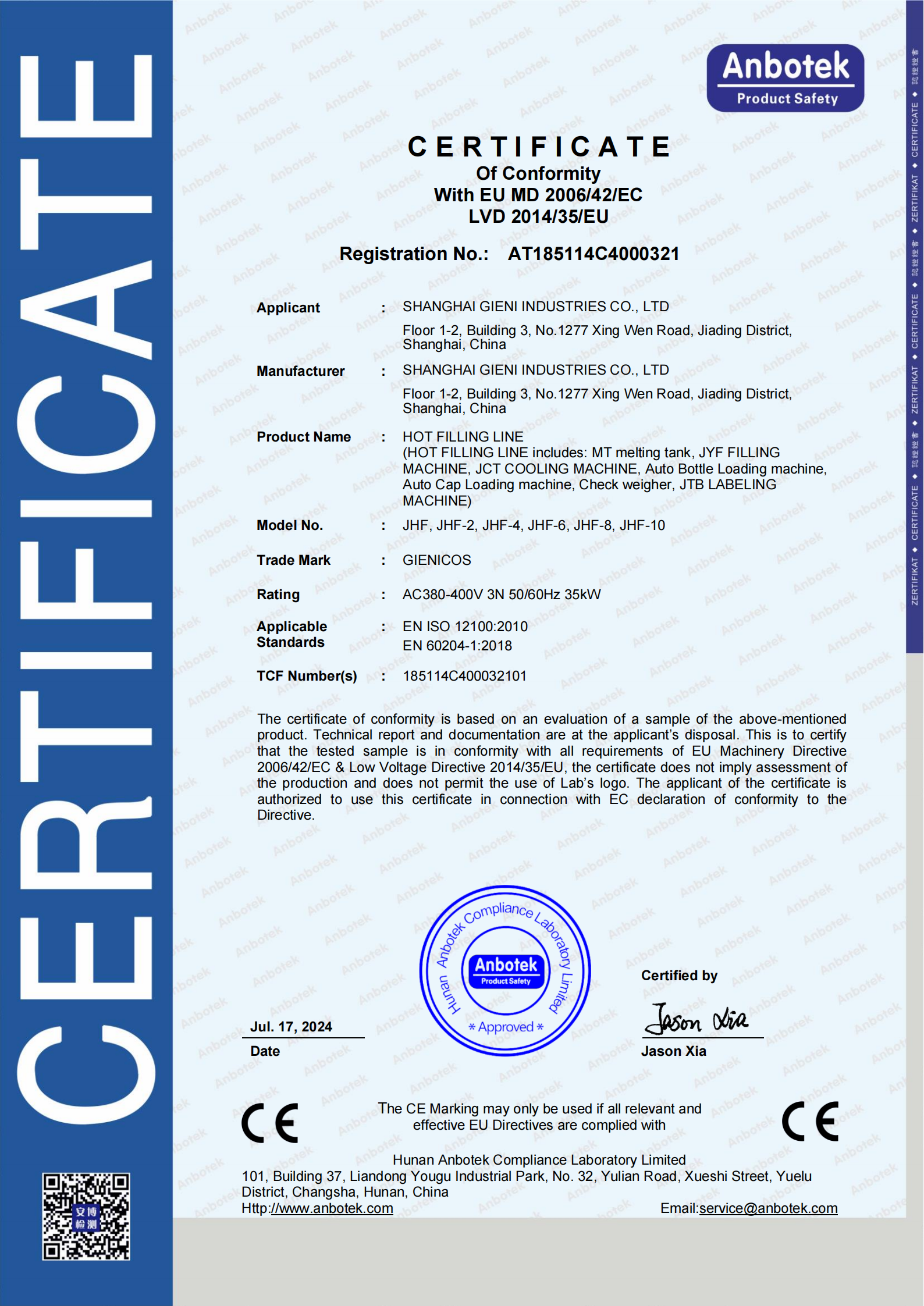
- Documentation gap. EU certification is issued against a defined configuration. CE certificate AT185114C4000321, for example, covers a HOT FILLING LINE whose scope lists the MT melting tank, the JYF filling machine, the JCT cooling machine, the automatic bottle loading machine, the automatic cap loading machine, the check weigher and the JTB labeling machine. Buyers should confirm that the configuration they order falls inside the certificate scope.
None of these failures is caused by a bad machine. They are caused by deciding the labeling stage in isolation from the container and from the rest of the line.
Industry Background: Labeling Is Now Specified With the Filling Line
The commercial context explains why line-side equipment is increasingly bought together rather than unit by unit. The global cosmetic filling machines market was valued at USD 476.80 million in 2025 and is projected to reach USD 718.63 million by 2036, according to Future Market Insights. Within that equipment mix, automatic filling machines are projected to hold a 41.2% share of the cosmetic filling technology market in 2026 (Future Market Insights). Regionally, Asia Pacific held a 33.08% share of the filling machine market in 2025, according to Fortune Business Insights.
Labeling demand moves with the same curve. The automatic lipstick filling machines market is projected by Strategic Revenue Insights to reach approximately USD 1.2 billion by 2033, expanding at a compound annual growth rate of 5.8% from 2025. Definitions in this sub-segment vary considerably between research houses — some reports count individual machines, others count complete lines — so the direction of the trend is more reliable than any single absolute value.
For importers there is also a customs dimension. Machinery used for opening, filling and closing containers falls under HS Code 8422.30.91 in the Harmonized Tariff Schedule published by the USITC. These are formal import facts, not marketing claims, and they are worth settling with a customs broker before the first shipment rather than after it.
The practical consequence for buyers is that the labeling machine is no longer a standalone purchase. It must accept the same container the filler fills and the capper caps, run at a speed that does not starve the line, and carry documentation that matches the configuration actually shipped.
Detailed Solution: Matching the Machine to the Container
GIENICOS approaches the labeling stage as a geometry problem first and a speed problem second. Three configurations cover the common cosmetic container profiles, and each one has published working ranges that can be checked against a physical sample within minutes.
Option 1 — Horizontal Round Container Labeling Machine (JTB)
The JTB is automatic horizontal labeling equipment for slim round containers, with a stainless steel and aluminum-alloy structure designed to meet GMP production requirements. Its published specification is:
- Voltage and power: AC 220 V, single phase, 50/60 Hz, 600 W
- Labeling speed: 0–25 m/min
- Labeling accuracy: ±0.1 cm, excluding container and label variation
- Bottle diameter: 1–2.5 cm
- Bottle height: 2.5–10 cm
- Label width: 1–12 cm
- Label roll inner diameter: 7.6 cm; outer diameter: maximum 36 cm
- Machine dimensions: 200 × 78 × 155 cm (L × W × H)
- Typical packaging applications: lipstick, lip balm, mascara and sunstick
One detail in that specification deserves attention. The accuracy figure of ±0.1 cm is stated as excluding container and label variation. In other words, the number describes the repeatability of the machine, not the finished position error on a running line. The visible deviation on a production line is the sum of machine repeatability, container diameter tolerance and label cutting tolerance. If a buyer needs a tighter finished result, tightening the container specification is usually as important as tightening the machine specification.
Option 2 — Bottom Color Code Labeling Machine (JTB-815S)
The JTB-815S is automatic labeling equipment for lipstick and lipgloss production, built on a stainless steel and aluminum-alloy frame with industrial electrical components. This is the machine that handles the flat-face side of the comparison: the code is applied to the flat base of a round container rather than wrapped around the cylindrical side, which is why both container diameter and container length become constraints. Its published specification is:
- Container diameter: 15–30 mm
- Container length: 50–110 mm
- Output: 60–90 pcs/min
- Labeling accuracy: ±1 mm
- Minimum label length: 9 mm
- Power supply: AC 220 V ±5%, 50 Hz, 2 kW
- Machine dimensions: 2000 × 1072 × 1800 mm (L × W × H)
- Typical production: lipstick and lipgloss lines, personal care packaging
Option 3 — Flat-Face Labeling for Cases (JTB-812)
Where the container is a wide, flat-faced format such as a powder case, the JTB-812 Powder Case Top and Bottom Labeling Machine applies labels to the top and bottom faces rather than to a side wall. Its published specification is:
- Labeling speed: 50–80 pcs/min
- Labeling accuracy: ±1 mm
- Container diameter: 30–100 mm
- Power supply: 220 V ±10%, 50 Hz
- Ambient temperature: 5–45 °C; relative humidity: 15–95%
- Machine dimensions: 2000 × 810 × 1600 mm (L × W × H)
- Stated industries: cosmetics manufacturing, powder case packaging, plus pharmaceutical, electronics and food packaging
What Sits Upstream of the Labeler
The labeling decision cannot be checked in isolation, because the container arrives at the labeler from the filling and capping stages. The upstream units most often paired with the labeling options above are:
- JSFL 1-2 Servo Piston Filling Machine — single or dual nozzle servo piston filling for lip balm, lipstick, lip cream and other high-viscosity cosmetic products, with a liftable tank and servo-controlled piston filling.
- JQH-02 Automatic Lipgloss Filling and Capping Machine — 1–20 mL filling volume, servo piston filling, 60–80 pcs/min, filling precision ±0.1 g, 3-phase 380 V, 13 kW, air pressure 0.5–0.8 MPa.
- JMG Lipgloss Mascara Filling Line — 60–72 pcs/min mid-speed and 80–100 pcs/min high-speed configurations, servo piston filling at 10–12 pieces per cycle, return-suction anti-drip nozzles, no-bottle no-fill detection and servo torque capping.
- JR-01X Semi Automatic Rotary Capping Machine — servo capping for round and square bottles at 30–40 pcs/min with adjustable capping torque.
- JSS-01 Sleeve Shrink Labeling Machine — for buyers who need a full shrink sleeve instead of a pressure-sensitive label, running up to 100 pcs/min on slim, long items such as lipstick, mascara, lip gloss, pencil boxes and oil bottles, with film cut precision of ±0.25 mm.
Reading these numbers together shows the intended pairing. A lipgloss line filling and capping at 60–80 pcs/min through the JQH-02 is matched by a bottom labeling stage at 60–90 pcs/min, so the labeling unit does not become the constraint. The case-format labeling stage at 50–80 pcs/min is specified for lower-output compact and powder lines rather than for high-speed gloss filling.
Certification Scope of the Labeling Stage
For EU-bound projects, the labeling stage inherits its documentation from the line it belongs to. CE certificate AT185114C4000321 was issued by Hunan Anbotek Compliance Laboratory Limited on 17 July 2024 against EN 60204-1:2018 and EN ISO 12100:2010, and its scope lists a HOT FILLING LINE composed of the MT melting tank, the JYF filling machine, the JCT cooling machine, the automatic bottle loading machine, the automatic cap loading machine, the check weigher and the JTB labeling machine.
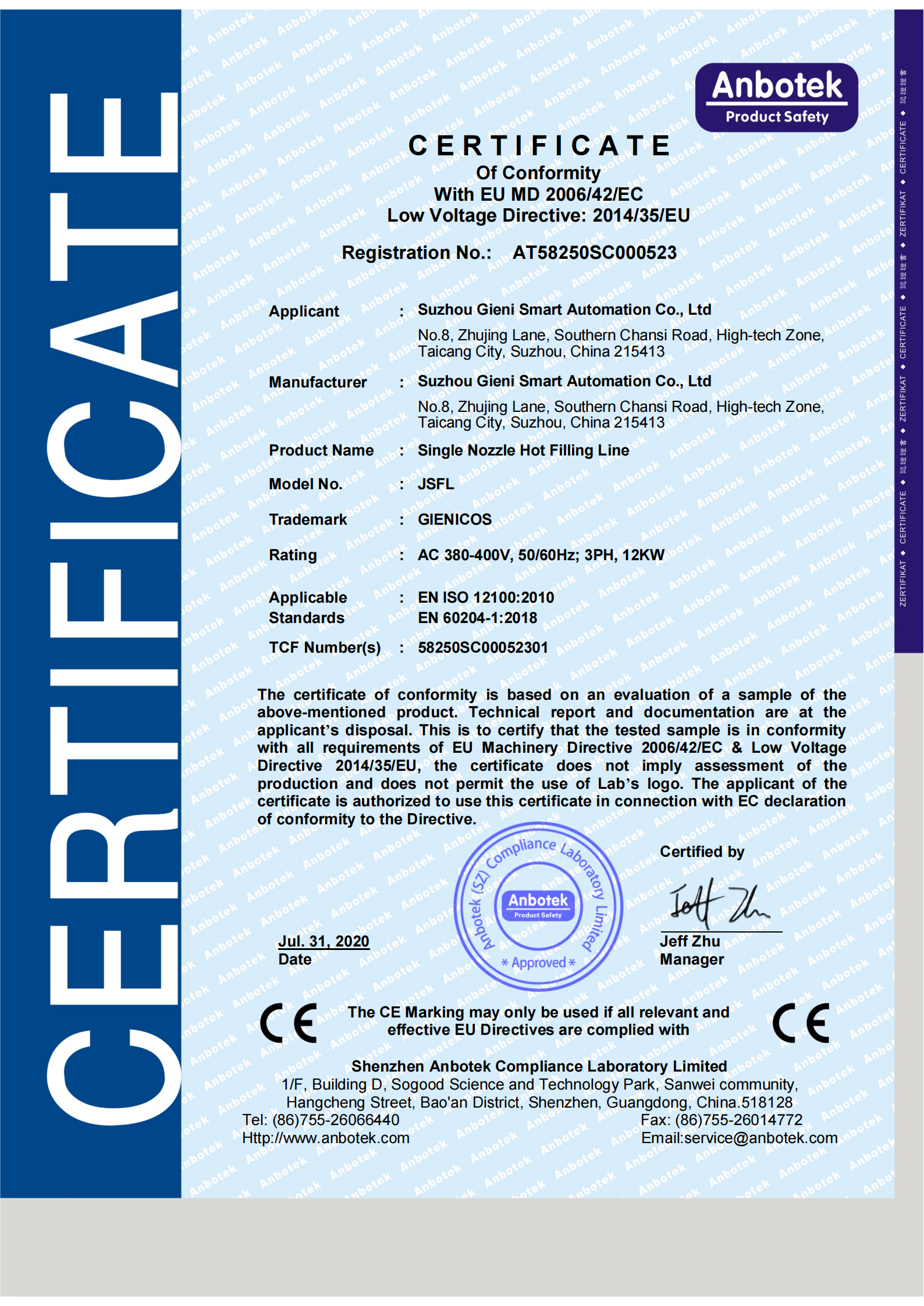
Where the labeling stage is paired with a hot filling configuration built around the single nozzle line, the relevant EU certificate is AT58250SC000523, issued by Shenzhen Anbotek Compliance Laboratory Limited on 31 July 2020 under the same two standards, with a scope limited to the Single Nozzle Hot Filling Line, model JSFL. Buyers should treat the scope wording — not the machine name alone — as the document that matters.
Step-by-Step Breakdown: Seven Checks Before You Order
The following sequence can be completed with one container sample, one line layout drawing and one set of supplier specification sheets.
- Measure the container, not the catalogue. Record nominal diameter, height or length, and the tolerance on each. Compare against the published ranges: JTB at 1–2.5 cm bottle diameter and 2.5–10 cm bottle height; JTB-815S at 15–30 mm container diameter and 50–110 mm container length; JTB-812 at 30–100 mm container diameter.
- Decide which face carries the mark. A side-wrap label uses the JTB with a label width of 1–12 cm. A short bottom code uses the JTB-815S with a minimum label length of 9 mm. A top-and-bottom label on a case uses the JTB-812.
- Convert your QC standard into a machine accuracy target. The JTB is published at ±0.1 cm excluding container and label variation; the JTB-815S and JTB-812 are published at ±1 mm. Confirm that the measurement method used on your line matches the way the specification is written.
- Match the labeling output to the slowest unit in the line. Check the filling and capping output (JQH-02 at 60–80 pcs/min; JR-01X at 30–40 pcs/min), the labeling output (JTB-815S at 60–90 pcs/min; JTB-812 at 50–80 pcs/min; JSS-01 at 100 pcs/min) and the linear label speed of the JTB at 0–25 m/min.
- Confirm utilities and footprint. JTB: AC 220 V, single phase, 50/60 Hz, 600 W, 200 × 78 × 155 cm. JTB-815S: AC 220 V ±5%, 50 Hz, 2 kW, 2000 × 1072 × 1800 mm. JTB-812: 220 V ±10%, 50 Hz, 2000 × 810 × 1600 mm. For the surrounding line, air supply is typically 0.5–0.8 MPa.
- Plan validation before shipment. GIENICOS accepts factory acceptance testing on site or by video inspection before shipment, with 100% OQC testing before shipping. Agree the acceptance method and the acceptance criteria in the purchase terms.
- Confirm customization and commercial terms. OEM and ODM production services are available, with customization covering voltage, logo, automation degree, tank size, filling method and speed request. Standard commercial terms are MOQ 1 unit, T/T 40%/60% payment, and delivery on FOB, CNF, CIF or DDP basis.
Use Cases: Three Container Profiles and Their Matching Configurations
Profile 1 — Slim round tube, side label, high cosmetic appeal
A lipstick, lip balm, mascara or sunstick tube with a diameter between 1 cm and 2.5 cm and a height between 2.5 cm and 10 cm fits the JTB directly. The side label can be 1–12 cm wide, which covers both a narrow brand band and a wider panel. Because the machine is a horizontal unit with a compact 200 × 78 × 155 cm footprint, it can be placed after the capping stage without consuming a large section of the clean room. Where the same product needs a full shrink sleeve instead of a label, the JSS-01 handles slim, long items up to 100 pcs/min.
Profile 2 — Rounded bottle with a bottom color code
A lipgloss or liquid lipstick container between 15 mm and 30 mm in diameter and between 50 mm and 110 mm in length, requiring a batch or color code on the base, fits the JTB-815S. This is the profile where integration matters most: the container typically comes from a filling and capping stage such as the JSFL 1-2 servo piston filling machine or the JQH-02 filling and capping machine, and the labeling unit runs at 60–90 pcs/min so that it keeps pace with a 60–80 pcs/min filling output. A common full configuration is melting or bulk preparation, servo piston filling, capping, bottom code labeling and checkweighing.
Profile 3 — Flat-faced case and compact formats
A powder case or similar wide container between 30 mm and 100 mm in diameter needs labeling on two faces rather than around a circumference, which is the working profile of the JTB-812 at 50–80 pcs/min. Because this unit is stated for powder case packaging as well as pharmaceutical, electronics and food packaging, buyers from adjacent industries can use the same platform — but the ambient specification of 5–45 °C and 15–95% relative humidity should be checked against the actual clean-room conditions.
Profile 4 — A line already running in production
One GIENICOS reference project covers 20 sets supplied to cosmetic brands, OEM/ODM contractors and small-batch production laboratories in the United States, Poland, Indonesia and Thailand, used for lipgloss and lip cream production. The reported result after five years of operation is stable running with service support delivered on time — a relevant data point for buyers who are evaluating the labeling stage as part of a longer production continuity decision rather than a single-machine purchase.
Comparison Table: Horizontal Round vs. Bottom Color Code Labeling
The table below compares the three labeling configurations using only published equipment specifications. It is intended to be read against a physical container sample, not against a product photograph.
| Decision factor | JTB Horizontal Round Container Labeling Machine | JTB-815S Bottom Color Code Labeling Machine | JTB-812 Powder Case Top and Bottom Labeling Machine |
|---|---|---|---|
| Primary container type | Slim round containers | Cylindrical lipstick and lipgloss containers | Powder cases and box-type containers |
| Label position | Around the container body (side wrap) | Bottom color code | Top and bottom faces |
| Container size range | Bottle diameter 1–2.5 cm; bottle height 2.5–10 cm | Container diameter 15–30 mm; container length 50–110 mm | Container diameter 30–100 mm |
| Label specification | Label width 1–12 cm; label roll inner diameter 7.6 cm, outer diameter max. 36 cm | Minimum label length 9 mm | Not specified in the published data sheet |
| Output or speed | Labeling speed 0–25 m/min | 60–90 pcs/min | 50–80 pcs/min |
| Labeling accuracy | ±0.1 cm, excluding container and label variation | ±1 mm | ±1 mm |
| Power supply | AC 220 V, single phase, 50/60 Hz, 600 W | AC 220 V ±5%, 50 Hz, 2 kW | 220 V ±10%, 50 Hz |
| Machine dimensions (L × W × H) | 200 × 78 × 155 cm | 2000 × 1072 × 1800 mm | 2000 × 810 × 1600 mm |
| Structure and material | Stainless steel and aluminum-alloy structure designed to meet GMP production requirements | Stainless steel and aluminum-alloy frame with industrial electrical components | Stainless steel and aluminum-alloy structure with industrial labeling components |
| Typical products | Lipstick, lip balm, mascara, sunstick | Lipstick, lipgloss | Powder cases; also stated for pharmaceutical, electronics and food packaging |
| Ambient specification | Not specified in the published data sheet | Not specified in the published data sheet | 5–45 °C; relative humidity 15–95% |
Two conclusions follow from the table. First, the JTB and the JTB-815S are not competing for the same job — their container ranges barely overlap, and their label positions are different by design. Second, the accuracy figures are expressed differently: ±0.1 cm with an explicit exclusion for container and label variation, versus ±1 mm stated directly. A buyer comparing these numbers should compare the exclusions as carefully as the numbers.
FAQ: Labeling Machines and Cosmetic Filling Line Integration
Which certificate covers the labeling stage of a cosmetic filling line?
The EU CE certificate AT185114C4000321, issued by Hunan Anbotek Compliance Laboratory Limited on 17 July 2024, covers a HOT FILLING LINE whose scope lists the MT melting tank, the JYF filling machine, the JCT cooling machine, the automatic bottle loading machine, the automatic cap loading machine, the check weigher and the JTB labeling machine. The applicable standards stated on that certificate are EN 60204-1:2018 and EN ISO 12100:2010. Where the line is configured around the single nozzle hot filling unit, certificate AT58250SC000523, issued by Shenzhen Anbotek Compliance Laboratory Limited on 31 July 2020, covers the Single Nozzle Hot Filling Line, model JSFL, under the same two standards. Buyers should confirm that their ordered configuration matches the certificate scope rather than relying on the machine name alone.
Can one labeling machine handle both round and flat cosmetic containers?
No. The published working ranges are different and only partially overlap. The JTB covers bottle diameters of 1–2.5 cm and bottle heights of 2.5–10 cm for side-wrap labeling, with a label width of 1–12 cm. The JTB-815S covers container diameters of 15–30 mm and container lengths of 50–110 mm for a bottom color code with a minimum label length of 9 mm. The JTB-812 covers container diameters of 30–100 mm for top and bottom face labeling at 50–80 pcs/min. A production plan that mixes slim tubes and wide cases therefore normally needs two labeling stations rather than one, and the decision should be made at line-design stage.
What should an OEM cosmetic hot filling machine manufacturer provide beyond the filling machine?
A supplier that builds a hot filling line should be able to cover the stages that feed and follow the filler: material melting and preparation, servo piston filling, cooling where wax-based or hot-pour products are involved, capping, checkweighing and labeling. GIENICOS, the brand of SHANGHAI GIENI INDUSTRY CO., LTD., founded in Shanghai in 2011, supplies this range, including lipgloss filling machines, mascara filling machines, hot pouring machines, lipstick filling machines, compact powder press machines, nail polish filling machines, eyeliner filling machines, eyebrow pencil filling machines, skin care filling machines, lipstick labeling machines, sleeve shrink labeling machines and check weighers. The company provides OEM and ODM production services with customization options covering voltage, logo, automation degree, tank size, filling method and speed request, states a monthly capacity of 10 units and a lead time of 45–80 days, and reports 42 authorized patents, customers in 100 countries and regions, and exports to the EU, USA, Asia and the Middle East.
What are the minimum order and payment terms?
The published commercial terms are a minimum order quantity of 1 unit, payment by T/T at 40%/60%, and delivery on FOB, CNF, CIF or DDP terms. Quality control states a 100% OQC test before shipping, and acceptance can be carried out as a factory acceptance test on site or by video inspection before shipment. Because these terms are configuration-dependent, buyers should confirm them in the final quotation together with the machine specification sheet, since labeling units and filling units may be quoted under different delivery arrangements.
How can we validate labeling accuracy before the line ships, and how long does delivery take?
Validation is handled through a factory acceptance test on site or by video inspection before shipment, supported by 100% OQC testing before shipping; the standard lead time is 45–80 days from order. After installation, the standard warranty is 12 months from the date of machine acceptance, covering manufacturing defects and excluding wearing consumable parts and man-made damage, with free spares and freight carried by the manufacturer. Support continues through remote technical assistance, on-site visit support and full-life service support, and the equipment follows a modular design so that key assemblies can be disassembled quickly for cleaning and spare-part replacement. To start that process, download the 2026 product catalogue at https://cdn.socialarks.com/sbsp/25084/common/2026/0809/2026%20CATALOGUE.pdf or send your container dimensions and target output to sales@genie-mail.net.
Conclusion: Decide on Geometry, Then Confirm on the Line
The choice between round and flat labeling is not a preference between two machines of similar capability. It is a geometry decision with hard boundaries. If the container is a slim round tube between 1 cm and 2.5 cm in diameter, the JTB horizontal round container labeling machine is the correct fit, with a label width of up to 12 cm. If the container is a rounded lipstick or lipgloss bottle between 15 mm and 30 mm in diameter that carries a code on the base, the JTB-815S is the correct fit, running at 60–90 pcs/min. If the product is a flat-faced case between 30 mm and 100 mm in diameter, the JTB-812 covers top and bottom face labeling at 50–80 pcs/min.
Once geometry is fixed, three checks decide whether the choice survives installation: the labeling output must match the slowest upstream unit such as the JSFL 1-2 servo piston filling machine or the JQH-02 filling and capping machine; the accuracy specification must be read together with its stated exclusions; and the ordered configuration must fall inside the certificate scope that will be handed to the importer. Buyers who complete those three checks before tooling usually avoid the most expensive labeling error in cosmetic production — discovering the wrong machine geometry after the container has already been manufactured.
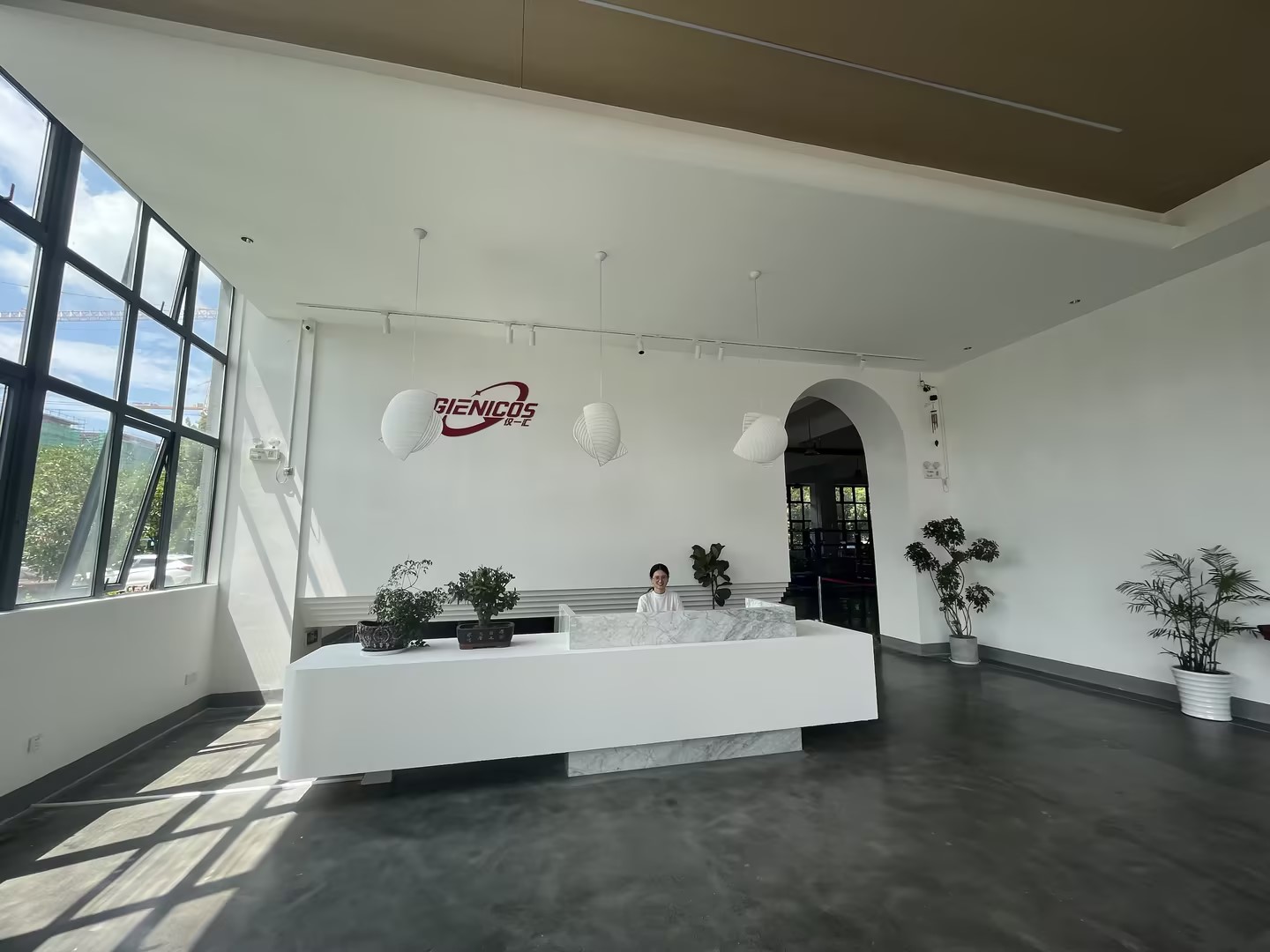
Send your container and we will confirm the labeling stage
Share the container diameter, height or length, the label or code position, and the target output per minute. GIENICOS will confirm whether the JTB, the JTB-815S or the JTB-812 fits, and how the labeling stage pairs with your filling equipment.
Catalogue: 2026 product catalogue (PDF)
Website: www.gienicos.com
Email: sales@genie-mail.net
Tel / WhatsApp: +86 134 8206 0127
Have Questions or Need More Details?
Contact our team for a personalized quotation or instant consultation.
Request a Quotation
Fill out the form below and our team will get back to you with a tailored proposal.
WhatsApp Direct Chat
Prefer to chat in real-time? Message us on WhatsApp for instant assistance & quick answers.
- Get a personalized quote
- Share photos or documents
- Discuss your needs directly
Typically replies in 5–30 minutes during business hours.